Get Full Government Meeting Transcripts, Videos, & Alerts Forever!
Get email alerts on the Water Conservation topic
No spam. Unsubscribe anytime.
Glendora outlines conservation outreach, rebate programs and new regional data tool as state targets approach
Summary
City staff described expanded outreach and workshop programs, confirmed regional grant funding for landscape analysis, and explained state urban water use objectives and compliance pathways.
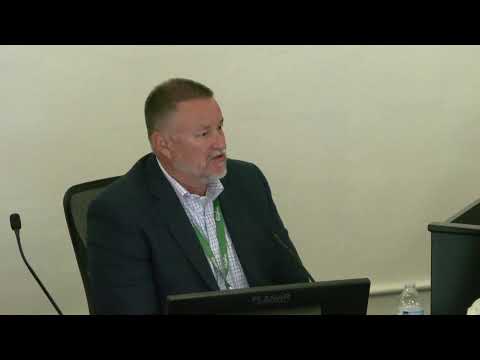
Glendora staff on Wednesday presented the fourth‑quarter water conservation update, reporting increased program activity, workshop attendance and new tools to validate urban landscape area used in state water‑use targets.
Senior management analyst Russell Ackerman told commissioners the city hosted record turnout at its landscape workshops and obtained member‑agency funding from Metropolitan for the events. He also said the city obtained a US Bureau of Reclamation grant, managed by 3 Valleys Municipal Water District and the city of La Verne, to create a water‑use efficiency dashboard using aerial imagery to classify irrigated parcels and validate data used for the state’s urban water use objective reporting.
Ackerman explained that differences among neighboring cities’ reduction targets reflect multiple data and mapping factors — including differences in measured irrigated square footage, temporary provisions such as recycled‑water bonuses, and inconsistent service‑area maps between the state and 3 Valleys — and that Glendora’s larger irrigated area likely explains much of its higher percentage reduction target. He told the commission the city’s water loss audit had not yet been completed and that an updated state reporting form was not yet available.
On compliance, staff said beginning January 2026 the state may issue written notices for noncompliance and by January 2027 could assess daily fines, but there is an alternative compliance pathway if an agency demonstrates a multi‑year reduction trajectory (roughly 2% reduction per year) that keeps it on track to meet targets.
Ackerman detailed program changes: the city added $1 per square foot on top of MWD incentives for residential turf replacement, will match MWD rebates for water‑efficient devices, and has ended the city dishwasher rebate and the city’s nonfunctional‑turf rebate as of June 30, 2025. He said commercial property owners can still apply to MWD’s commercial turf program while funding lasts. Commissioners asked about the accuracy and methodology of the aerial classification; Ackerman said the contractor (NV5 via EagleView) and the dashboard use validation steps and the tool can provide parcel‑level classification, with options to purchase additional consumption benchmarking.
Commissioners requested follow up reporting on numbers of rebate applications and the percentage of customers using paperless billing; staff said application counts were comparable to the prior quarter and that paperless‑billing adoption rates would be reported at a future meeting. The commission received and filed the water conservation update by voice vote.