Get Full Government Meeting Transcripts, Videos, & Alerts Forever!
Get email alerts on the Water Supply topic
No spam. Unsubscribe anytime.
Glendora staff warn imported water deliveries down and invasive golden mussels pose regional risk
Summary
City staff presented a fourth-quarter water supply outlook, reporting steep declines in local rainfall and updates on imported water deliveries; staff and neighboring agencies are monitoring recently detected golden mussels and developing regional mitigation plans.
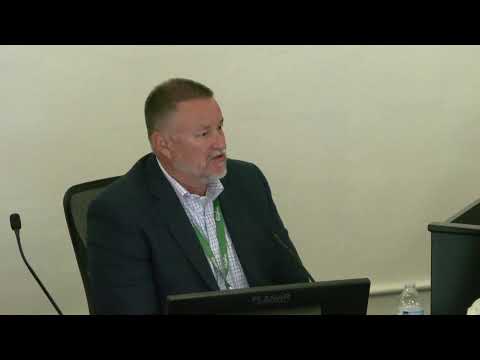
Glendora water staff on Wednesday reported a roughly 50% reduction in local rainfall so far in the 2025 year compared with 2024 and provided updates on imported deliveries and a new regional response to invasive golden mussels. The update was delivered during the commission’s fourth-quarter water supply outlook presentation and staff asked the commission to receive and file the report.
The outlook matters because the city relies on both local groundwater and imported imports to recharge the San Gabriel Basin and meet customer demand. Division Water Manager Dale Worth told commissioners that total recorded rainfall for the 2025 water year stood “just about a 50% reduction in the amount of rainfall that we’ve received.” Worth also summarized a range of imported-water deliveries from Upper District, 3 Valleys Municipal Water District and San Gabriel Valley Water District, giving acre‑feet totals through late June and noting USG‑3 flows of about 300 cubic feet per second through late May and June.
Worth said the Colorado River system and statewide reservoirs continued to show declines: Lake Powell and Lake Mead storage were in the low‑30% range in late June and statewide reservoir storage fell from 84% of average in June to about 76% in July. The State Water Project allocation remained at 50% as set April 29, 2025.
The presentation included a new concern: the detection of golden mussels in California in 2024 and the species’ rapid operational risk to water infrastructure. Worth described the mussels’ behavior: “Mussels will attach themselves to things. So gates, sluices inside pumps and different types of equipment,” adding they can cause clogging and “increased costs and maintenance.” He and other staff emphasized that impacts are primarily to infrastructure rather than the potable quality of water.
Paul Zampiello, assistant public works director, said county managers have warned that if mussels are found in county spreading infrastructure the county could suspend spreading operations, a step that would limit the city’s ability to recharge groundwater. “So that’s… one of the biggest focuses for us that we’re gonna really be mindful and we’ll keep the commission abreast of that,” Zampiello said.
Metropolitan Water District and member agencies are developing monitoring and control plans; staff reported three immediate operational responses: enhanced inspections and monitoring, reviewing asset-management control options, and coordination with the Department of Fish and Wildlife and Department of Water Resources. Worth said the city’s watermaster and nearby agencies are preparing a mitigation plan and that staff will provide updates on PM‑26 spreading and the mussel issue.
No formal, recorded vote on the supply outlook appears in the meeting transcript; Worth requested that the commission receive and file the update.
Background: staff also reported recent groundwater key‑well elevations near Baldwin Park had modest monthly gains in July compared with June but remain well below historical highs, and that local treated‑water purchases and well production for spring/summer 2025 were above the same months in 2023. Commissioners asked questions about infrastructure impacts and contingencies if spreading were shut down by the county.
Staff said mitigation will be regional, and that final plans and any operational changes will depend on approvals and funding from county and state agencies. The commission will receive further briefings as the regional response plan develops.