
St. Louis details recovery funds, creates recovery office to coordinate long-term rebuild
Get AI-powered insights, summaries, and transcripts
Subscribe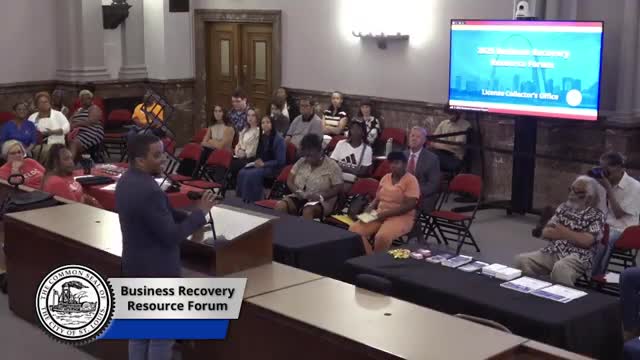
Summary
City officials outlined a package of local and state funding, the creation of a recovery office and near-term programs aimed at housing stabilization, home repairs and broader neighborhood restoration after the May 16 tornado.
City officials announced a series of funding allocations and a new recovery office designed to coordinate long-term relief and rebuilding after the May 16 tornado.
The chief recovery officer, Julian Nicks, said the city secured several streams of support, including $30,000,000 in Grama-settlement interest approved by the Board of Aldermen, about $25,000,000 through the Missouri Housing Development Commission and an additional $100,000,000 from the state that is still being finalized. “We know the damage is way more extensive than the number of dollars that we have,” Nicks said, adding the estimated damage ranges “between 1 to 2,000,000,000.”
Nicks said Mayor Spencer announced the establishment of a dedicated recovery office to lead both immediate recovery and longer-term neighborhood transformation work. He described staffing and budget-building under way and said the office will focus on at least five areas: resident well‑being, debris removal and infrastructure, housing restoration and acceleration of permitting, business and nonprofit recovery, and planning. “We are in this for the long haul,” Nicks said.
Nicks and other officials described near-term programs already rolling out: an emergency stabilization program and a $5,000,000 home‑repair fund for underinsured homeowners that will operate through existing program partners. He said some Grama funds were focused on individuals and families while other streams will be used for housing investment and planning. City materials and staff directed attendees to stlrecovers.com for program registration and updates.
Comptroller Donna Behringer and Treasurer Adam Lane described administrative supports that enabled quicker distribution of checks and coordination with departments during the immediate response. Ryan Coleman, speaking for the comptroller’s office, said an executive order removed a 25% insurance withholding requirement and allowed the building commissioner to waive the withholding, which sped up payments to residents in many cases. “That’s a program that usually only sees 1 to 2 fire checks a week. And so, it was pretty easy to handle,” Coleman said of the insurance-check workload, noting that dozens of checks remained to be reconciled.
Officials repeatedly cautioned that available funds will not cover total estimated damages and urged residents to enroll in city programs and resource hubs. Nicks urged people to watch the city’s recovery site and social channels for weekly updates and rollout of new resources.
The city framed the recovery office as a single point for cross‑departmental coordination and external grants, but officials acknowledged gaps in business‑directed financial aid and said additional programs are being designed.
Looking ahead, officials emphasized the long timeline for recovery from catastrophic disasters and said the new recovery office will be staffed and budgeted in phases to manage both immediate needs and decade‑scale restoration work.