Get Full Government Meeting Transcripts, Videos, & Alerts Forever!
Get email alerts on the Ethics Training topic
No spam. Unsubscribe anytime.
Norwalk Board of Ethics advances plan for employee, official ethics training; implementation left to HR and mayor’s office
Summary
At its July 24 meeting the Norwalk Board of Ethics agreed on a framework for a recorded ethics training program for city employees, elected officials and others covered by the code, but left requirements and scheduling to Human Resources and the mayor’s office and noted open questions about FOIA rules and the November election transition.
The Norwalk Board of Ethics on July 24 discussed a proposed ethics education program for city employees, elected officials and other persons covered by the city’s code of ethics and agreed on a draft framework that would include recorded and live sessions, a short set of hypotheticals and an acknowledgement for personnel files.
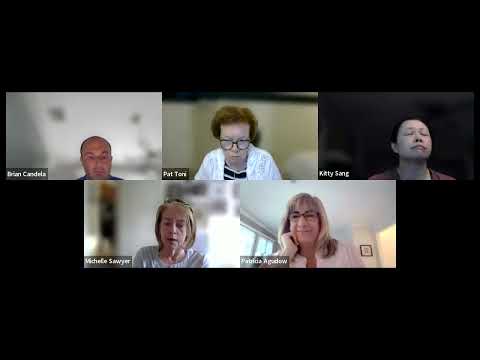
The board — Pat Toney, Michelle Saw, Tricia Aguto and Katie Sam — voted unanimously to accept the minutes from the May 22, 2025 meeting before moving into the discussion on training. No members of the public attended or submitted written comments for this agenda item.
Why this matters: The board said it wants a repeatable, auditable training program so staff and officials can show they received instruction on the city’s ethics rules and to reduce confusion over common topics such as conflicts of interest and prohibited gifts. Several members said recording at least one daytime and one evening session would let people who cannot attend live sessions view the content later and provide a simple way to document participation.
Most important points discussed
• Audience and scope: Board members agreed the primary audience should be city employees and elected officials and noted the sessions should also be available to residents. Members emphasized that ultimate authority to require training and to implement sign-off procedures lies with Human Resources and the mayor’s office, not the board.
• Format and timing: The board favored a short seminar format (about one hour, with the possibility of 60–120 minutes depending on demand), supplemented by recorded sessions and PowerPoint “CliffsNotes.” The plan called for at least one daytime session and one evening session, with IT assistance to record and host the video for later viewing.
• Documentation and recurrence: Members proposed a mechanism to document completion in employees’ personnel files similar to existing cybersecurity training: either attendance at a live session or viewing the recorded session and completing an acknowledgement. The board also discussed repeating training on a periodic basis (suggestions included every two to three years) and noted statutes and code provisions can change over time.
• Curriculum elements: The board recommended introducing the code and the citizen’s guide, walking through key code sections, and using hypotheticals to illustrate application. Board members cited conflicts of interest and prohibited gifts (code sections discussed during the meeting were referenced as “32‑4” and “32‑7” in the discussion) as topics that likely need additional examples and time.
• Implementation constraints and next steps: Members agreed to draft a proposed package of content and a short list of “must-have” versus “negotiable” elements to present to HR and the mayor’s office. The board also discussed the timing implications of the municipal election and transition: members said starting development now allows the board to present a near-final product to incoming administration staff during the transition period.
• Open questions and legal reminders: A staff member advising the board reviewed Freedom of Information Act (FOIA) constraints: any planning meeting that reaches a quorum (four or more members) must be publicly noticed and treated as a public meeting with Zoom capability and recording; small-group work (three or fewer members) and careful email practice were presented as permissible ways to draft materials without triggering FOIA notice requirements. The staff member also confirmed a 12‑month restriction referenced in the code applies after officials leave office, where applicable, though the board did not attempt to change those rules at this meeting.
Decisions and administrative actions
• Acceptance of minutes: The board approved the minutes of the May 22, 2025 meeting by unanimous voice vote (tally: 4 yes). The motion was moved and seconded on the record; specific mover and seconder were not recorded in the transcript.
• No formal adoption of a training mandate: The board agreed on a working framework and tasks but did not adopt any ordinance or policy requiring training; members agreed HR and the mayor’s office would decide whether training would be mandatory and how it would be enforced.
• Work plan: Members agreed to work in small groups (three or fewer) between meetings to draft content and identify “must-have” elements, then reconvene to share those drafts at the next regularly scheduled meeting.
Operational and scheduling notes
• Next meeting: The board’s next regular meeting was set for Aug. 28, 2025 (fourth Thursday). Members discussed the possibility of a special meeting if Aug. 28 conflicts with Labor Day schedules, and the staff advisor explained the lead time needed to secure a Zoom link and public notice.
• Materials: Board members confirmed PowerPoint slides and recorded videos of draft content exist and will be circulated for review. One board member said they would distribute slides and notes to other members in separate emails to avoid creating a FOIA quorum during the drafting process.
What the board did not do
• It did not mandate training, set a compliance deadline, adopt an administrative rule, or allocate funds. Those implementation steps were left to HR and the mayor’s office.
What to expect next
Board members will exchange draft materials in small groups and bring consolidated proposals to the next public meeting for further discussion. The board signaled a preference for a combination of recorded and limited live sessions, periodic recertification, and a simple personnel-file acknowledgement process once HR and the mayor’s office approve an implementation plan.
Ending
No executive session was held. The meeting concluded with a motion to adjourn that carried without further recorded objection.