
Board splits on sanitation appeals; one fee waived, another sustained as staff explains pickup rules and funding
Get AI-powered insights, summaries, and transcripts
Subscribe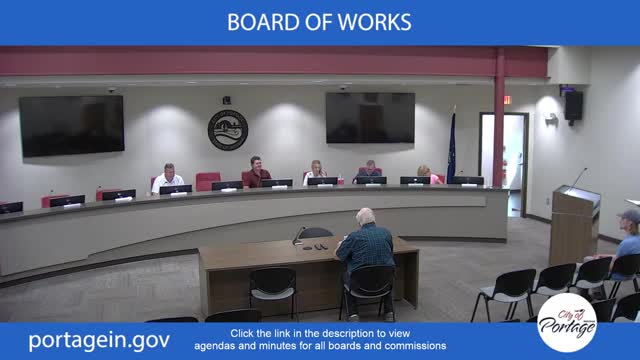
Summary
The Board granted one resident—s appeal and waived a $40 special-pickup charge, while later sustaining a separate $40 charge for a landlord in Willowdale; staff used the hearing to explain amnesty-day rules, documentation practices and why pickup fees exist.
The Portage Board of Works addressed multiple sanitation appeals and public complaints about special pickup fees and sidewalks, granting one appeal and denying another while staff explained the city—s billing and documentation practices. A resident who said he placed garbage out on the wrong day in a cul-de-sac appealed a $40 special-pickup charge; he told the board he uses an automated system at home and that the truck spent only minutes collecting the material. After city staff described the program—s structure — a flat monthly rate ($20.25) that does not fully cover tonnage fees and a monthly amnesty day — and explained that staff documents special pickups with photographs to prevent false claims, the board voted to grant that resident—s appeal and reduce the charge to $40 (effectively waiving the larger fee he had been assessed or confirming the $40 charge as appropriate, per discussion). Later in the meeting, a landlord from Willowdale appealed a $40 charge for a bulk pickup. He raised broader concerns about sidewalks and the costs of living in the neighborhood. City staff explained that bulk items must not be placed within 3 feet of poles, vehicles, trees or lines and that in this case the grapple truck could not access the pile, requiring hand crew collection. Member Newell and others expressed that $40 is a reasonable fee for the volume described; the board voted to sustain that charge. Throughout both items, staff explained the city—s sanitation funding: the landfill is charged by tonnage (about $66 per ton) and the city subsidizes the difference between flat-rate collections and actual disposal costs through county income-tax distributions. Staff said the city documents special pickups with photos because residents sometimes dispute whether material existed. Board members and staff also took public comments about training and snow-plowing priorities in cul-de-sacs; staff invited residents to office hours to discuss sidewalks and property-tax mechanics. The board distinguished between appeals of assessed fees (administrative) and the broader neighborhood questions raised by residents about sidewalks and service levels; both appeals were decided on their individual facts at the meeting.