Get Full Government Meeting Transcripts, Videos, & Alerts Forever!
Get email alerts on the Estate Accounting topic
No spam. Unsubscribe anytime.
Judge allows first annual accounting for estate; heirs raise questions about missing bank records
Summary
A probate judge approved the personal representative's first annual accounting for the period Sept. 28, 2023'Sept. 28, 2024, while heirs raised concerns about missing bank records and the later sale of the decedent's home.
A probate judge approved the personal representative's first annual accounting covering Sept. 28, 2023, through Sept. 28, 2024, at a virtual hearing in File 53034 on the petition to allow the accounting.
The ruling followed questions from two family members, who said they lacked access to certain bank and credit-card records and disputed communications with the personal representative and counsel. The judge and the estate's attorney described procedures for obtaining records not already in the file and noted that proceeds from a later home sale were not part of this accounting period.
The judge began by confirming the scope of the hearing: "this accounting just covers 09/28/2023 through 09/28/2024," and that "the sale of a house . . . happened after this accounting was completed," so sale proceeds were not before the court. The judge said the proposed accounting included an expense spreadsheet and that any formal objections would need to specify items (for example, a math error or lack of supporting documentation).
Mr. Casselberry, the attorney for the personal representative, said the inventory and accounting had been amended and that the court must approve the first accounting before a final accounting and disbursement could be completed. Casselberry told the court he had not located any bank account at Onstead State Bank and asked that anyone with information provide it.
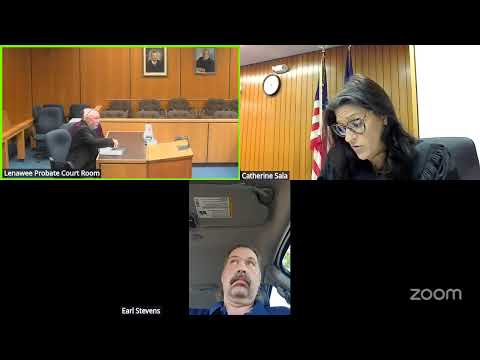
Earl Stevens, an interested participant who was sworn in, told the judge, "I'm not I'm not happy with the way any of this has been handled," and said he had tried to communicate with Casselberry and was not allowed on the property during the estate sale. He said he questioned figures on the spreadsheet and that he had not filed a formal objection because he did not understand that he needed to do so.
David Stevens, also sworn in, said that during the accounting period the family did not have access to all records, identifying missing bank statements and credit-card receipts. He told the court there was a separate criminal suit pending against another individual, but he said that matter would be handled after the estate was closed.
The judge recited a court order from a March 7, 2024 hearing that allowed interested parties to request one year of bank and credit-card statements and stated that Earl Stevens could ask Casselberry to subpoena those records at Stevens's expense; Stevens could later petition the court for reimbursement from the estate and the court would decide whether reimbursement was warranted. The judge encouraged the parties to work together and to exchange requests in writing so that Casselberry would know which specific statements to obtain.
Earl Stevens said he was willing to pay for subpoenas and records and asked the court to allow him remote participation in future hearings. The judge said the accounting appeared correct for the period before the court and "ought to be allowed," which will permit preparation of the second annual accounting.
No formal contested motion or vote was recorded in the transcript beyond the judge's allowance of the accounting. The court directed the parties to cooperate to identify missing records and to follow the court's prior order regarding subpoenas and potential reimbursement.
The judge closed the hearing by offering the parties continued remote participation and wishing them luck as they work to finalize the estate.