Get Full Government Meeting Transcripts, Videos, & Alerts Forever!
Get email alerts on the State Sovereignty Ag Litigation topic
No spam. Unsubscribe anytime.
House approves bill asserting Attorney General role in federal matters, sparking debate over consent‑decree authority
Summary
The House passed legislation clarifying the attorney general's authority to represent state interests in federal litigation and to require notification and review before state entities enter consent judgments; opponents contended it could curtail local autonomy. The measure passed 72‑25.
Lede The Louisiana House on May 20 passed a bill that clarifies and affirms the attorney general’s authority to represent the state in federal litigation and to require state approval before agencies or local entities enter consent decrees that would impose binding obligations on the state.
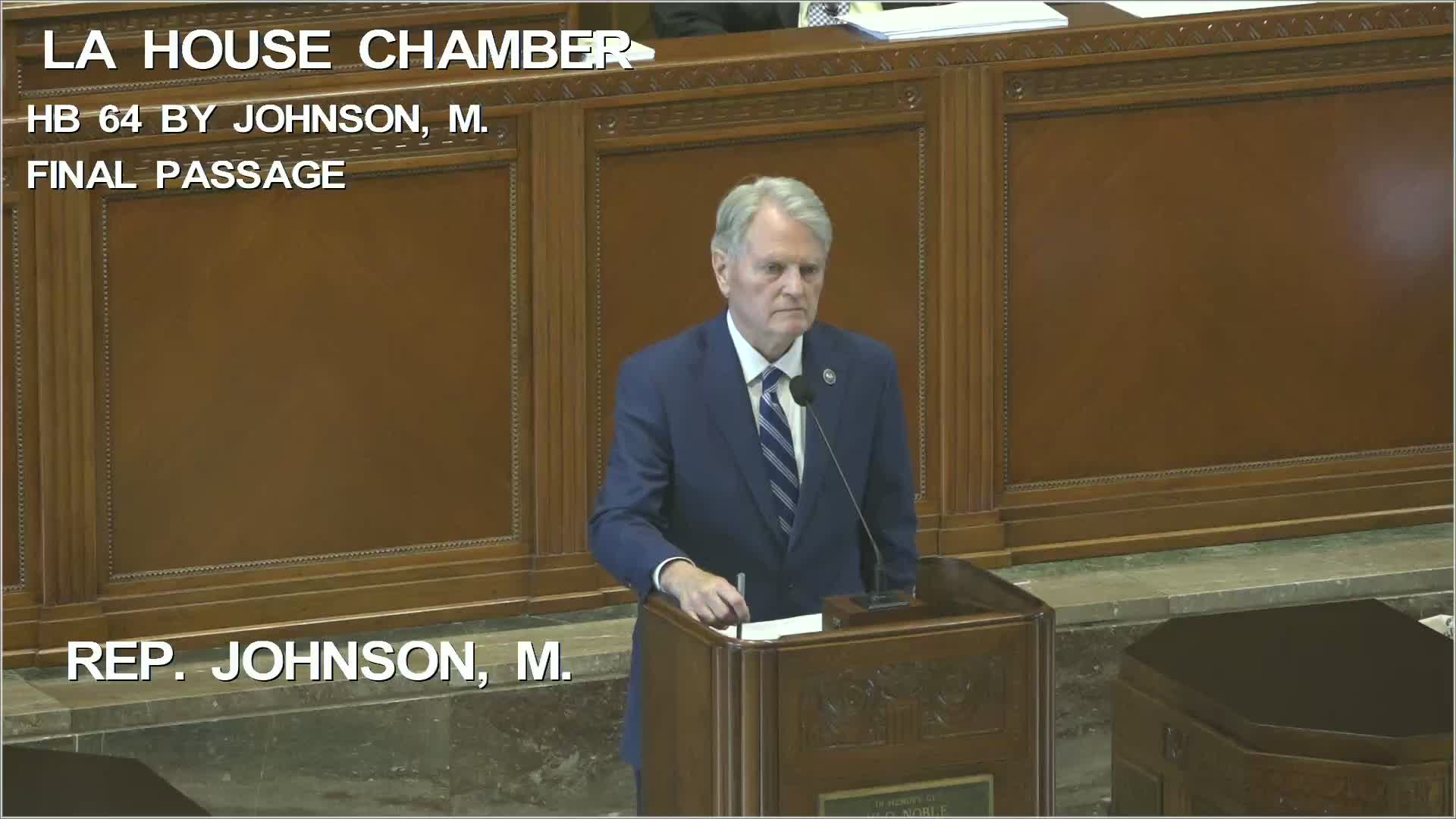
Nut graf House Bill 64, carried by Speaker Pro Tem Mike Johnson on behalf of the attorney general, requires state or local entities that receive federal legal action to notify the governor and attorney general within 30 days and allows the attorney general to intervene; it also requires authorization from both the governor and attorney general before entering consent judgments that would bind state interests. The bill passed 72‑25 after heated floor debates about local autonomy and retroactivity.
Body Speaker Pro Tem Mike Johnson summarized the measure as a safeguard of state sovereignty and a clarification of the attorney general’s role, saying it “explicitly empowers the attorney general to initiate, defend, or intervene in any legal matter involving federal action that implicates our state sovereignty.” The bill also calls for a litigation stay (the floor debate referenced a 60‑day stay in the text) to allow the attorney general to consider intervention.
Rep. Jordan and others objected to sections they said could permit the attorney general and governor to prevent independent local entities — such as elected school boards, sheriffs or city councils — from entering settlements or consent decrees they believed were in the public interest. Jordan said independent elected bodies should retain the ability to decide whether to settle and that the bill could effectively give the state executive branch veto power over local settlements.
Speaker Johnson and supporters argued the measure is limited to cases that create obligations or ongoing jurisdiction over the state and that it is a necessary check to prevent long‑running federal orders that encroach on state sovereignty or impose unanticipated costs. Several members debated whether the bill should be retroactive to address multi‑year federal consent decrees that continue to bind the state.
Ending After more than an hour of questions and argument, the House passed HB 64, 72‑25. Sponsors said the bill is intended to preserve the state’s sovereign interests in federal litigation; opponents warned it could complicate local governance and negotiations. The bill moves to the Senate for further review.