Get Full Government Meeting Transcripts, Videos, & Alerts Forever!
Get email alerts on the Fire Department Promotions topic
No spam. Unsubscribe anytime.
House approves law letting fire chiefs establish suppression 'second‑in‑command' positions statewide
Summary
The House passed legislation authorizing fire chiefs to select suppression leadership based on seniority plus merit instead of automatic seniority alone; sponsors said the change provides continuity for suppression leadership. The bill passed 89‑0.
Lede The House on May 20 approved a statewide measure allowing fire departments to promote suppression leadership using a blend of seniority and merit, replacing a system that selected the most senior suppression firefighter regardless of other qualifications.
Nut graf House Bill 136, carried by Rep. Glorioso with backing from the Fire Chiefs Association and the Firemen’s Association, authorizes a locally created “chief of operations” or similar position on the suppression side to be filled based on specified qualifications including years of service and some administrative experience. Sponsors said the change ensures continuity for a role that is more administrative than shift work; the House passed the bill 89‑0 after committee amendments and a name change to the position title.
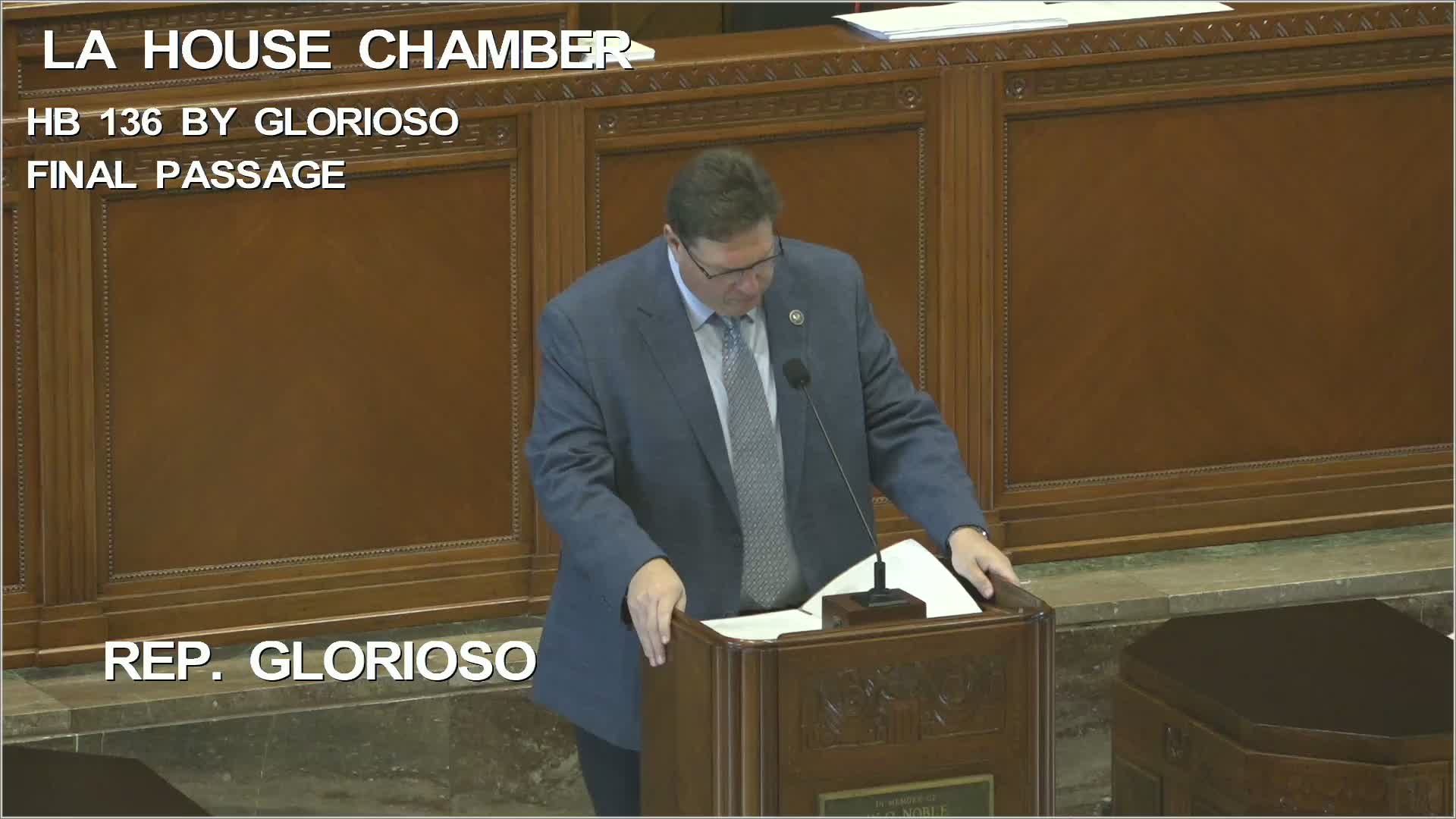
Body Rep. Jason Glorioso, sponsor of the measure, said the bill is a compromise negotiated between the Chiefs Association and the Firemen’s Association. “What it does is it allows the fire chiefs to create essentially a second in command position for fire suppression,” Glorioso told the House.
Under current practice, the most senior suppression firefighter simply becomes head of suppression, but the chiefs argued that person may be months from retirement and not suitable for longer-term administrative continuity. Glorioso told members the new suppression leadership position “does require that that person have 25 years of service and a year in the administrative side as well.”
Members asked whether the bill applied statewide; Glorioso said the measure is statewide and represented a negotiated compromise between associations representing chiefs and firefighters. Two technical amendments offered by the sponsor were adopted on the floor without objection, and the House adopted a four‑page amendment changing the title of the position and clarifying language.
Ending The legislation passed the House on a voice and roll-call sequence and the clerk recorded the final tally as 89 yeas and 0 nays. Sponsors said the bill will give department leaders a tool to ensure managerial continuity on the suppression side and will be implemented locally under state authorization.