Get Full Government Meeting Transcripts, Videos, & Alerts Forever!
Get email alerts on the Education Mental Health topic
No spam. Unsubscribe anytime.
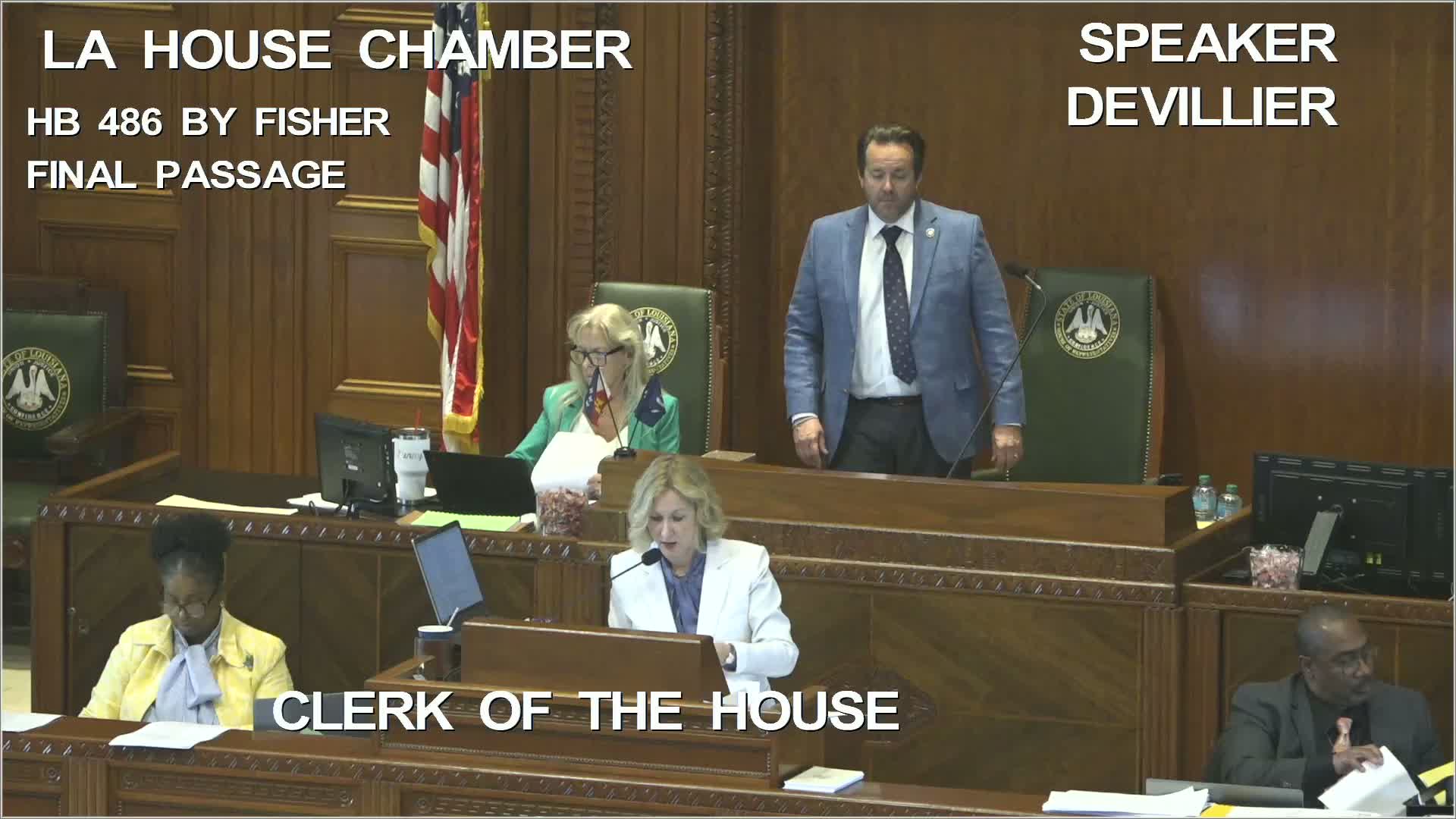
House passes bill to make mental‑health assessments available to students with parental consent
Summary
The Louisiana House on May 19 approved a bill requiring public schools to make licensed mental‑health assessments available to students with parental consent, directing the Department of Health to provide lists of credentialed providers and adopting reporting and annual‑consent amendments.
The Louisiana House on Monday passed House Bill 486, requiring public schools to make mental‑health assessments available to students with a parent or guardian’s written consent and directing the Louisiana Department of Health (LDH) to provide lists of credentialed providers that schools can share with families.
Supporters said the change is intended to help identify behavioral and mental‑health needs earlier so students can receive timely services. Opponents raised concerns about parental consent, confidentiality and the potential for overreferral.
Under the bill, schools must make licensed behavioral‑health providers — for example, licensed clinical social workers, licensed professional counselors, licensed addiction counselors and clinical psychologists — available as an option for families who request an assessment. Assessments may be performed at a provider’s office or at school facilities when the parent consents. LDH is directed to make credentialed provider lists available to school systems.
Lawmakers adopted two amendments during floor debate. Representative Hughes’ amendment requires parental consent to be renewed annually; the House adopted that amendment. Representative Jason Cruz offered and the House adopted an amendment requiring schools to report counts of the assessments or screenings conducted (the language as adopted clarifies the measure tracked). The sponsor, Representative Julie Fisher, said the reporting will help the state understand uptake and needs across grade levels.
Funding and payment were a frequent focus in debate. Sponsors said Medicaid may be billed for eligible students and that local human‑services authorities or community providers often serve uninsured families on a sliding fee scale. Several members pressed the sponsor on whether the bill would impose new local costs. The sponsor and several supporters said the measure creates access and does not appropriate new general‑fund dollars; appropriations staff reported no fiscal hold when the bill left committee. However, lawmakers and witnesses acknowledged some local operational work will be required to coordinate provider lists and logistics.
Members also discussed confidentiality and professional oversight. Several lawmakers noted that licensed providers are governed by existing professional boards and federal patient‑privacy rules, and the sponsor said assessment results are shared only with the parent unless the parent authorizes disclosure to the school.
The House approved the bill on a roll call of 65 yeas and 31 nays. The bill now moves to the Senate for consideration.
The measure is aimed at expanding early identification of students with behavioral‑health needs and establishing clearer, statewide access routes rather than creating a statewide mandate to compel evaluations without parental consent.