Get Full Government Meeting Transcripts, Videos, & Alerts Forever!
Get email alerts on the Public Assistance Citizenship Verification topic
No spam. Unsubscribe anytime.
House approves bill requiring proof of citizenship for some state benefits after heated debate
Summary
The Louisiana House passed legislation requiring applicants for certain state public-assistance benefits to prove citizenship or lawful status, drawing extended debate about effects on children, emergencies and use of federal resources; the measure passed 67-26.
Lede The House of Representatives on May 20 approved legislation that requires people applying for some state public assistance to prove U.S. citizenship or lawful status, with supporters saying the measure protects taxpayer-funded benefits and opponents warning it could chill access to services for vulnerable people and complicate emergency responses.
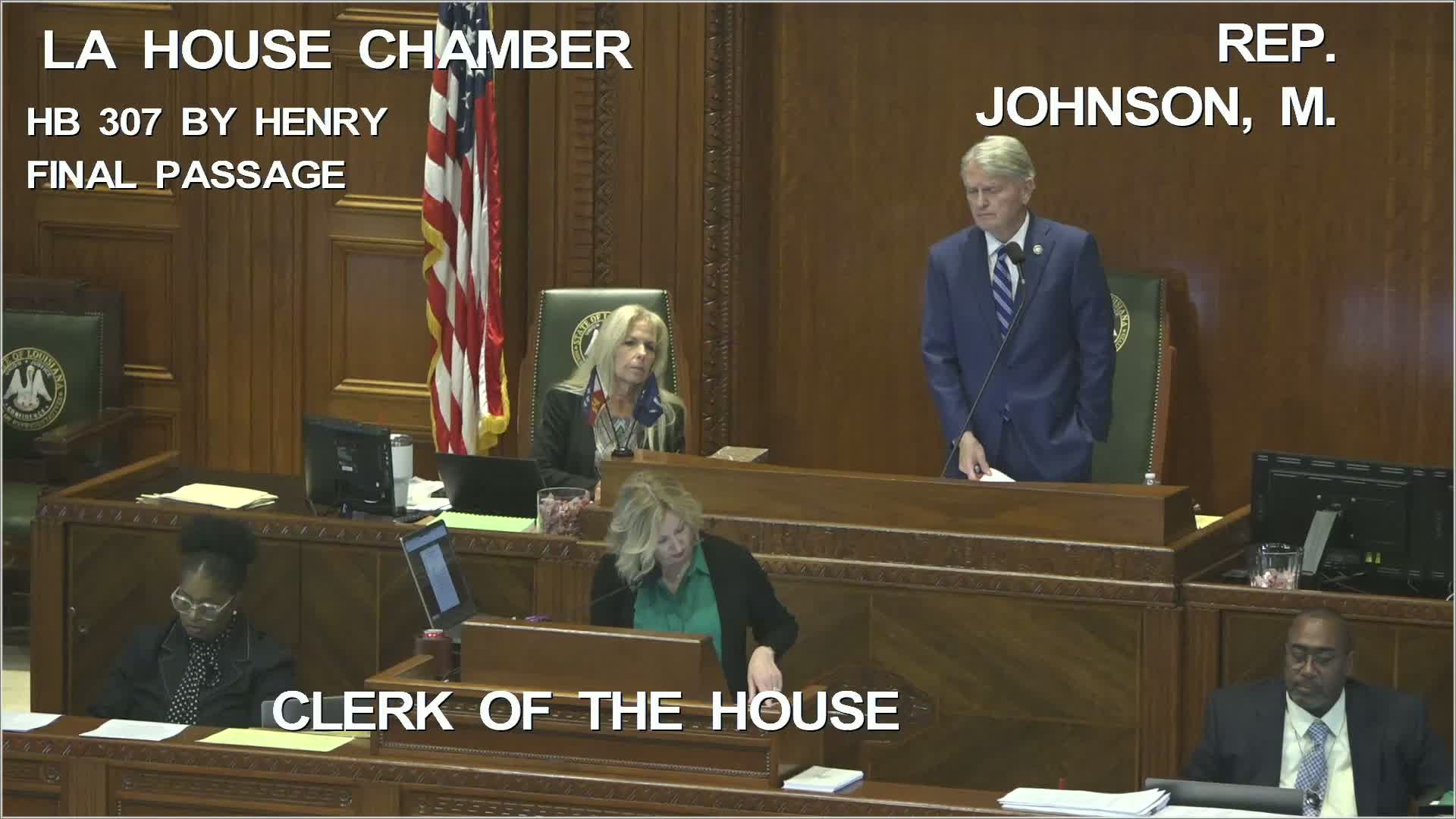
Nut graf House Bill 307, sponsored by Rep. Jonathan Henry, drew more than an hour of discussion and amendments before final passage by a 67-26 vote. Supporters said the bill clarifies agency responsibilities and can be implemented without new state funding because federal dollars will cover some costs; opponents, including several Democrats and social-services advocates, said the measure could deter eligible people from seeking benefits and raised questions about reporting to immigration authorities.
Body Representative Jonathan Henry (author) told colleagues the bill “would require state agencies to have any applicant prove citizenship before getting a state benefit.” He said the intent is to make sure benefits intended for Louisiana taxpayers go to eligible recipients.
Rep. Jordan asked whether the bill would prevent victims of domestic violence or people needing emergency medical care from getting help; Henry responded that hospitals and emergency care are not meant to be affected, and that lawful residents such as green-card holders “they'd be fine.”
Opponents pressed practical and humanitarian concerns. Rep. Robbie Carter described a post‑Hurricane Ida example of a migrant mother sheltering with small children who feared seeking help: “She was scared to death that they were gonna take her 2 kids from her,” Carter said, arguing the bill could put families in traumatic positions and deter people from getting food, shelter or medical care.
Rep. Rev. Jordan questioned how American‑born children in households with an undocumented parent would continue to receive benefits if a parent were reported; Henry said, “The children would definitely still get the benefits,” and later noted that some of the administrative burden could be handled using federal resources. Rep. Chairman Muscarello noted the fiscal note identified about $130,000 in federal funds for implementation.
Several members sought and received clarifications that lawful residents (for example, green‑card holders) would remain eligible for benefits. Henry said the bill requires reporting certain noncitizen applicants to federal immigration authorities if they cannot document status.
The bill’s principal amendment, accepted in committee and on the floor, added a provision worked out with the state retirement system and aimed to reduce unintended effects on existing systems. Supporters said most agencies already have protocols for verifying eligibility; critics said those internal protocols vary and that the bill creates a statewide mandate that could produce uneven outcomes at local offices.
Ending After extended debate and several hours of questions from members across the chamber, the House passed HB 307 by roll call, 67 yays to 26 nays. Representative Henry moved to adopt the title and the motion was laid on the table without objection. The legislation will now move to the Senate.