Get Full Government Meeting Transcripts, Videos, & Alerts Forever!
Get email alerts on the Redistricting topic
No spam. Unsubscribe anytime.
Residents urge stronger majority-minority districts as school board sets Feb. 1 public hearing on redistricting
Summary
Public commenters at the Jan. 18 Terrebonne Parish School Board meeting urged the board to strengthen majority-minority composition in Districts 1 and 2; the board’s education committee recommended the board call a Feb. 1 public hearing and a resolution to adopt new election districts in accordance with federal and state statutes.
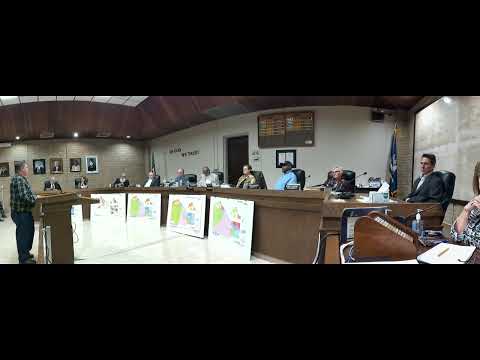
The Terrebonne Parish School Board heard public comment on proposed school board election maps Jan. 18, with several residents urging the board to strengthen the majority-minority composition of Districts 1 and 2 and the board voting to call a Feb. 1 public hearing to consider a resolution establishing the 2021 election districts.
Residents said proposed changes to Districts 1 and 2 should increase the minority deviation so those districts present clearer opportunities for minority candidates. The board’s education technology and policy committee recommended the full board call a Feb. 1, 2022, 6 p.m. public hearing at 201 Stadium Drive in Houma to consider adopting a resolution establishing the election districts “in accordance with the federal and state statutes.”
Wayne Thibodeau, identified at the meeting as a former council member for District 2, told the board he reviewed the proposed maps and census statistics and said that, compared with the 2010 census deviations, the new proposal reduced deviation in one district to “a little less than 2%” and left another at “around 6%.” He said both majority districts should be strengthened and that achieving that would likely require changing the racial composition of some precincts.
Carl Harding, introduced at the meeting as a council member, spoke about the legal principle of “one person, one vote” and equal representation by population; he cautioned that geographic mapping also interacts with partisan patterns and population displacement from Hurricane Ida. He said the board’s redistricting choices could affect minority representation on the school board for years.
Craig Luke, a Grand Caillou resident, told the board his community risks being split across multiple districts under some map alternatives, which he said could reduce the ability of community members to elect representatives from their neighborhood in the future.
Board members moved and approved the committee recommendation to call the Feb. 1 public hearing; the committee’s motion was recorded as moved by Clyde Hamner and seconded by Roger Dale DeHart. The board did not adopt districts at the Jan. 18 meeting; the record shows the board is proceeding to the public-hearing step required before adopting a resolution.
The public comments were part of the meeting’s public hearing segment; no formal map adoption or vote on a final map occurred on Jan. 18. The board and staff referenced compliance with “federal and state statutes” as the basis for the timeline and the resolution language.
Board members asked clarifying questions but made no new map changes at the meeting. The Feb. 1 hearing is scheduled to provide another opportunity for residents to comment before the board considers adoption of the resolution establishing the election districts.