
Committee recommends second reading of distraction‑free device policy; privacy and special‑education exceptions remain central
Get AI-powered insights, summaries, and transcripts
Subscribe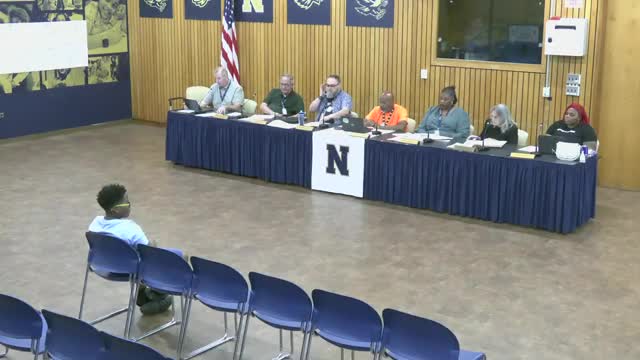
Summary
The Newburgh City School District policy committee advanced a state‑driven “distraction‑free schools” device policy to a second reading, highlighting data‑privacy limits on third‑party translation tools, special‑education and medical exceptions, and a requirement that the district supply devices rather than permit bring‑your‑own devices.
The Newburgh City School District policy committee reviewed a new “distraction‑free schools” policy required by state action and recommended moving it to a second reading and adoption. The draft would limit personal electronic device use during the academic day, allow targeted exceptions for emergencies, medical needs and IEP/Section 504 accommodations, and permit device use for extracurricular activities, field trips and bus travel.
Policy staffer Mr. McGrath (presenter) said the draft attempts to balance the state requirement for distraction‑free classrooms with families’ need to communicate with students. He described an end‑of‑day “window” for students to check devices so families can confirm transportation or pick‑up plans; he said devices would remain allowable on buses and during extracurricular activities.
The draft also addresses on‑campus storage and enforcement. The committee discussed Yondr pouches (district‑used secure storage) and backpack‑storage scenarios; Mr. McGrath said the policy should not create a loophole allowing students to bypass restrictions by carrying older devices. He noted students were not part of the stakeholder committee that drafted the recommended language.
Translation services and data privacy were central topics. Peterson and McGrath explained that district‑controlled translation tools are allowable, but third‑party translation apps that the district does not control raise student‑data privacy concerns under state education privacy requirements (discussed in the meeting as "Ed Law 2‑d"/data privacy). On that basis, the committee agreed the policy should permit translation services only if the district controls the software or has an enforceable privacy agreement.
For emergencies, the draft gives building administrators authority to permit device use; committee members clarified that routine communications during the day (for example, messages about transportation) will remain possible through the main office and building procedures. The committee heard multiple suggestions on how to communicate the new rules to families, including a “communications campaign,” calendar notices and a clear executive summary in the welcome packet; one board member recommended paid advertisements and broad outreach before implementation.
Mr. McGrath said the district would no longer permit bring‑your‑own devices and that the district must provide devices to students. The committee discussed special‑education students and students in the process of evaluation; Onyx Peterson and other members said accommodations should be addressed through IEP and Section 504 planning and building‑level management.
The committee recorded that the policy had its first reading and will be brought back for second reading and adoption; members directed staff to add precise language on district‑approved translation services, administrator discretion for emergencies, and communications steps before the policy takes effect. One member said the intended effective date is at the start of the school year (discussed as August 1) if the board adopts the policy in time.
No final adoption occurred at the committee meeting; staff will prepare the revised draft and outreach materials for the next board packet.