Get Full Government Meeting Transcripts, Videos, & Alerts Forever!
Get email alerts on the Budget topic
No spam. Unsubscribe anytime.
County approves $132.2 million provisional 2026 budget; officials flag staffing, tax options
Summary
The Pennington County Board of Commissioners approved a provisional 2026 budget of $132,234,641 on July 23, 2025, while commissioners discussed personnel costs, a set of new full‑time positions and whether to use property tax growth and CPI increases this year.
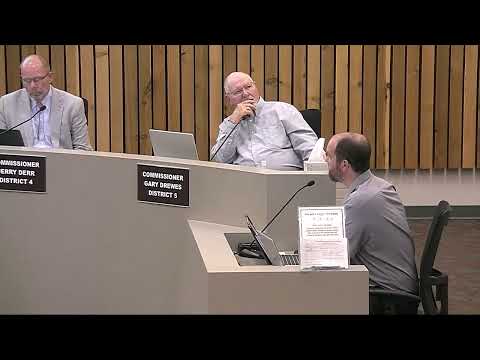
The Pennington County Board of Commissioners on July 23 approved a provisional 2026 budget of $132,234,641 and set an additional public budget hearing for Aug. 19 before the mandatory Sept. 2 meeting. The provisional budget figure includes the 5% mandatory appropriation required by SDCL and reflects the board’s decision to present a baseline that does not yet assume property tax growth or CPI adjustments.
Jordan Ebb, director of the Commission Office, said the county’s estimated cash position as of June 30 would leave the general fund with a projected start balance for 2026 of about $28,300,000. “When I’m looking at the cash balance accounts … we’re looking at about 35.6, almost $35,700,000 in the general fund,” Ebb told commissioners as he reviewed spreadsheets. After accounting for assigned and restricted funds, Ebb said the unassigned balance would be about $16,200,000.
Ebb summarized major provisional budget drivers: initial department expenditure requests totaling approximately $128,600,000 (about a 1.8% increase over 2025), personnel requests that originally totaled nearly $74,000,000, and outside‑agency requests of about $2,500,000. He said personnel is the largest single component of the county budget: “Personnel is a pretty big portion of the county’s budget.”
On staffing, Ebb said department heads requested 12 additional positions for 2026. He listed those by office: two full‑time deputy public defenders (one noted as 50% grant funded in the initial requests), one full‑time legal secretary for the public defender’s office, three FTEs for the treasurer’s office (tax and title specialists), and six positions for the state’s attorney’s office (five deputy state’s attorneys and one office manager). Ebb estimated the total cost of granting those requests at roughly $1.1 million if budgeted with family health coverage, and slightly over $1.0 million under an employee+1 insurance assumption.
On property taxes, Ebb explained the provisional calculations left out full growth and CPI to show a conservative baseline: the county’s property tax collections as budgeted are about $60.9 million; adding CPI and growth would increase the tax request by roughly $3.0 million to about $64.0 million. He said initial revenue requests across funds were about $126.8 million, but the provisional version using flat taxes reduced that to about $123.8 million; a three‑to‑five‑year trend projection he ran showed revenues closer to $122.9 million.
Commissioners discussed next steps and data requests. Several members urged more time before final decisions on wage increases, FTE approvals and funding philosophy for outside agencies; one said he was “not comfortable … making a bunch of decisions today on the provisional budget” while figures continued arriving. The board voted to schedule an additional budget hearing on Aug. 19 and to meet as required on Sept. 2 to work toward a final budget by the statutory deadline.
The motion to approve the provisional budget passed after a voice vote. The motion was moved by Commissioner Hadcock and seconded by Commissioner Durr; commissioners responded “aye” and the chair announced the motion carried.
Budget staff said they will re‑run projections if commissioners direct staff to add property tax growth and CPI for a final budget, or if they change assumptions about personnel (for example, step increases, cost‑of‑living adjustments or health plan assumptions).