Get Full Government Meeting Transcripts, Videos, & Alerts Forever!
Get email alerts on the Land Policing topic
No spam. Unsubscribe anytime.
Centennial Forest, land protections and policing raised as environmental and municipal concerns
Summary
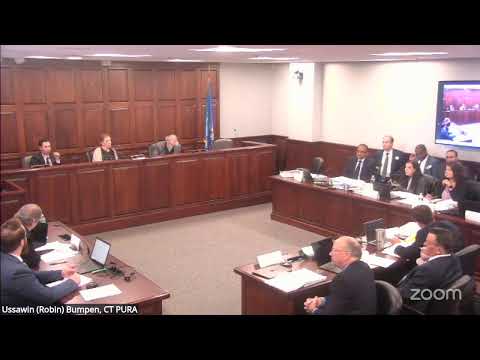
Connecticut state agencies and petitioners discussed an earlier 2002 land conveyance (about 18,316 acres) that formed Centennial Forest, the statutory protections attached to land sales, and the history of company‑contracted law enforcement and watershed patrols; DEEP pressed for records about Aquarion policing costs and job descriptions.
The Department of Energy and Environmental Protection (DEEP) questioned petitioners about Centennial Forest and earlier land transactions originating with the BHC sale. DEEP cited docket O11116 (the earlier PURA approval) and a Natural Resources Management Agreement that created long‑term protections for the conveyed acreage; petitioners told the panel they will honor the terms of that 2002 arrangement and described how proceeds from any permissible disposals must be used under their bond resolutions and enabling legislation.
DEEP asked whether the authority and Aquarion plan to employ private or dedicated police officers for watershed enforcement after the transaction. Petitioners said Aquarion historically employed part‑time police officers and contracted seasonal policing details with municipalities for summer recreational sites, and that RWA maintains a permanent police force that patrols watershed lands across multiple towns. DEEP requested a range of exhibits: (1) annual average cost of law enforcement for Aquarion (2020–2023) as a dollar amount and as a percentage of billed sales, and (2) the comparable figures for RWA. DEEP also requested Aquarion job descriptions for contracted police detail members, seasonal patrol workers, watershed rangers and any historical Aquarion police job descriptions; petitioners agreed to produce the materials as late‑file exhibits.
Petitioners said RWA generally sells class‑3 land only after a defined process and typically transfers property to land trusts; proceeds from class‑3 dispositions are deposited into dedicated construction or watershed protection funds under bond resolutions. Petitioners said the enabling legislation grants towns a right of first refusal and that the representative policy board and towns participate in disposition decisions.
DEEP pressed petitioners on whether police officers assigned to watershed lands have statewide authority under Conn. Gen. Stat. §29‑19a and whether contracted summer policing details were certified under that statute; petitioners said they would check and provide written clarification as a read‑in or late‑file exhibit.
The panel granted DEEP’s requests for detailed law‑enforcement cost and personnel exhibits and for copies of related job descriptions and policy documents.