Get Full Government Meeting Transcripts, Videos, & Alerts Forever!
Get email alerts on the Budget topic
No spam. Unsubscribe anytime.
Board reviews first draft of FY2026 budget, projects modest use of reserves
Summary
Director of Finance Tiffany Lynch presented the first draft of the FY2026 budget covering three funds, forecasting about $1.5 million use of unrestricted reserves, changes to retirement contribution assumptions, and planned allocations from special projects and facilities reserves.
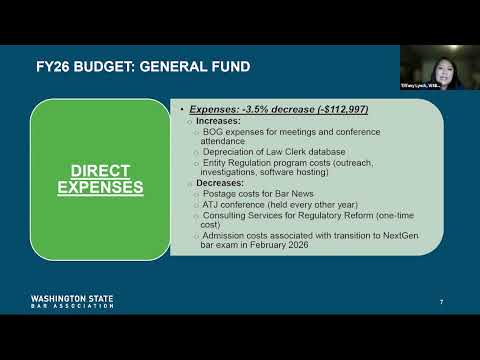
Tiffany Lynch, director of finance, on Zoom presented the board’s first draft of the fiscal 2026 budget to the Budget and Audit Committee, saying the three funds included in the draft show a combined budgeted use of reserves “just under 1,500,000.” The draft compares a fiscal 2025 reforecast to the FY2026 proposal and highlights modest changes driven by staffing step increases, a 2% salary assumption, higher IT and professional fees for one‑time implementation costs, and a planned use of facilities and special‑projects reserves. Lynch said the sections budget was not included in this draft but will be in the final version. Committee members were shown line‑item differences and scenario assumptions. Lynch said salaries assume eligible step movement and “no change to our bonus incentive program.” She noted an added 1.0 full‑time equivalent for the proposed entity‑regulation cost center and that the special projects and innovation reserve—seeded by a $400,000 allocation at the end of FY2024—will fund the regulatory reform work streams, with an estimated $80,000 remaining to support the alternative pathways project in 2026. Lynch told the committee that a major positive change for the final draft will be a reduction in employer retirement contribution rates. “We estimated in the first draft 8.4% based on what we knew from the office of the state actuary. But effective on July 1, we had a notification from the DRS that the rate is actually reduced down to 5.58,” Lynch said, and she forecast that the final budget will show roughly $400,000 less in expenses once the revised rate is applied. On revenues, Lynch said the draft includes the planned $10 license‑fee increase that will be prorated to apply for nine months of the fiscal year and reiterated that a pending board action on a hardship exemption — if approved later — would be reflected in the final version. Lynch estimated that the hardship exemption, if implemented as proposed, would reduce license‑fee revenue by about $140,000 based on prior application patterns. Lynch flagged one‑time increases in indirect expenses — primarily for implementation of a new association management system — and an expected shift in temporary staffing needs after the downsizing and document scanning project concluded in FY2025. She said the CLE fund shows a modest budgeted use of reserves (about $135,000) and that client‑protection reserves are projected to grow slightly, with starting reserves in the client protection fund noted at roughly $4.7 million. The committee was told that the final draft will include the sections budgets, the confirmed retirement contribution rate, updated next‑generation bar exam logistics costs, any approved hardship exemption, and recommended allocations from the special projects and innovation fund (including the proposal to earmark the $300,000 moderate‑means program funding in that reserve while the program is under assessment). Lynch said she expects the final budget to be about $700,000 stronger (less use of reserves) than the draft before the board in large part because of the retirement rate change and other adjustments. Questions from governors focused on timing and presentation of alternate versions should a board action (the hardship exemption) change revenues; Lynch said staff can present comparative versions (with and without the exemption) so the board can see both outcomes. No formal budget adoption occurred at this meeting; the committee’s next step is to consider the final draft on August 18 and, if recommended, bring it to the full board in September.