Get Full Government Meeting Transcripts, Videos, & Alerts Forever!
Get email alerts on the Construction Procurement topic
No spam. Unsubscribe anytime.
Board hears how Brevard procures school construction and why managers favor construction‑management model
Summary
Facilities staff summarized how the district selects construction managers, design-build firms and subcontractors, the controls used to reduce risk, and why many large school projects use construction-management contracts instead of hard bid models.
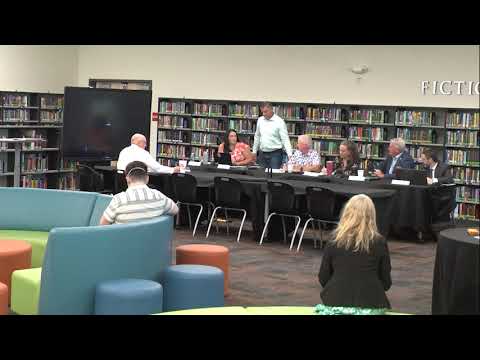
Brevard Public Schools facilities staff used the July 22 off-site work session to walk the board through the district’s procurement methods for school construction, explaining why the district often selects construction managers or design-build teams instead of hard-bid general contractors for larger and more complex projects.
The nut of the presentation: Facilities director Sue Hand and her team said the district balances schedules, staff capacity and the need to finish projects between school years, and that a professional construction-manager approach gives the district a “force multiplier” — extra on-site project leadership and schedule control — at the cost of a management fee.
Why it matters: Board members and staff said a failed or late project affects schools, students and operations. The district’s summer construction season has been shrinking as schools adopt more extended schedules and year-round activities, increasing the need for contractors who can work on occupied campuses and meet tight timelines.
Major points from the presentation: - Procurement methods: The district uses multiple procurement routes — RFQs under the Consultants’ Competitive Negotiations Act for engineering and professional services, continuing-services construction-manager contracts, design‑build agreements and, where appropriate, competitively bid general-contractor work. State law requires competitive selection for projects above statutory thresholds (the presenter referenced the $7.5 million selection threshold for certain project types). - Continuing contracts and assignment: The district has continuing-contract pools (10 construction managers, five design builders and five general-contractor agreements among others). Projects under the statutory threshold are assigned from these rotating pools with an equitable distribution goal; facilities staff said they try to balance workload but that recent statutory increases from $2 million to $7.5 million have affected how assignments are distributed. - Controls and audits: Staff described annual rate audits, third‑party audits for contracts above $1 million, project manager reviews of pay applications, fund‑accountant checks and commissioning for HVAC systems. Facilities staff said the district’s contracts include standard public-procurement provisions and that change orders generally reflect owner-directed scope changes. - Trade availability and market constraints: Board and staff discussed limited trade availability, supply-chain delays and rising subcontractor costs; staff said bundling work and pairing continuing-contract resources can reduce fees.
Board members asked about alternatives and risk. One board member asked whether the district could require lower thresholds for competitive public bidding; facilities staff said lowering thresholds would increase in-house oversight and require larger staff to peer-review plans — a trade-off that could make the district either “bigger” or “do less work.” Staff said the district is experimenting with hybrid models on classroom-renovation work, buying materials in bulk and competitively awarding installation, to reduce fee drag on small projects.
Ending: Facilities staff said they will continue to test hybrid models for small‑value renovations, pursue partnerships with municipalities on civil work, and keep the board informed when procurement choices change project scope, scheduling or cost estimates.