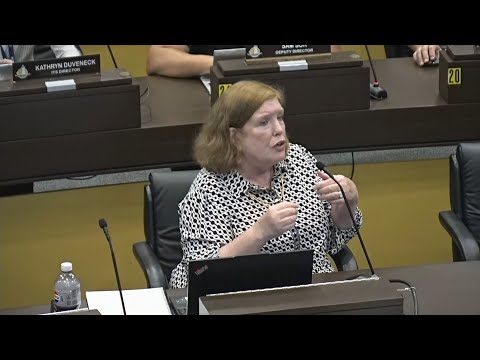
Police chief presents $13.3M 2026 budget; highlights drones, co-response and domestic-violence specialist
Loading...
Summary
Chief Goldstein outlined the 2026 Fond du Lac Police Department budget, proposed drone-first-responder program, staffing gains to near full strength, mental-health co-response and domestic-violence initiatives, and data showing declines in shots-fired incidents and use-of-force reports.
Chief Benjamin Goldstein presented the Police Department—s 2026 budget proposal to the Fond du Lac City Council on July 23, 2025, describing a $13.3 million operating plan with roughly 87% of funds for personnel and remaining funds for equipment, training and capital projects. Goldstein emphasized investments in training, officer wellness, and new technology, including a proposed Drone as First Responder (DFR) program.
"By deploying drones to incident scenes ahead of officers, we can quickly assess situations, improve response times, enhance officer safety, and provide critical real time information to field units," Chief Goldstein said. He told council the department has nearly full staffing after an earlier shortfall and said recent recruitment strategies had reduced vacancies from 25 to about 1–3 vacancies, updating the staffing level to roughly 97% and later stating 99% after a new hire.
Goldstein summarized a series of operational initiatives: a Domestic Violence Intervention Police Specialist (in place since October), a mental-health and wellness police specialist paired with a community response social worker, a third-year CORE (co-response) program showing outreach increases and diversion from arrest, and the Drexel Outreach Response Program launched March 3, 2025, in partnership with a local shelter (named in presentation as St. Catherine Drexel Seltzer). He said CORE assessments have shifted some cases from criminal complaints to crisis care and reported year-over-year increases in outreach responses.
Crime and enforcement trends highlighted by the chief included a reduction in confirmed shots-fired incidents: 5 in 2021, 14 in 2022, 7 in 2023, 4 in 2024, and 2 in 2025 to date. He also reported a 7% increase in calls for service over the past year, an 80% increase in smartphones analyzed in-house, and a 16% decrease in reportable uses of force. The department described its drug enforcement focus as targeting dealers and supply chains through partnerships such as the Lake Winnebago Area Metropolitan Enforcement Group.
Council members asked about security at apartment complexes after a June shooting; Chief Goldstein described coordinated efforts with community development and legal staff to meet with property managers, use nuisance statutes when needed, and pursue nonmonetary and grant-supported measures such as cameras and management interventions. He said outright private armed security by landlords was not part of the department—s plan.
Goldstein asked council for support of capital priorities that include facility renovations, fleet replacement, and the DFR program; no formal council vote on the police budget occurred at the July 23 meeting. The chief closed by thanking the department and identifying continued need for mental-health resources and regional funding partnerships for social services.
Next steps: the police budget will be considered as part of the city—s 2026 budget process; council members will have additional budget sessions and opportunities to question line items.