Get Full Government Meeting Transcripts, Videos, & Alerts Forever!
Get email alerts on the Open Space Acquisition topic
No spam. Unsubscribe anytime.
COSAC asks council to OK targeted outreach, interim offers to speed small open‑space deals
Summary
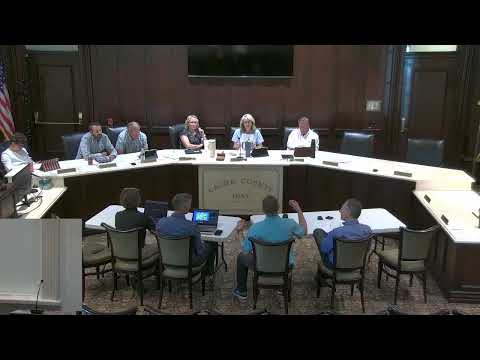
The Cache County Open Space Advisory Committee (COSAC) told county officials at a joint workshop that slow partner funding and low applicant awareness are delaying projects from a voter‑approved open‑space bond, and asked the council to authorize targeted outreach and an interim offer step for small parcels.
Chris Sands, chair of the Cache County Open Space Advisory Committee (COSAC), told the County Council at a joint workshop that COSAC wants council guidance and the ability to make targeted outreach and interim funding proposals to protect scenic gateways and smaller parcels before they are lost to development.
Sands said the advisory panel was formed by ordinance after a November 2022 open‑space bond passed about 55%–45% and that COSAC has completed about 18 months of work, including roughly 38 meetings. "The first round really for applicants is intended to not cost any money," Sands said, describing the two‑round application process: an initial, low‑cost pre‑application and round‑one screening followed by a second round that requires the applicant to incur expenses (appraisals, due diligence) before COSAC recommends a project to the council.
Why it matters: COSAC said limited partner funding and the time required for due diligence — not COSAC review — are the main bottlenecks to getting projects to final, funded status. The committee has several projects at different stages: Elkhorn Ranch has received round‑two approval and is in due diligence with other funding sources confirmed; two Cooper family parcels have completed round one but have not advanced to round two; the Harris property has round‑two approval but county staff said some outside funding could be in jeopardy; Silva Farms has round‑one approval but has not yet submitted a round‑two packet.
COSAC members described how the committee scores projects on a 100‑point scale that includes factors such as scenic gateways, connectivity and public access. Brent Thomas, a COSAC member, said the scoring system reduces subjectivity: "Any time there's these type of decisions, it's easy to have it be subjective... but I think they've really done their due diligence to try and take some of the subjectivity out," he said.
Committee proposal and rationale: Several COSAC members urged a new optional step between round one and round two that would allow the committee to present the council with a proposed, county‑funded offer for smaller parcels that are unlikely to attract matching partners. Eric (COSAC member) described the proposal as a way to give small landowners a clear decision point: "We would recommend that we make an offer to Cooper, for example, the Cooper property, for example, for some value," he said, adding that the county could structure the offer so a land conservancy could hold the easement if the owner accepted.
Council reaction and next steps: Council members expressed cautious support for targeted outreach but raised two concerns: (1) avoiding any appearance of favoritism in spending taxpayer funds, and (2) ensuring the public understands how the program works. Keegan (County Councilmember) asked whether any applications appeared to be preselected for funding; COSAC answered, "No, not at all," in response. Catherine (County Councilmember and former COSAC ex‑officio member) noted recent state legislation that allocates rollback tax receipts to open‑space uses and said that funding could provide an additional $150,000–$200,000 ("give or take") to pair with bond funds.
Councilmembers asked staff to confirm bond timing and spending deadlines (Zion Bank materials referenced a six‑year practical spending window after bond issuance) and asked COSAC to return with a concrete proposal that identifies target areas or a parcel count, estimated outreach costs, and a prescoring approach. "Bring us an actual proposal and let's move," one councilmember said.
The workshop included substantive discussion about program mechanics (site visits for every applicant, weightings in the scoring matrix, and the role of partner funders such as NRCS), landowner concerns about permanence of easements and inheritance, and outreach options (direct mail, public workshops, letters to the editor). COSAC emphasized it wants to act only with council guidance and would not independently commit funds without council approval.
COSAC and council staff agreed to coordinate on a follow‑up that will outline targeted outreach options, estimated costs, and clarifications about bond use and timelines. That follow‑up will determine whether COSAC can present pre‑scored parcels or recommended interim offers for council consideration.