Get Full Government Meeting Transcripts, Videos, & Alerts Forever!
Get email alerts on the Tree Mitigation topic
No spam. Unsubscribe anytime.
Planning board defers decision on caps for tree‑save mitigation after broad debate
Summary
The Planning Board deferred action on a proposed Tree SAVE mitigation amendment after members raised concerns about small‑site impacts and asked staff to refine the proposal.
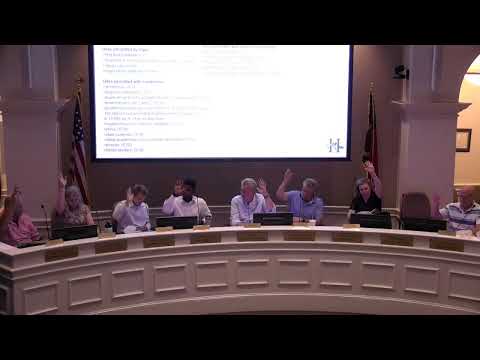
The Huntersville Planning Board debated proposed changes to the town’s Tree SAVE mitigation rules and ultimately voted unanimously to defer action so staff can refine the approach and address members’ concerns about small sites and implementation details.
Proposal summary: Planning staff presented a draft amendment that would cap the amount of mitigation a developer may use in lieu of preserving existing trees. In the draft discussed at the meeting, residential projects would be required to retain at least 70% of required tree‑save (a 30% cap on mitigation) and commercial projects would have a 50/50 split between preservation and mitigation. The draft also proposed higher compensation for heritage trees (allowing mitigation up to 200% of caliper) and clearer plan submittal requirements.
Why it matters: Staff said the town has received sizable mitigation payments in recent years but has not retained as many mature trees as the 2040 Plan envisioned. The proposed caps were intended to increase retention of mature, large‑caliper trees, which deliver immediate canopy, stormwater and air‑quality benefits compared with newly planted stock.
Board discussion and concerns: Board members voiced differing views. Supporters said the changes would preserve mature canopy and provide the planning department a stronger negotiating position with applicants; opponents expressed concern that caps could push more applicants to conditional rezonings or render some redevelopment economically infeasible on small lots. Several board members asked for more study on how the rule would affect small parcels and redevelopment scenarios and suggested consulting the town arborist to refine definitions and planting‑size guidance.
Funding and planting program: Staff reported the town’s tree‑fund balance had grown substantially and that funds are envisioned for park planting, street trees and public‑facility plantings. Board members asked staff to clarify long‑term planting plans and whether the fund could be used proactively to plant trees rather than offer mitigation as a primary outcome.
Decision to defer: After extensive discussion the board voted to defer TA25‑04 to a later meeting (the board set a return date at or before the next scheduled planning meeting) to give staff time to consider: (1) acreage or project‑size thresholds for the caps so smaller redevelopment parcels are not unduly burdened; (2) additional arborist standards and alternative tree‑saving construction techniques (root‑protection, suspended pavement); and (3) clearer examples and impact analyses.
Next steps: Staff will return with revised language and additional analysis; Planning Board members asked staff to include comparisons to peer municipalities, a recommended small‑site threshold if appropriate, and options for spending the tree fund on public plantings.