
Supporters urge restoring right to strike for certain Massachusetts public employees; municipal leaders warn of disruption
Get AI-powered insights, summaries, and transcripts
Subscribe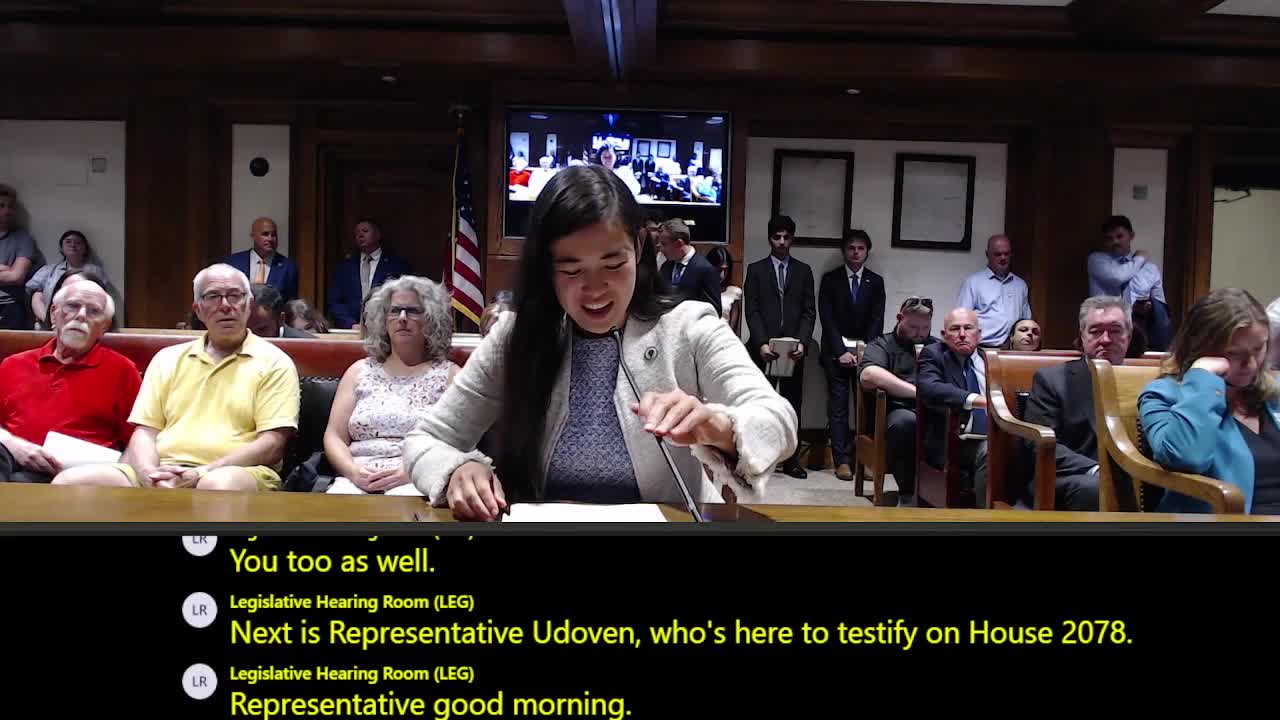
Summary
Educators, public workers and union leaders urged the Joint Committee to restore the right to strike for certain public employees; the Massachusetts Municipal Association opposed the change, citing legal and budget constraints and the impact on students and taxpayers.
Educators, municipal employees and union leaders urged the Joint Committee on Labor and Workforce Development to advance legislation restoring the right to strike for certain public employees (House Bill 2078; Senate Bill 13-11), saying it would improve bargaining and help retain staff. The Massachusetts Municipal Association (MMA) testified in opposition, warning that legalizing some strikes would disrupt students and strain local budgets.
Supporters described strikes as a last-resort bargaining tool that compels employers to negotiate in good faith. Representative Madre Decker, testifying in support of H2078, said the bill would "restore for most public sector employees the right to strike after a 6-month period of negotiations" and argued that the threat of strike helps produce timely contracts that maintain services and staffing. "Going on strike is not a capricious decision ... unions are a democratic institution," Decker said.
Teachers and school staff described concrete contract outcomes won after strikes, including higher wages for paraprofessionals, added staff for mental-health services, and class-size or schedule changes. Jennifer Mar, a high-school English teacher from Andover, told the committee that her district won a wage increase for the lowest-paid educators and additional elementary recess time after a work stoppage. "The right to strike gives teachers and the communities we serve ... the ability to create the best conditions for teaching and learning," Mar said.
Public-sector labor leaders and retired municipal employees framed the question as one of civic and economic fairness. "It's labor that has given us the most meaningful tools, policies, and wages to reduce poverty in our communities," Representative Decker said. Bonnie Jin, a former union organizer, told the committee the right to withhold labor is "the ability to withhold labor as a last resort when every other option has been exhausted."
The MMA opposed the bills, pointing to existing state statute that prohibits public employees from striking and highlighting local fiscal and operational constraints. Dave Kaufman, legislative director for the Massachusetts Municipal Association, told the committee: "Local leaders have a responsibility to their taxpayers and face significant challenges within the confines of Proposition 2½ restricting property taxes and local revenue." Kaufman added that illegal strikes in recent years have caused disruption for students and families and that municipalities lack the budget flexibility to respond to sustained work stoppages.
Committee members asked questions but did not take a vote. Several speakers said legal and constitutional questions would remain if the right to strike were restored for some categories of public employees. Supporters asked the committee to report the bills favorably to give municipalities and unions clear, lawful frameworks for negotiations; opponents urged caution, asserting the potential harm to students and local taxpayers from school or service interruptions.
No formal motions or votes were recorded during the hearing.