Get Full Government Meeting Transcripts, Videos, & Alerts Forever!
Get email alerts on the Medicaid Coverage Husky Health topic
No spam. Unsubscribe anytime.
RDAC members raise alarm after HUSKY stops covering certain supplements and medical foods
Summary
Members of Connecticut—s Rare Disease Advisory Council said HUSKY (the state Medicaid program) stopped covering items it considers —over the counter— as of July 1, affecting patients with inborn errors of metabolism and other rare diseases; council agreed to pursue meetings with DSS, DDS and DPH and to contact legislative allies.
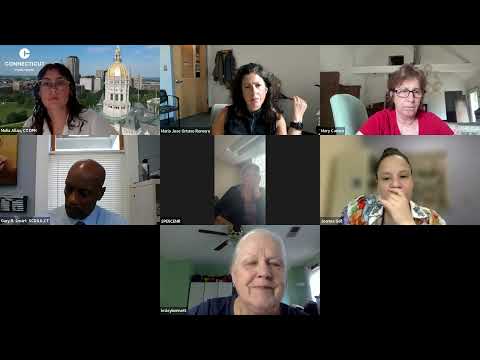
Michelle Spencer Manzan, co-chair and medical representative to the Rare Disease Advisory Council (RDAC), told the council that "as of July 1, Husky is no longer covering anything that is quote unquote over the counter," and said the change has left some patients without life-sustaining supplements and medical foods. The council discussed immediate outreach to state agencies and legislators to seek a medical exemption or other fix.
The issue matters because members said the affected products are used as standard-of-care treatments for some rare disorders. "They're refusing to pay for citrulline," Manzan said, naming a treatment she called lifesaving for urea cycle disorders. She added that coenzyme Q10 and specialized amino-acid preparations used for metabolic and mitochondrial disorders are among items no longer consistently covered. "We can't do prior auths. We can't do exemptions, and they will not call us back to even talk about the issue," she said.
Council members described cases where patients have lost access to therapies: Mary Caruso, caregiver representative and parent of two adults with Friedreich's ataxia, said supplements such as CoQ10 and Niagen had been paid for in the past but increasingly face coverage denials. Emily (Germaine) Lee, the RDAC physician representative, described a broader problem of limited recognition that some inexpensive supplements are medically necessary when taken lifelong by families with little income.
Doreen Long, who identified herself as a Department of Social Services representative, said she would take the issue back to her agency and try to get someone to connect with the council; she noted that Bill Halsey is the Medicaid director. Council co-chair Leslie (last name not specified on the record) urged immediate outreach to legislators and agency leaders and recommended contacting Senator Anwar, chair of the Public Health Committee, to request help arranging meetings with DSS, the Department of Developmental Services (DDS) and the Department of Public Health (DPH). "We need to arrange a meeting with DSS, Christine Weston, or the commissioner," Leslie said, adding that the pharmacy and therapeutics board might also be involved.
Council members described practical consequences and possible next steps. Manzan and others warned of short-term cost savings that could produce higher downstream hospital costs if patients stop medically indicated supplements. Leslie proposed organizing meetings with DSS, DDS and DPH by September and invited RDAC clinicians and committee chairs to participate. Doreen Long said the matter may relate to federal Medicaid rule changes and that she would seek appropriate staff at DSS to respond.
No formal action or regulatory change was adopted by the RDAC at the meeting; instead the council directed staff and members to pursue outreach and arrange interagency meetings. Leslie said she would be away until Aug. 5 and suggested holding meetings after Aug. 6; she and other RDAC members asked volunteers to join discussions with DSS, DDS and DPH.
The council identified specific items and clarifications to pursue: confirmation that the coverage change took effect July 1; the HUSKY criterion described on the record (treating items priced over $100 as —over the counter—); whether prior authorizations or medical exemptions remain possible; and whether the pharmacy and therapeutics board must review a policy exception for evidence-based supplements used as medication. Doreen Long said she would try to identify the correct DSS contact and return to the group with next steps.
The RDAC agreed to keep working on the matter and to invite agency officials and legislative staff to future meetings to seek a remedy. The council did not adopt a formal petition or resolution during the session.
The council—s discussion was part of a broader agenda that also included subcommittee updates and planning; the HUSKY coverage discussion began during the scheduled rare-disease community-speaker portion of the meeting and continued as members identified next steps.