
Library leaders push for commission to tackle rising e‑book licensing costs and access limits
Get AI-powered insights, summaries, and transcripts
Sign Up Free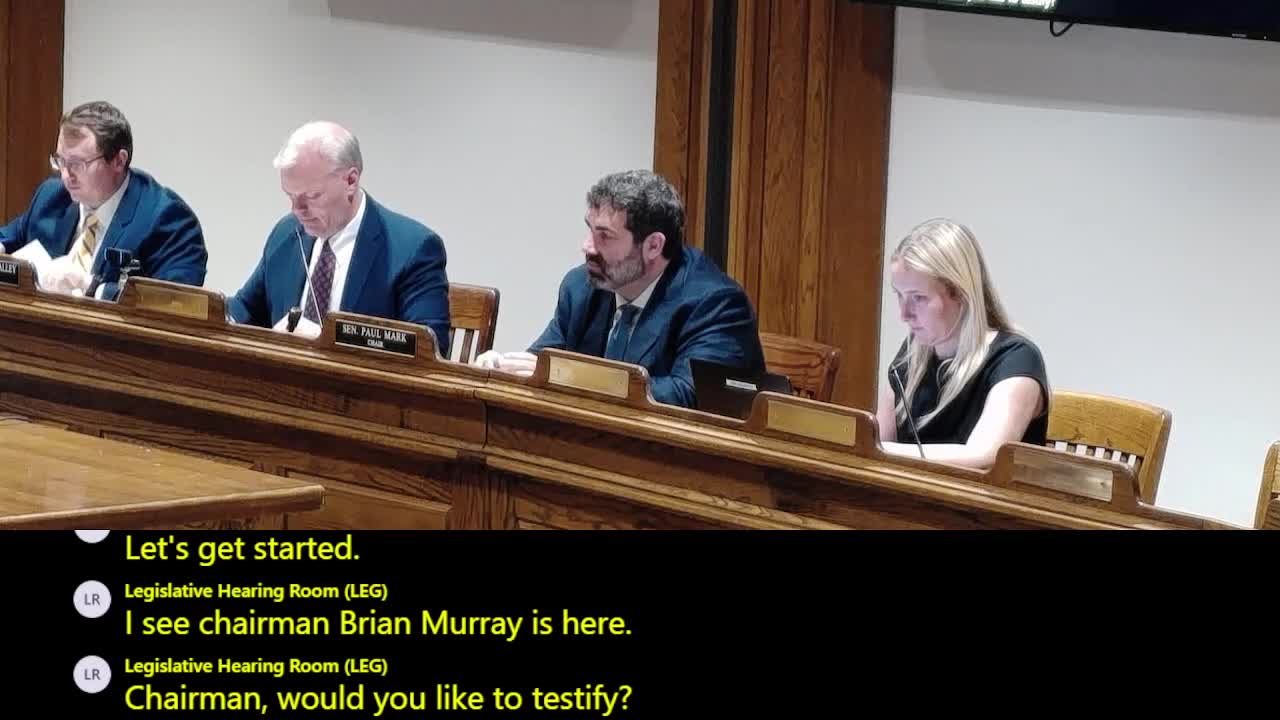
Summary
Librarians, library networks and publishers told the committee that current e‑book and e‑audiobook licensing models significantly limit public access and burden library budgets; sponsors urged creation of a legislative commission (H3595/S2330) to negotiate fair terms and preserve taxpayer value.
Library directors, networks and legal experts urged the legislature to study and reform how libraries buy e‑books and audiobooks, saying current licensing terms impose steep costs and narrow access.
Representative Brian Murray, testifying as a proponent of House Bill 3595, told the joint committee the bill would address contract terms that make digital collections expensive and restrictive for public libraries. "Publishers require licenses for libraries to purchase these electronic materials," Murray said. "These licenses are number one, very restrictive and number two, very expensive."
Several library network directors described the mismatch between consumer pricing and public‑library licensing. Catherine Lussier, executive director of the North of Boston Library Exchange, said: "With physical books we are able to purchase books at a steep discount... With digital content we are required to rent our books at a price that is often five to six times the cost of what consumers pay, and those books often expire after a period of time or a number of checkouts." Lussier said Massachusetts libraries have spent more than $54,000,000 on digital content over the past seven years and reported average wait times of 79 days for popular titles in some networks.
Library directors also described service impacts. Lisa Downing, director of Forbes Library, said e‑books and audiobooks are essential accessibility tools for patrons with disabilities, homebound patrons, and students with learning differences; long waits and disappearing licenses reduce equitable access.
Legal and policy experts said a state commission would be a practical, lawful route to address the problem. Kyle K. Courtney, director of copyright and information policy at Harvard and founder of the Ebook Study Group, said Massachusetts can pursue market‑based, contract‑law solutions rather than challenging federal copyright: "My strategies protect public institutions and taxpayer investment by not looking at copyright, by looking at contract law. That's why I strongly support this proposed commission." Courtney said the commission would include librarians, lawyers and publishers to build a durable plan.
David Leonard, president of the Boston Public Library, described the budgetary impact and recommended purchase options that preserve long‑term access and stewardship: "This bill supports the work of libraries by ensuring we are able to purchase preservation copies, and not just rent copies for circulation that disappear maybe after two years or after 26 loans."
Students and patrons described real consequences. Rory Longren, a recent high‑school graduate with dyslexia, described dependence on audio and e‑formats and said long wait lists make it difficult to access required reading. "Ebooks often expire before I can finish reading, and I have to place a hold and go back and win the hold queue again," he said.
Witnesses pointed to other states’ actions. David Leonard and Kyle Courtney referenced Connecticut and Rhode Island laws and procurement policies as models that give libraries more negotiation leverage and preserve taxpayer value. Asked about other models, Dan Novak from Penguin Random House noted Rhode Island’s recent statute as a helpful reference for procedural components that create enforceable rights for readers and librarians.
The bills under consideration would establish a special legislative commission to study licensing, procurement and possible statutory or contractual remedies, and to bring publishers and libraries to the table. Committee members asked clarifying questions about existing state efforts, federal funding trends, and how a commission's recommendations might be implemented. The hearing did not include a committee vote on the e‑book measures.
Proponents asked the committee to advance H3595 and S2330 as a first step to give libraries stronger leverage and better long‑term stewardship options for digital content.