Get Full Government Meeting Transcripts, Videos, & Alerts Forever!
Get email alerts on the Parking Policy topic
No spam. Unsubscribe anytime.
Supporters Tell Legislature Parking Cash‑Out Would Cut Vehicle Miles and Encourage Transit Use
Summary
Proponents — including transportation data experts, lawmakers and parking‑reform advocates — urged the Joint Committee to advance S1346, a parking cash‑out bill that would require employers offering subsidized parking to offer employees the cash equivalent or a transit alternative, citing modeled VMT reductions and low employer compliance costs.
Transportation researchers, an authoring state senator and business‑district advocates told the Joint Committee on Labor and Workforce Development that a parking cash‑out law would reduce driving, save households money and lower greenhouse‑gas emissions. Testimony in support of Senate Bill S1346 came from a MassDOT‑experienced data scientist, a state representative who has filed companion legislation, and national parking reform advocates.
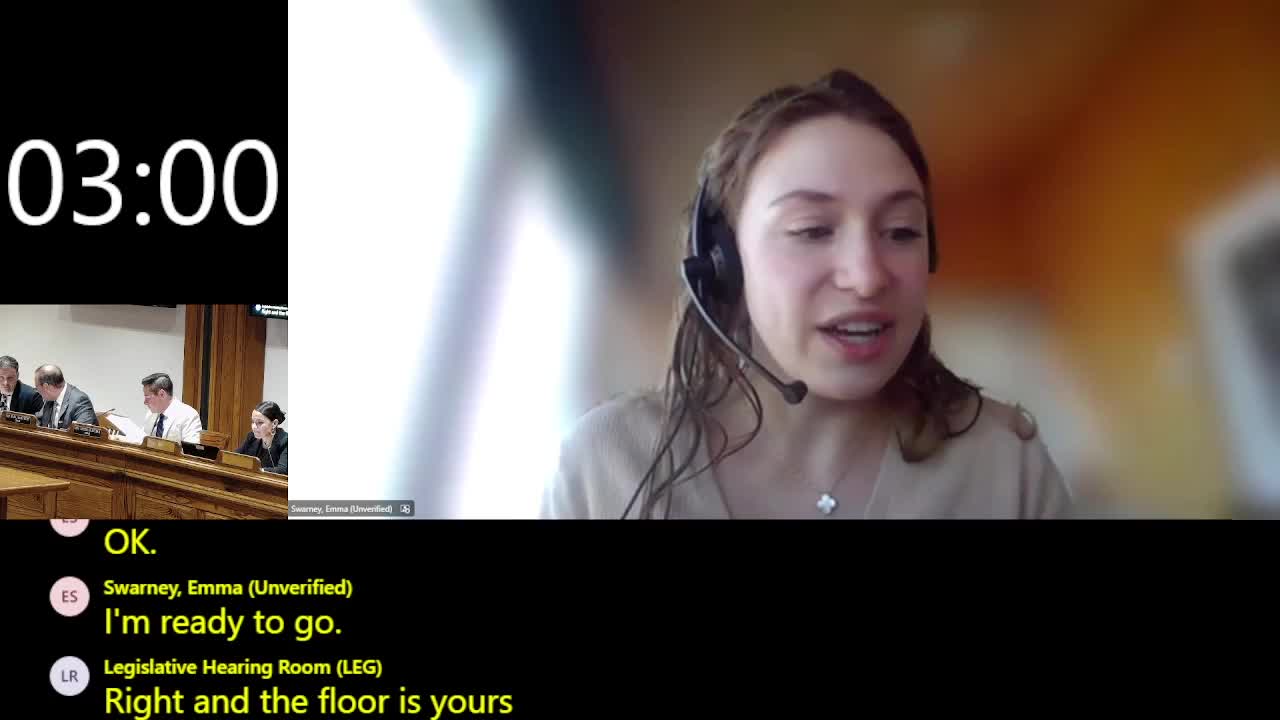
Emma Swarny, a data scientist at StreetLight Data and a former MassDOT Rappaport Public Policy Fellow, summarized academic and agency analyses, saying parking cash out “simply requires employers offering employees a parking subsidy the choice between parking and an equally valued alternative benefit if they choose not to drive.” She cited Federal Highway Administration modeling that estimated a roughly 10% reduction in vehicle miles traveled and quoted studies from California and Washington, D.C., showing large increases in transit and active‑transport choices where cash‑out rules were implemented.
Representative Rob Owens and Senator John Keenan described the policy as an incentive realignment: when employers provide parking subsidies they encourage driving; giving workers the cash equivalent or a transit benefit “levels the playing field” and removes a financial penalty for not driving. Owens described personal experience in private firms that shifted locations and parking practices and said the law would “not force anybody to give up their car” but would remove the pay penalty for choosing another mode.
Parking reform advocates emphasized the program’s cost‑effectiveness and fairness. Tony Jordan, president of the Parking Reform Network, called cash out “logical, economical and fair,” praised built‑in exemptions for small employers and collective‑bargaining situations, and cited an FHWA analysis projecting nearly a 10% VMT reduction and measurable safety and emissions benefits. Emma Swarny and Tony Jordan both said employer compliance costs are small relative to parking spot value, and that employers often save money if they reduce leased parking.
Committee members asked about unintended consequences and pricing in low‑demand suburban lots. Witnesses said jurisdictions can set minimum cash‑out values — for example using nearby transit fare or a capped monthly value — and that operational details are commonly handled through agency rulemaking and exemptions for small employers or employer‑provided parking.
No committee action was taken at the hearing. Sponsors and supporters asked the committee to report S1346 favorably and to work with MassDOT on technical rules for valuation and exemptions.