Get Full Government Meeting Transcripts, Videos, & Alerts Forever!
Get email alerts on the Drones topic
No spam. Unsubscribe anytime.
Lawmakers Hear Conflicting Views on Multiple Drone Bills Covering Privacy, Safety and Federal Preemption
Summary
Multiple witnesses — including municipal pilots, commercial operators, public-safety officials and industry representatives — testified for and against several drone-related bills, raising conflicts between proposed state restrictions and existing federal rules.
Representatives, senators and a range of drone operators told the Joint Committee on Transportation on Wednesday that proposed Massachusetts bills addressing unmanned aerial systems raise both safety concerns and practical conflicts with federal aviation rules.
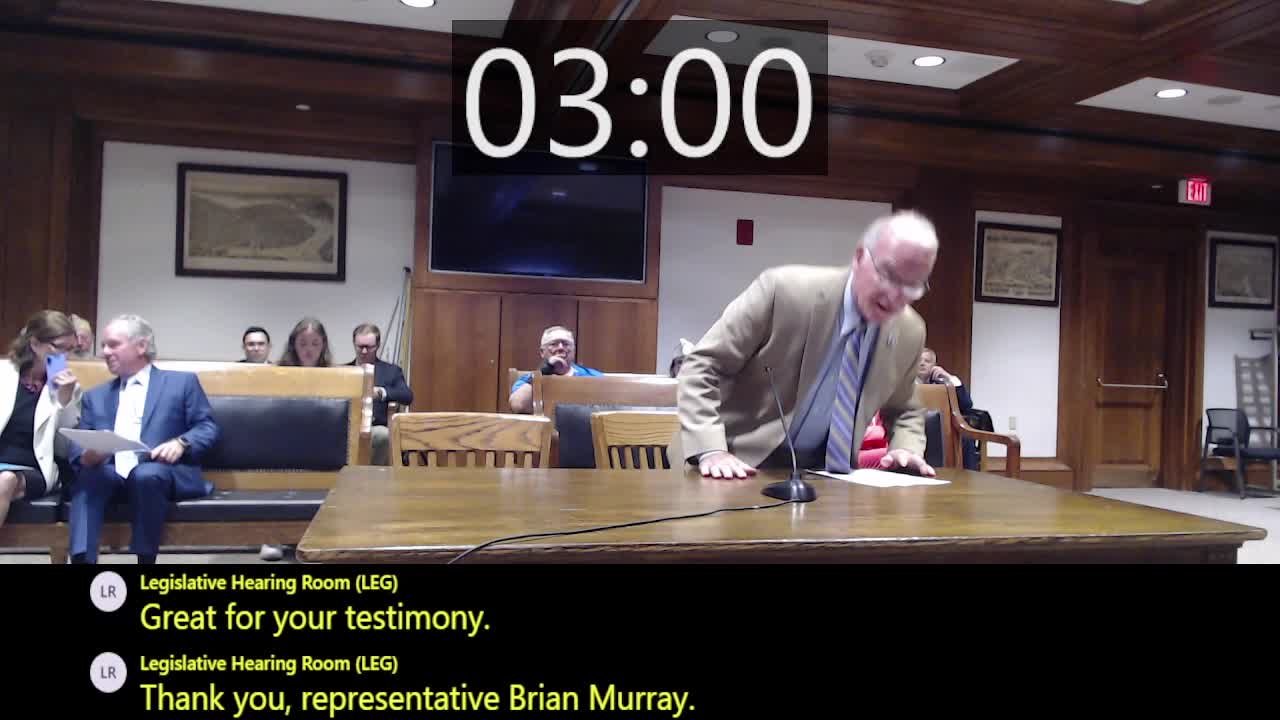
Representative Brian Murray said he filed a bill to define unmanned aerial vehicle operations, prohibit arming drones and to bar surveillance of private property without consent. “There’s a prohibition of arming these things with weapons that could cause serious bodily injury,” Murray said, adding his bill would also ban surveillance of an individual’s private property without consent.
Opponents from the commercial drone industry warned that some draft bills would conflict with federal authorities and damage local businesses. Michael Ford, a commercial real-estate aerial photographer, said several proposals “would inhibit my ability to perform this work” and asked the committee to table the measures while working with the Federal Aviation Administration. Commercial-construction drone program manager Eric Gronenberg told the committee that bill language banning beyond-visual-line-of-sight operations or nighttime flights would override existing FAA waivers and approved procedures used for mapping, thermal inspections and helipad checks.
Senator John Vilas, who supports Senate Bill 2454, said the Commonwealth needs clearer rules to protect privacy and public safety. “Unregulated drone use poses serious safety, privacy and security threats,” he said, citing examples such as drones interfering with firefighting aircraft or surveillance of correctional facilities.
Industry advocates, including Hayden Spitz of Boston Drone Productions, urged lawmakers to balance safety with jobs and training. Spitz said bills that impose blanket restrictions near schools or ban certain equipment would “ruin tons of jobs” and curtail instructional programs. Several witnesses warned that a ban on Chinese-made equipment, as proposed in one bill, could cripple small businesses because comparable alternatives are not widely available.
A representative from the Aircraft Owners and Pilots Association and others reminded the committee that federal law preempts some local flight restrictions and that state proposals must be reconciled with FAA authority and existing federal statutes including the Airport Noise and Capacity Act.
Committee members heard multiple proposals covering no-fly zones around critical facilities, limits on surveillance and registration of drone operations, as well as a suggested ban on particular manufacturers. No formal action was taken; several industry witnesses asked the committee to coordinate with the FAA and with industry stakeholders to refine statutory language.