
Students and unions press for debt-free public higher education; lawmakers seek implementation detail
Get AI-powered insights, summaries, and transcripts
Subscribe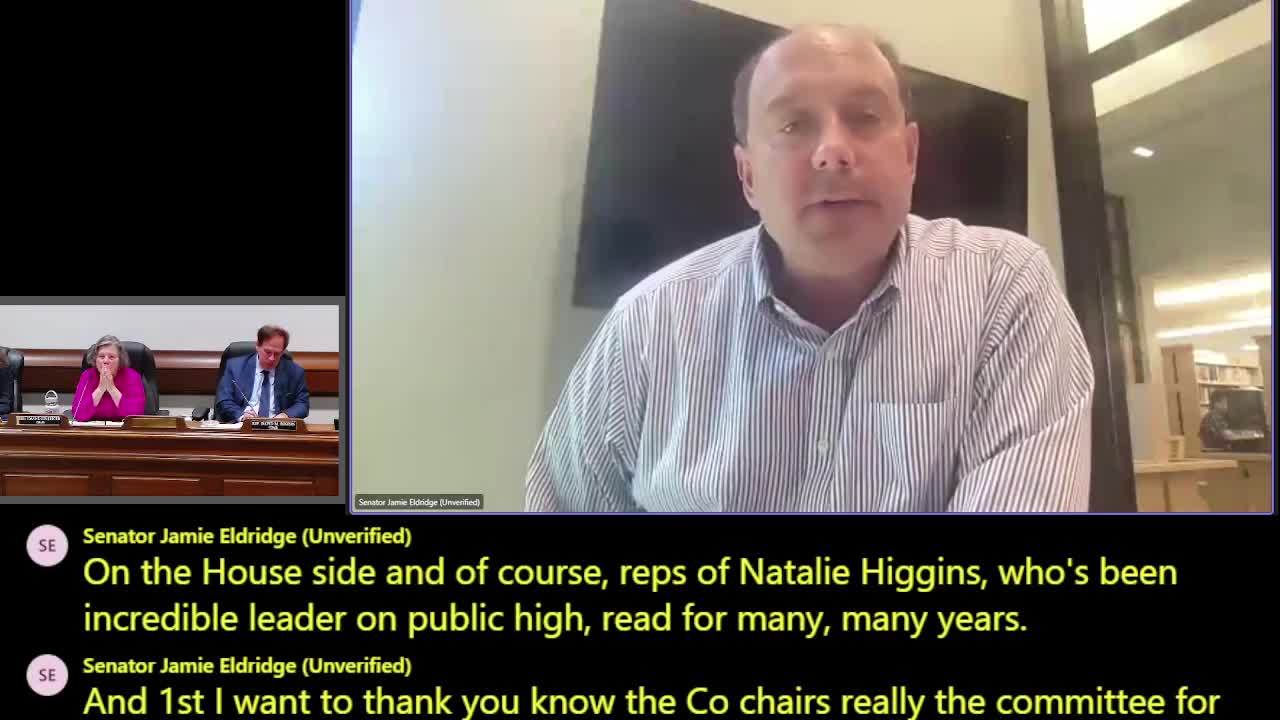
Summary
Students, labor groups and several legislators urged the Joint Committee on Higher Education to back debt-free public higher education legislation that would cover tuition and mandatory fees across public two- and four-year institutions. Witnesses said the policy would increase degree completion and economic mobility; lawmakers asked for fiscal
The Joint Committee on Higher Education heard broad support Friday for legislation to make public higher education debt-free across Massachusetts public colleges and universities. Students, union leaders and legislators described the bills as the next step after free community college and pressed lawmakers to resolve implementation, timing and funding questions.
Why it matters: Proponents said debt-free public higher education would reduce lifetime student indebtedness, increase degree completion and support state economic growth. Testimony linked the proposal to workforce needs in nursing, teaching and public-service professions; advocates argued broad affordability would especially help first-generation and low-income students.
Senator Jason Eldridge, one of the bill's sponsors, described the Debt Free Future Act (H.1436 / S.929) as a grant program to pay the equivalent of tuition and mandatory fees for Massachusetts students enrolling in public postsecondary institutions. "The debt free future act ensures that Massachusetts high school graduates are able to graduate from a public post-secondary college or university without debt," he said, adding that aid would be supplemental to existing federal, state and institutional support and would not replace Pell or other grants.
Students recounted financial barriers and administrative gaps. UMass Boston student Aden Pohl described rising costs and institutional pay practices, and student organizers said verification and financial-aid timing problems can leave students without aid at semester start. Rue, a student organizer, said a verification hold once threatened her enrollment when her FAFSA documentation could not be processed in time. Representative Jo Pease and others asked for clear plans on how financial aid reforms would be implemented to avoid late disbursements.
Unions and educators urged lawmakers to consider faculty and staff compensation and institutional capacity as part of a full affordability plan. Max Page of the Massachusetts Teachers Association said debt-free higher education is an investment in racial and economic justice and urged lawmakers to consider bold revenue options, including proposals to tax large private-college endowments as a possible funding source.
What the bills would do: The Debt Free Future Act would create a state grant to cover tuition and mandatory fees; proposals discussed also included additional aid for Pell-eligible students to cover non-tuition costs such as housing, books and childcare. Separately, a financial-aid modernization bill (H.1459 / S.411) would change the state's financial-aid distribution processes to ensure timelier, more predictable student access to grants and tuition relief.
Outlook and next steps: Committee members asked sponsors for fiscal plans and implementation timelines, and requested data on who would be eligible and the expected budgetary impacts. Supporters offered to supply additional data and urged the committee to advance the bills. No formal vote was taken at the hearing.
Ending: Advocates framed the bills as a durable, pro-growth public investment; lawmakers said they would consider fiscal and operational details before moving forward.