Get Full Government Meeting Transcripts, Videos, & Alerts Forever!
Get email alerts on the Health Privacy Reproductive Gendercare topic
No spam. Unsubscribe anytime.
Mass. House approves bill to strengthen privacy and legal protections for reproductive and gender-affirming care
Summary
The Massachusetts House passed an amended version of Senate Bill 2543 to expand data privacy protections and bar professional discipline and some out-of-state legal actions related to reproductive and gender-affirming health care; several amendments were debated and adopted or rejected.
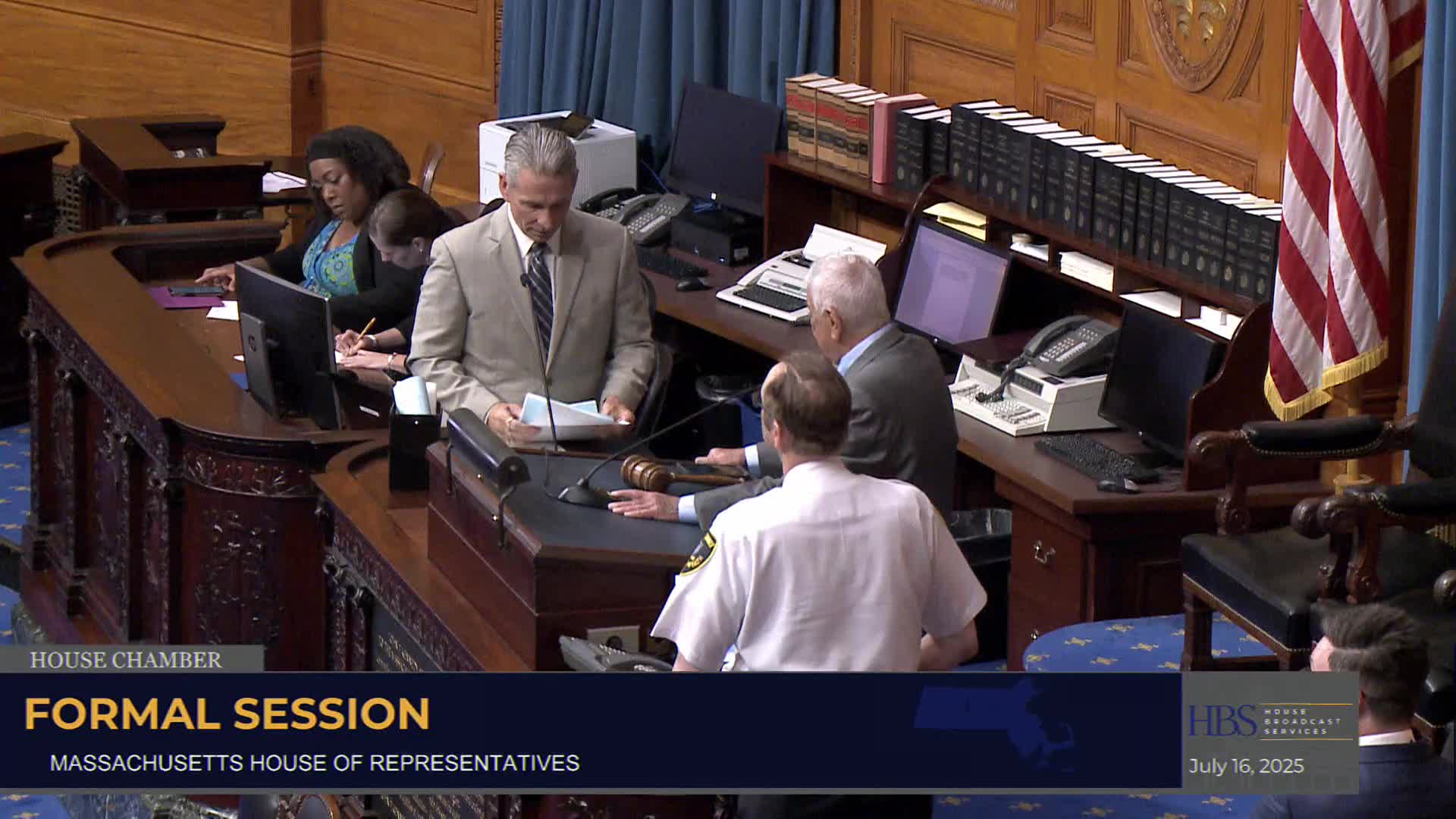
BOSTON — On July 9, 2025, the Massachusetts House of Representatives passed an amended version of Senate Bill 2543, "An Act strengthening health care protections in the Commonwealth," sending the measure to be engrossed after floor debate and several roll-call and voice votes.
The bill, as debated, aims to shield personally identifiable health information related to abortions, in vitro fertilization, miscarriage management and gender-affirming care; restrict cooperation with out-of-state investigations into those services; empower health agencies to alter prescription monitoring for certain drugs; and limit professional-board discipline and insurance or court-based penalties tied to legally protected care in Massachusetts.
Supporters said the bill updates previous protections and responds to efforts in other states and at the federal level that they said could interfere with medical decision-making in Massachusetts. "Today, we act to ensure the protection of our residents who would dare to exercise their rights to make their own health care decisions," said Representative Day of Stonem, a lead floor speaker for the bill, adding the measure seeks to protect both patients and providers. "When patients and doctors engage in legal activities here in Massachusetts relating to health care, they will have the peace of mind that their personal information will remain private," he said.
Debate focused on the scope of protections. Representative Soder of Bellingham sponsored Amendment 8, which would have expanded the bill's definition of "legally protected health care activity" to include the refusal of reproductive, gender-affirming or other preventive care for oneself or one's minor children. Soder argued that "if we are committed to protecting an individual's decision to receive certain health care services, it's only logical and consistent to protect the equally fundamental decision to refuse such services." The amendment was rejected (recorded in the transcript as 30 in favor and 129 opposed; the amendment was not adopted).
Opponents said Amendment 8 would give one parent unilateral authority over medical decisions for minors and could block judges from resolving disputes. "What this is really about is the right for parents to refuse care for their minor children," said Representative Ramos of North Andover, who opposed the amendment. Ramos warned the change could allow an abusive or controlling parent to prevent a minor from receiving treatment and said the amendment lacked a court exception.
Lawmakers did adopt narrower and technical changes. Amendment 6, offered by Representative Kilcoyne of Clinton, was approved (130 in the affirmative, 29 in the negative) and narrowed the bill's protected-services definition to specifically include abortions (as defined in section 12K of chapter 112), abortion-related care including miscarriage management, in vitro fertilization and gender-affirming care. Representative Kilcoyne said the amendment "narrows the scope of protected services under data sharing provisions to abortion, abortion related care, including miscarriage management, in vitro fertilization, and gender affirming care," describing the change as targeting the services most at risk of out-of-state prosecution or political interference.
Other amendments adopted by voice votes clarified technical and implementation issues: Amendment 7 (Vargas of Haybrel) exempted entities that transfer or process information solely for payment, treatment or health-care operations under 45 CFR 164.501 from violating the section; Amendment 9 (Decker of Cambridge) directed the commissioner of public health to convene a technical advisory group to review a specified statutory section; and a Ways and Means committee amendment was adopted earlier in the proceedings. An earlier amendment (Amendment 4, McKenna Sutton) that would have barred certain state-funded campaign advertising was rejected by voice vote.
The bill also contains provisions described on the floor that would allow prescribing physicians to request that prescription labels list a practice group rather than an individual clinician, and would bar Massachusetts professional registration boards from taking disciplinary action against practitioners for providing health care services that are lawful in the Commonwealth. Floor remarks also said the measure would bar courts from using other states' laws that prohibit gender-affirming care as grounds to change custody or visitation in Massachusetts cases.
After floor action on amendments and a final roll call, the speaker announced the bill had passed to be engrossed. The transcript records the final tally as 136 in the affirmative and 23 in the negative and states that "the bill is passed to be engrossed."