
Advocates urge bill to limit restrictive software licensing that locks state agencies into specific cloud providers
Get AI-powered insights, summaries, and transcripts
Subscribe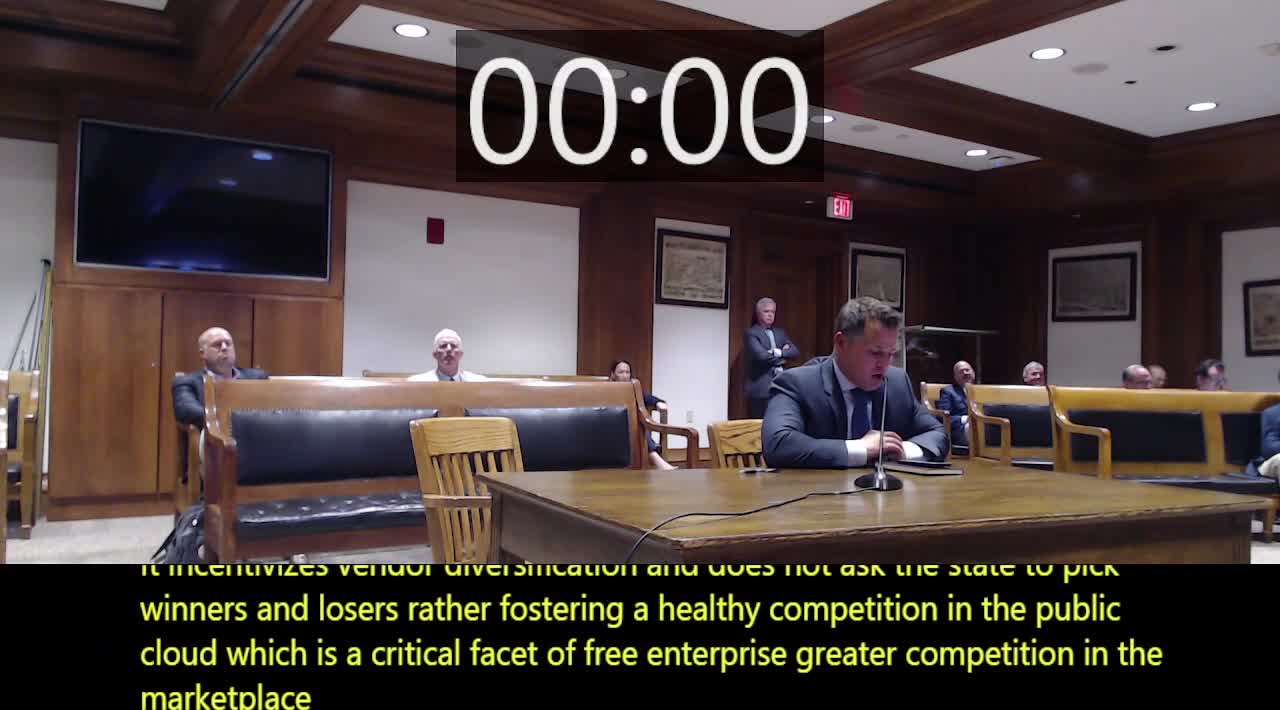
Summary
A coalition of private‑sector IT and cloud companies urged support for S2150 to block contract terms that restrict where software can run and to reduce vendor lock and wasteful government spending.
Scott Traxton, representing the Coalition for Fair Software Licensing, urged the committee to advance S2150, a bill designed to prevent software license terms in future state contracts from artificially restricting how the state may deploy purchased software.
Traxton said restrictive licensing practices have emerged that prevent agencies from running software on the hosting environment of their choice and can force purchases of bundled services from the same vendor. He described the practice as a form of vendor lock that increases costs, complicates modernization and can raise cybersecurity risk by concentrating services with a single provider.
"This legislation is a good technology procurement housekeeping bill," Traxton told the committee, noting similar laws have passed in several states and that federal authorities are scrutinizing restrictive licensing practices. He cited the November Federal Trade Commission inquiry into a major software provider’s licensing and a House measure directing federal agencies to assess software licensing spend.
Testimony stressed the bill is narrowly tailored to future procurements of software designed to run on generally available server hardware and would not alter existing contracts or prevent agencies from choosing bundled arrangements when that choice is made by the agency.
Committee members asked for examples of cost impacts and how the bill would operate in practice; Traxton said the proposal would preserve agency choice while removing hidden contractual language that imposes vendor preferences. The committee requested follow‑up materials and examples of problematic provisions and savings estimates.