
Mass. hearing weighs statewide ban on artificial turf amid health and waste concerns
Get AI-powered insights, summaries, and transcripts
Subscribe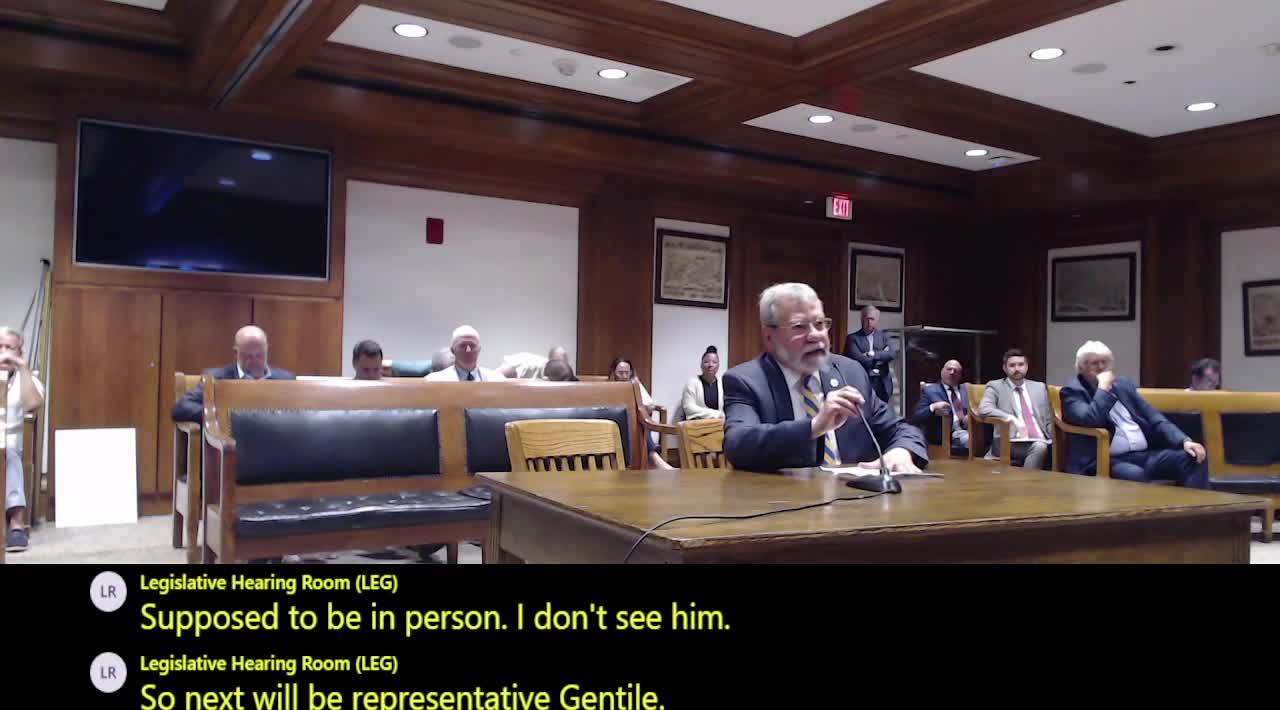
Summary
Lawmakers and advocates debated bills that would ban state and municipal funding for new artificial turf fields, with supporters citing PFAS, microplastics, heat and disposal risks and opponents warning of lost access and higher local costs.
Representative Paul Gentile, sponsors and advocates pressed the Joint Committee on State Administration and Regulatory Oversight on Tuesday for legislation that would prohibit state and municipal contracts for installing artificial turf fields that contain zinc, plastic or intentionally added PFAS.
Supporters said the measure is intended to protect children and municipal environments from chemicals and microplastics, reduce heat‑related injury risk on playing surfaces and avoid generation of large, toxic waste streams when turf reaches end of life.
The bill’s backers argued Massachusetts should adopt a single statewide standard instead of a patchwork of local policies. "The science clearly shows that artificial turf is a serious threat to the public, especially our youth," Representative Gentile said, citing studies and local bans, including Boston’s restrictions enacted in late 2022.
Speakers testifying for the ban described multiple concerns. Tracy Stewart, a Medway resident who has organized against local turf projects, told the committee she recorded surface temperatures of 140 to 155 degrees on plastic fields last year and said contractors widely remove and ship field material out of state with no effective tracking or disposal oversight. "When plastic grass is removed, they're simply trucked away with zero oversight on where the material is dumped," Stewart said.
Diana Zuckerman, president of the National Center for Health Research, emphasized gaps in long‑term safety data. "There are no safety tests to prove that artificial turf is safe for long‑term use by adults or children," she told the committee, urging caution because of hormone‑disrupting chemicals, PFAS and microplastics found in turf components.
Janet Kern, of Lexington 0 Waste Collaborative, described the disposal problem and cited a Lexington field documented at roughly 262 tons of material. She said most fields cannot be recycled in‑state and warned that shipping heavy turf waste to out‑of‑state landfills or warehouses simply moves environmental burden to other communities.
Opponents — including manufacturers, turf industry trade groups and some designers and municipal recreation officials — warned a ban would reduce year‑round access to athletic surfaces, increase municipal maintenance burdens and risk eliminating fields where grass cannot support heavy use. Melanie Taylor, president and CEO of the Synthetic Turf Council, said members voluntarily test for intentionally added PFAS and that recent assessments, including by the California Office of Environmental Health Hazard Assessment, did not find elevated exposure from crumb rubber infill. "Synthetic turf systems unlock year‑round access, require far less maintenance and allow communities to maximize their resources," Taylor said.
Design professionals urged the committee not to adopt a blanket prohibition because surfacing decisions are site‑specific. Meg Kaczynski, a civil engineer who works on athletic facilities, said communities with limited space rely on turf to provide hours of play that grass cannot support. She urged local decision making to balance playability, safety and environmental factors.
Committee members and witnesses also discussed industry claims about recycling. Multiple witnesses said that while some recycling options exist, field removal commonly results in stacked rolls of turf in warehouses or shipment to other states, with unclear final disposition.
The bills before the committee would not affect existing fields but would bar state or local public funding for new installations that contain the listed materials. Supporters urged the committee to move the measure forward; opponents urged more study, regulated standards, or alternative restrictions rather than an outright ban.
The committee did not take a vote on the bills during the hearing; legislators asked for additional written testimony and data on health risk assessments, lifecycle disposal capacity in Massachusetts, local demand projections and cost impacts.
Looking ahead, proponents said the measure would create a uniform state standard, while opponents asked the legislature to consider narrower approaches that preserve access to play areas and allow municipalities to choose surfaces appropriate to local conditions.