
Joint Judiciary hearing splits over bill to adopt IHRA definition of antisemitism
Get AI-powered insights, summaries, and transcripts
Subscribe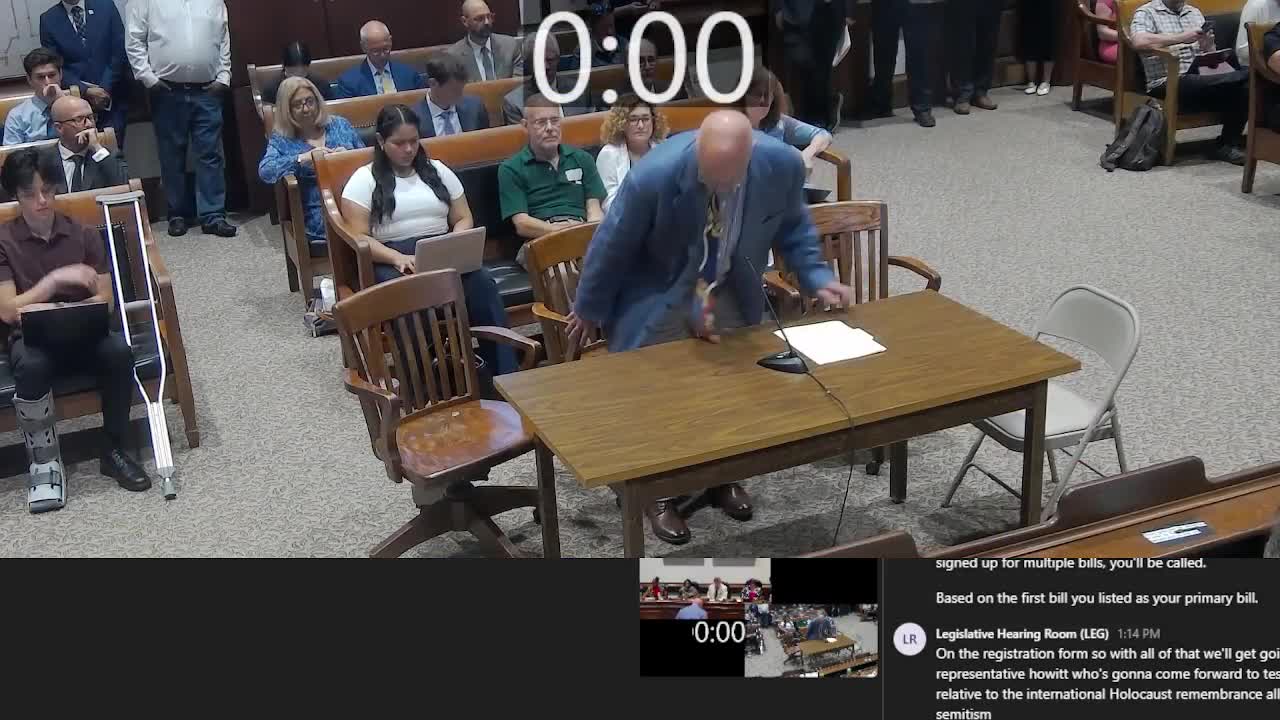
Summary
Supporters said the IHRA definition would provide clarity in identifying antisemitic conduct; critics — including Jewish scholars, civil‑rights groups and university faculty — said codifying IHRA risks chilling free speech and silencing criticism of Israeli government policy.
Boston — Supporters and opponents of House Bill 17‑63 packed testimony before the Joint Committee on the Judiciary over whether to adopt the International Holocaust Remembrance Alliance (IHRA) definition of antisemitism into state law. Representative Michael Howitt, sponsor of the bill, told the committee the draft would give law enforcement and schools clearer language for identifying antisemitic conduct. "Antisemitism is a certain perception of Jews which may be expressed as hatred toward Jews," Howitt read from the IHRA formulation during his testimony.
Proponents, including speakers who identified as Jewish, said codifying a definition would help officials treat and track incidents consistently and protect Jewish residents from harassment and intimidation. Robin Goldstein, a retired teacher who said she is "a proud Jew and Zionist," asked lawmakers to adopt the IHRA wording, arguing it draws a clear line between legitimate criticism and discrimination.
Opponents warned that the IHRA definition — and particularly its examples that reference criticism of Israel — would be used to criminalize or silence political speech and academic inquiry. Ivy McCall, who described herself as Jewish, told the committee: "The accusation that Israel is indiscriminately murdering children in Gaza is no longer blood libel. It is blood‑soaked fact." She and many other witnesses — including university faculty, civil‑rights lawyers and advocacy groups — urged the committee to reject the bill or to adopt a narrower formulation such as the Jerusalem Declaration on Antisemitism.
Civil‑liberties and education groups also told the committee they have documented instances in which IHRA wording was used to discipline or remove faculty and students for criticism of Israeli government policy. Barbara Dugan of the Council on American‑Islamic Relations said CAIR has received complaints from health‑care professionals and others who faced workplace repercussions after criticizing Israel.
Legislators said they were weighing two objectives: protecting Jewish residents from rising antisemitic incidents and guarding free speech and academic freedom. Chairs Representative Michael Day and Senator Lydia Edwards said they would accept written follow‑up and consider revisions. The hearing record remains open for written testimony.
Ending: The committee did not take a vote; sponsors said they would pursue additional outreach and possible amendments. Lawmakers on both sides said they wanted to avoid unintended First Amendment consequences while addressing antisemitism.
Speakers quoted in this article are drawn from the hearing transcript and include Representative Michael Howitt, sponsor; Robin Goldstein, retired teacher; and Ivy McCall, witness.