
Conservation groups seek temporary boost to state land‑conservation tax credit to clear backlog
Get AI-powered insights, summaries, and transcripts
Subscribe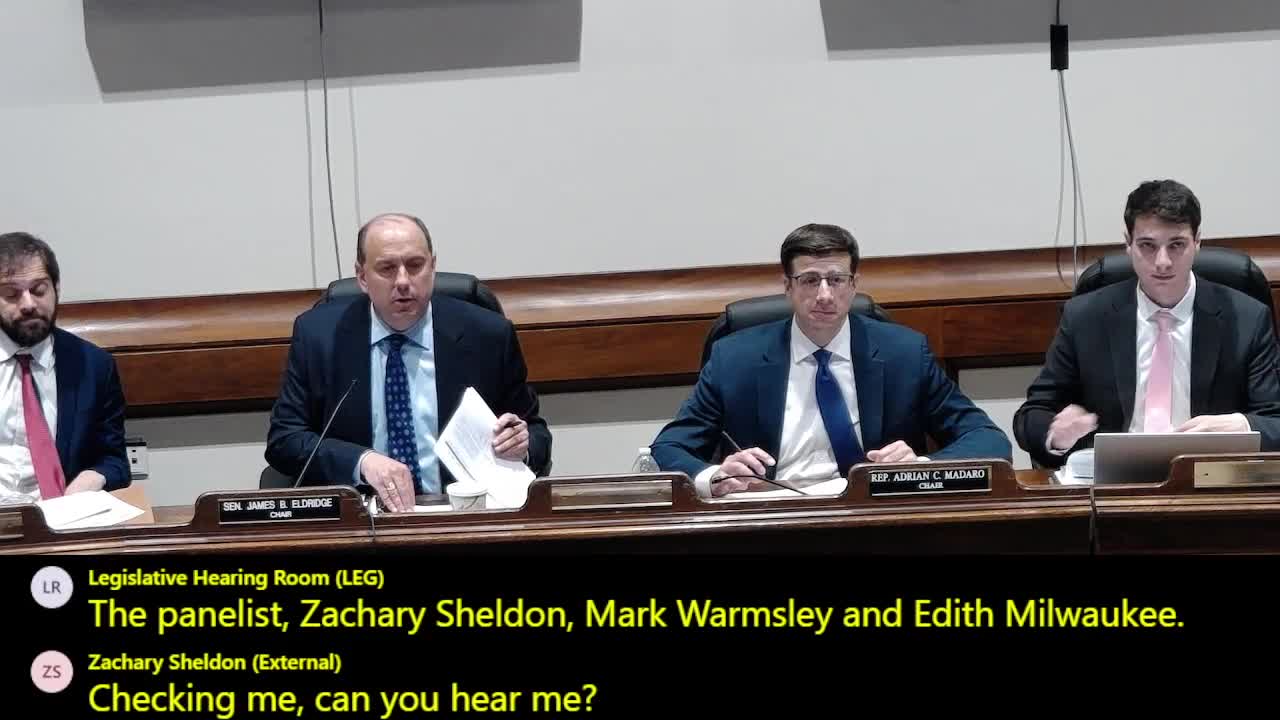
Summary
Conservation advocates asked the Joint Committee on Revenue to increase the annual cap on the Conservation Land Tax Credit from $2 million to $5 million over three years (with a 10‑year sunset back to $2 million) to address an existing backlog, accelerate permanent land protection and leverage state bond funding.
Conservation organizations and land‑trust leaders urged the Joint Committee on Revenue to raise the annual cap on the Conservation Land Tax Credit (CLTC) to address a multi‑year backlog and accelerate permanently protected land across the Commonwealth.
Zachary Sheldon of The Nature Conservancy described the CLTC’s track record: since program inception it has contributed to the conservation of roughly 17,000 acres across 155 cities and towns by incentivizing donated land and conservation restrictions. Witnesses said demand for CLTC far exceeds the current $2 million annual cap, which forces multi‑year waits that can scuttle transactions.
The bills before the committee (S.2083/H.3147) would increase the credit cap to $5 million over three years with a sunset back to $2 million after 10 years, and would clarify eligibility for certain nonprofit conservation organizations. Land‑trust witnesses from Kestrel Land Trust and private landowners testified with case examples of family farms and woodlands that were conserved because the CLTC made transactions feasible.
Witnesses framed the expansion as a cost‑effective investment: private donors capture a partial federal/state incentive but the program’s state credit has historically produced large returns in conserved land value per dollar of credit. Committee members asked for examples and timelines; witnesses noted that delays generated by the cap create transaction risk and that a temporary increase would enable more projects that complement state climate, open‑space and bond investments.
No committee vote was taken at the hearing; proponents asked the committee to report the bills favorably.