
Dental compact draws split testimony as regulators and hygienists tout portability, dentists warn on hands‑on competency
Get AI-powered insights, summaries, and transcripts
Subscribe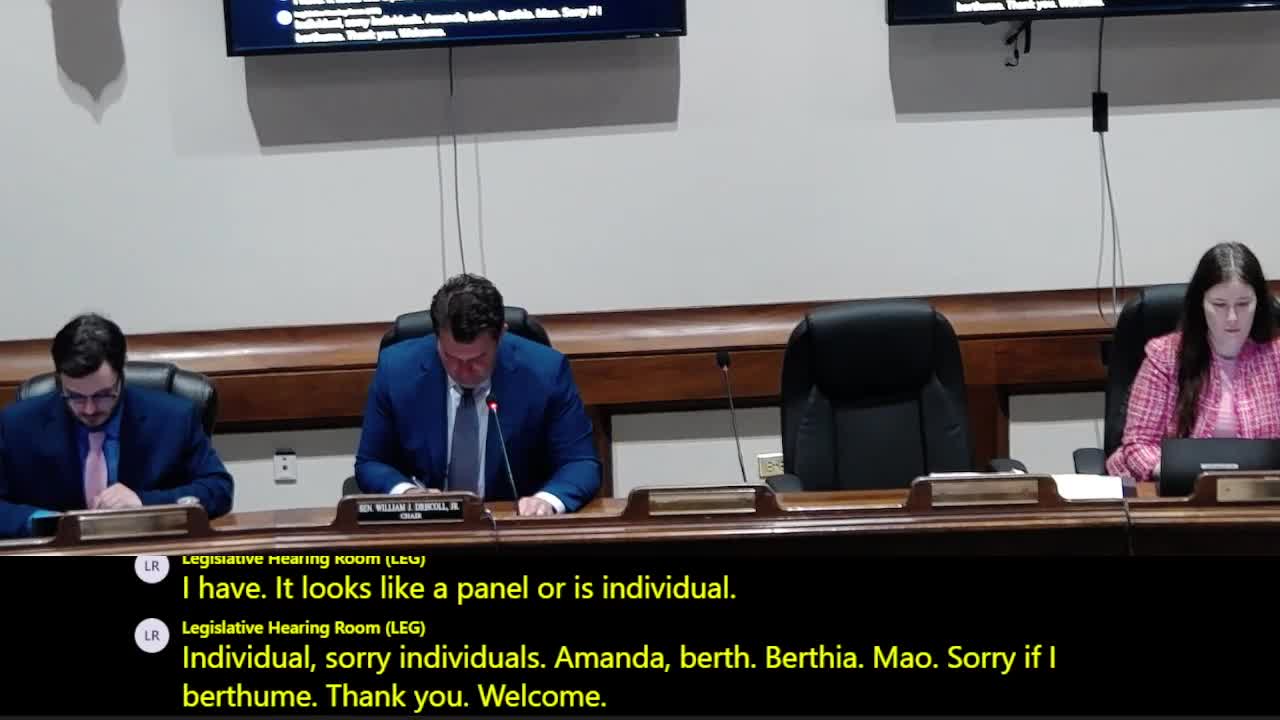
Summary
The Joint Committee on Public Health heard sharply divided testimony on a proposed interstate compact for dentists and dental hygienists: supporters said the measure would improve licensure portability and access; regulators and clinicians warned it omits a required hands‑on skills assessment and could limit state oversight.
Proponents and opponents squared off before the Joint Committee on Public Health over S1494 and H2563, measures that would adopt an interstate licensure compact for dentists and dental hygienists.
Amanda Berthiaume, a licensed dental hygienist and educator, urged the committee to support the compact as a modernized, inclusive pathway to multistate practice that helps military families, mobile clinicians and patients who travel for specialized care. She described the compact as developed by the Council of State Governments (CSG) and endorsed by organizations including the American Dental Association and the American Dental Hygienists’ Association; she said it is intended to be flexible and avoid embedding a single examination into law.
Countering that testimony, Dr. Mina Paul, a Massachusetts‑licensed dentist and former chair of the Massachusetts Board of Registration in Dentistry, and Pat Connolly Atkins, a dental hygienist and educator, warned the committee the CSG compact would allow practice without a hands‑on clinical skills exam. Dr. Paul said the compact’s absence of an independent hand‑skills assessment would “create a dangerous loophole” enabling dentists who have not demonstrated clinical skills on an independent assessment to perform invasive procedures such as root canals and oral surgery. Pat Connolly Atkins described the clinical hand‑skills exam as essential to patient safety and said Massachusetts has required such assessments for licensing for decades.
Legal and governance concerns were also raised. David Hanke, outside counsel to the Council on Dental Competency Assessments (CDCA), told the committee the compact creates a multistate commission with rule‑making authority that could produce binding rules in member states and allow unlimited financial assessments on states; he said litigation in other states raises questions about the compact’s constitutionality.
Why it matters: Supporters framed the compact as a tool to increase access and portability while opponents emphasized patient safety and state‑level control of clinical competence. The hearing recorded detailed objections from dental regulators and educators about the absence of a hands‑on licensure requirement in the CSG compact text.
Limits and status: Committee members asked no recorded vote; the record is a mix of professional association support and regulatory caution. Proponents argued the compact would expand the workforce and help military spouses; opponents asked for safeguards for hands‑on competency and cautioned against ceding rule‑making authority to an interstate commission.