
Massachusetts DOC details reentry, health contracts, education and tablet rollout to commission
Get AI-powered insights, summaries, and transcripts
Subscribe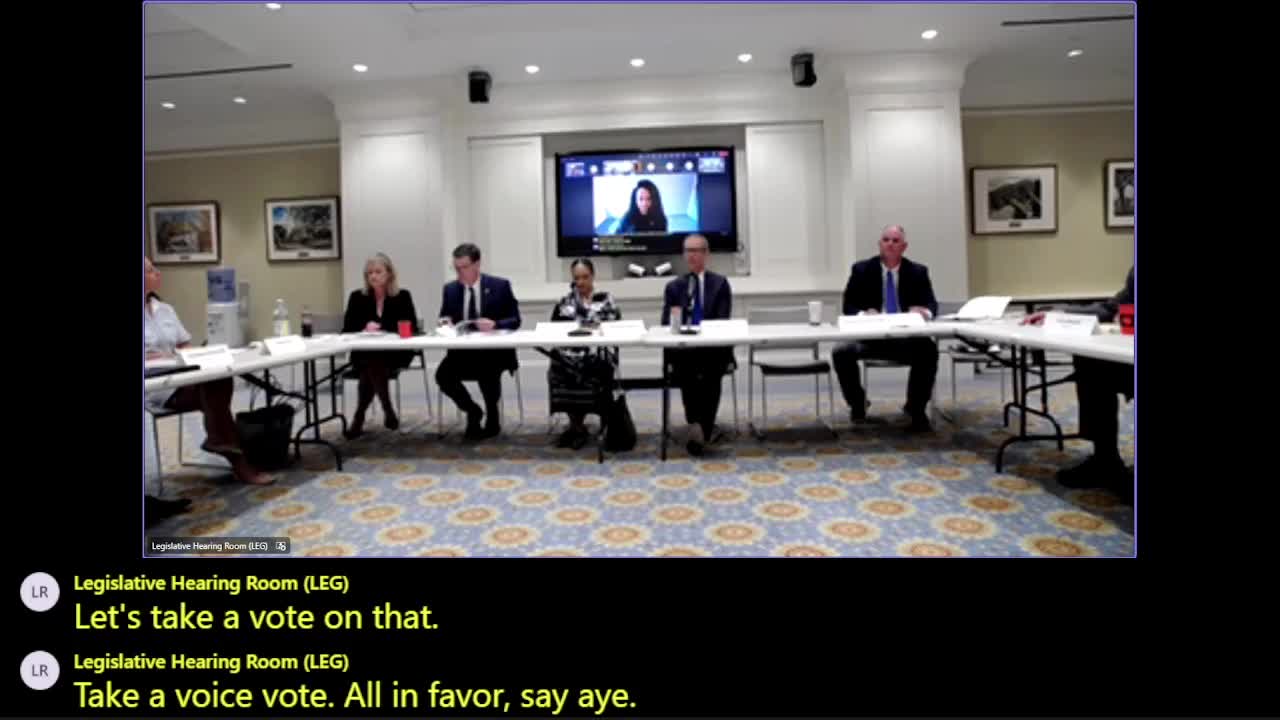
Summary
Commissioners heard a broad briefing from Massachusetts Department of Correction leaders on population trends, medical and programming contracts, education and tablet initiatives, and the department's move away from restrictive housing.
Sean Jenkins, commissioner for the Massachusetts Department of Correction, told the Criminal Justice Reform Commission on Monday that the department has reduced its incarcerated population while expanding clinical and programmatic services.
Jenkins said the DOC currently oversees about 6,100 people in custody, down from roughly 10,000 in 2016, and described the department as “a health care provider.”
The presentation reviewed the system’s facility mix (including maximum, medium and treatment sites), ongoing transitions of specialized programs, and investments the department says are intended to support reentry and reduce recidivism.
Jenkins and Deputy Commissioner Mitzi Peterson described the DOC’s portfolio of services, starting with health care. “We are a health care provider,” Jenkins said, noting annual contracts the department characterized together at roughly $300 million for prison health care, medication‑assisted treatment and treatment services at regional state hospital sites.
Peterson said the department conducts initial, individualized assessments for everyone entering custody and uses those assessments to match people to education, behavioral health and substance‑use programming. “We have a number of very dedicated professionals from teachers to health care providers, to correctional staff that work diligently,” she said.
Commission staff and DOC presenters gave specific program and cost examples. The DOC reported the following figures during the briefing: an estimated system population of about 6,100; Susan Baranowski described as the Commonwealth’s only maximum‑security facility with roughly 1,200 people; MCI Framingham hosting about 200 people (about 50 from Middlesex County pretrial); Bridgewater State Hospital with about 200 individuals; and MCI Norfolk and MCI Shirley mentioned as sites with college partnerships. The department said health‑care contract components include a $152 million prison health care contract, an estimated $90 million contract for services at Bridgewater State Hospital, $36 million for service at MASAC, and approximately $14 million for MAT (medication‑assisted treatment) services.
On programming and education, Jenkins and Peterson said the DOC now has partnerships with about 10 colleges and universities that provide credit‑bearing coursework inside facilities, naming institutions such as Tufts, Boston College, Emerson, and Boston University. The DOC reported more than 3,000 people enrolled in education or vocational programs systemwide and said 104 people completed HiSET diplomas in 2024 (about double the prior year).
The department also described a technology rollout: origin tablets provided to people in custody to support education, reentry planning, messaging and free phone calls. Jenkins said tablet costs are currently about $6 million per year for device investment, connectivity and licensing.
Peterson described program innovations and unit types designed to replace disciplinary restrictive housing with a “behavioral assessment unit” model, saying the DOC concluded operations of its long‑term restrictive housing unit in 2022. Jenkins and Peterson said most people who enter assessment units return to general population after individualized treatment and review.
The presentation further described expanded substance‑use treatment and MAT availability at all security levels, specialized residential recovery programs at several institutions, vocational efforts such as The Last Mile coding program, and partnerships with outside evaluators including the Vera Institute and the Falcon Group for strategic planning and culture work.
Commission members asked for more granular data. Several commissioners and former officials requested program participation and completion statistics, budgets broken down by site, and details on step‑down transfers between DOC and county sheriff facilities. Jenkins and Peterson said the DOC maintains gap analyses and program statistics and agreed to return with deeper data at a follow‑up meeting.
The session closed with the commission asking the DOC to appear again in September with targeted follow‑up materials and subject‑matter experts to address participation numbers, program placement by facility, and staffing and cost breakdowns.
Ending:The meeting recorded two procedural votes: a voice vote approving the minutes of the July 11 meeting and a voice vote to adjourn. Both were recorded as passed by “aye” with no roll‑call tally in the transcript.