
Supporters urge Massachusetts to join interstate EMS licensure compact to ease staffing and surge response
Get AI-powered insights, summaries, and transcripts
Subscribe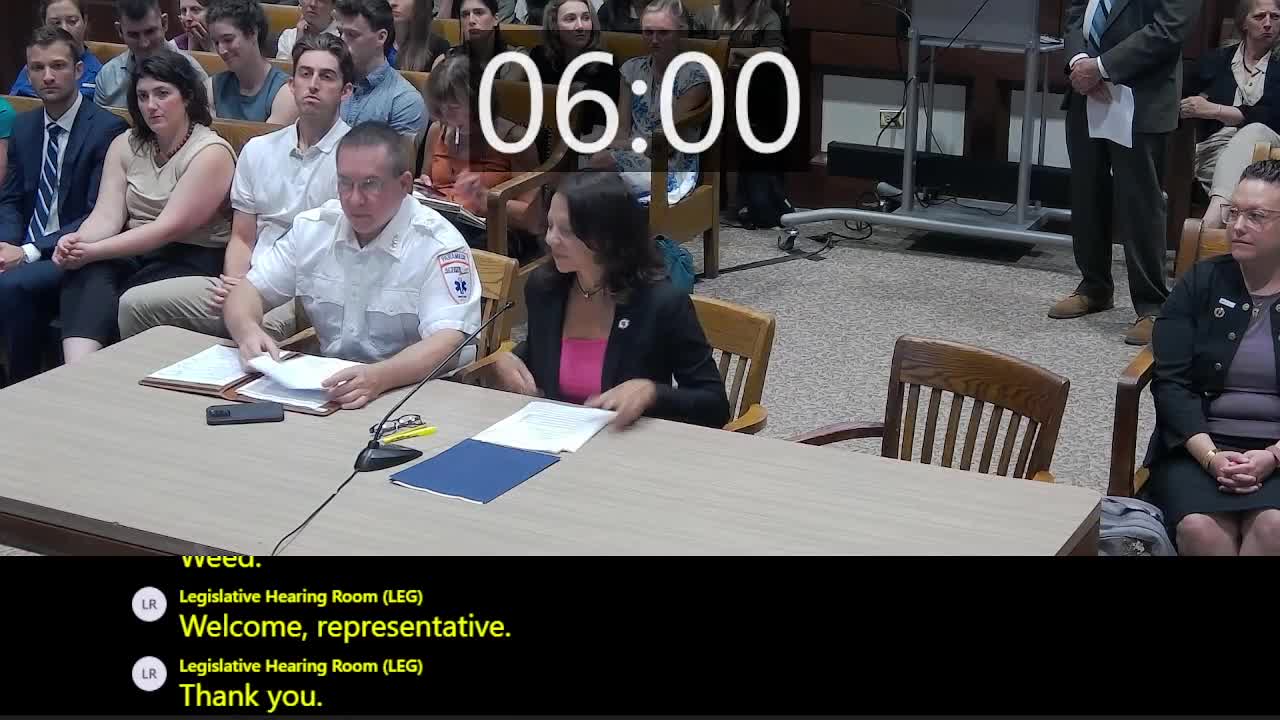
Summary
Advocates, ambulance operators and compact administrators testified for H4119, saying the EMS licensure compact would allow qualified out‑of‑state EMS providers to respond quickly to daily shortages and disasters without redundant licensing steps; proponents said standards match Massachusetts requirements and there is no state cost to join.
Representatives from ambulance services, the EMS compact commission and state advocates urged the Joint Committee on Public Health to advance H4119 to permit Massachusetts to join the interstate Emergency Medical Services (EMS) licensure compact.
Rep. Lee Davis and multiple ambulance executives described the EMS system as “in crisis,” citing low active workforce percentages, high nonrenewal rates, long response times in some locations and rising call volumes. Mike Woronka, identified as a 38‑year veteran paramedic and CEO of Action Ambulance, told the committee that only about half of certified EMTs and paramedics are working on ambulances and that “in some parts of Massachusetts, residents have waited as long as 45 minutes for an ambulance to arrive.”
The core proposal: H4119 would authorize Massachusetts to join the EMS compact, which supporters said allows qualified EMS clinicians from other compact states to begin working immediately after affiliating with a Massachusetts EMS agency, without repeating credentialing steps that can take weeks. Donnie Woodyard, executive director of the Interstate Commission for EMS Personnel, said participating states already share standardized education, the national credentialing exam (NREMT), and real‑time disciplinary data; he emphasized that agencies in Massachusetts retain authority to affiliate and to suspend compact privileges.
Why it matters: Witnesses said compact membership would expand the pool of available EMS providers, boost disaster readiness and reduce delays in daily coverage. Supporters noted more than 25 states already were members of related licensure compacts for other professions and that 25 states had enacted the EMS compact; they said Massachusetts could be the first New England state to join. Speakers told the committee joining “costs nothing” and would not lower Massachusetts standards because compact membership relies on uniform national certification and shared data.
Limits and status: The hearing included no committee vote. Proponents provided operational background and described real‑world examples—mutual aid deployment in hurricanes and mass‑casualty events—where rapid mobility was essential. No testimony at the hearing recorded legal objections specific to Massachusetts nor a fiscal estimate for administrative implementation beyond proponents’ assertion of “no cost.”