
Families, clinicians urge state to expand newborn screening for lysosomal and metabolic disorders
Get AI-powered insights, summaries, and transcripts
Subscribe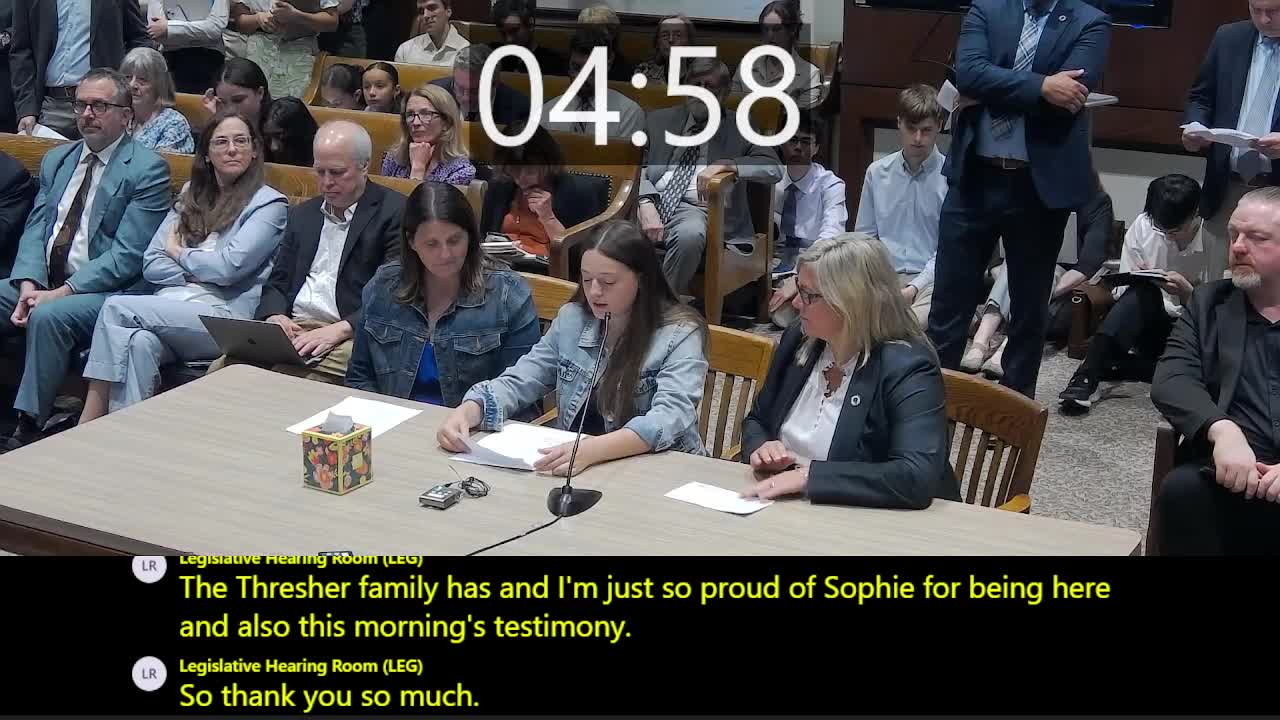
Summary
Parents, clinicians and patient advocates asked the Joint Committee on Public Health to add several rare metabolic and lysosomal disorders to the state newborn screening panel so infants can be diagnosed and treated earlier, citing cases of long diagnostic odysseys and available therapies.
Parents, clinicians and rare‑disease advocates told the Joint Committee on Public Health that Massachusetts should expand its newborn screening panel to include additional lysosomal and metabolic disorders so infants can be diagnosed and treated earlier. Testimony focused on diseases such as Gaucher disease, Fabry disease, Pompe disease, Niemann‑Pick and pyruvate dehydrogenase complex deficiency (PDCD). "A simple blood test changed my life," said Sophie Thresher, a high‑school senior who described years of misdiagnosis before being diagnosed with Gaucher disease. Her mother, Jill Thresher, urged lawmakers to add lysosomal storage disorders to routine newborn screens saying, "Gaucher is treatable, but it has to be diagnosed."Researchers, physicians and advocacy groups described multiple cases in states that already report these results to families. Amanda Yost, who testified about Pompe disease, described receiving newborn screening results for her son four days after birth and starting enzyme replacement therapy at two months, which she said prevented tissue damage and allowed him to meet developmental milestones. Several advocates noted that the test specimens are already collected for other conditions and said unmasking or reporting additional results to families would carry low incremental cost but high clinical value.Both clinicians and patient‑advocacy organizations urged the committee to report favorably on House Bill 2495 and companion Senate legislation, which would require the Commonwealth to add certain lysosomal storage and other rare disorders to the newborn screening panel. James Romano, Legislative Coordinator for the Lysosomal Storage Disorders Advocacy Coalition, told the committee that Massachusetts already pilots screens for some of these conditions and that the state can use existing laboratory capacity: "Last year you added Duchenne muscular dystrophy; these additions save money and lives."Opponents did not appear in force; witnesses and legislators emphasized that adding conditions would not force new therapies but would shorten diagnostic odysseys, let clinicians start existing therapies earlier, and allow families to seek specialist care. Advocates asked the committee to advance the bills for further study and budget review so newborn results can be reported to clinicians and families rather than remaining unblinded in state labs.