
Louisiana gaming revenues up for fiscal year but June declines in several segments
Get AI-powered insights, summaries, and transcripts
Subscribe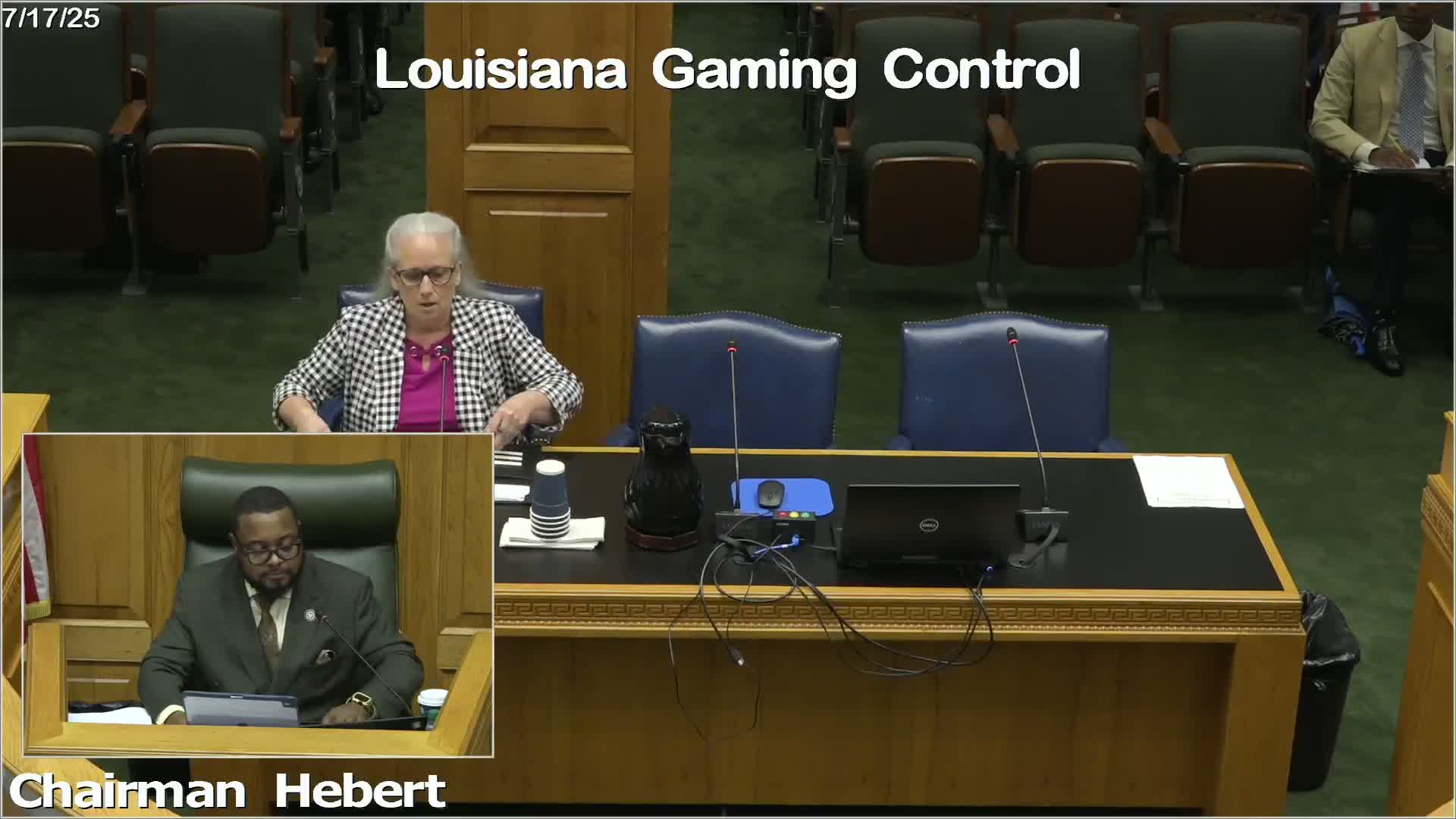
Summary
State auditors reported higher year-to-date gaming receipts for fiscal 2024–25, while June 2025 showed month-over-month declines in riverboat, racetrack and video device revenues; sports wagering and Caesars New Orleans showed notable gains year-over-year.
Donna Jackson, an auditor with the Louisiana State Police Gaming Audit Section, reported June and fiscal-year revenue figures to the Louisiana Gaming Control Board on July 17, 2025. The most notable figures: adjusted gross receipts for the fiscal year 2024–25 were $1.81 billion, about $80 million (5%) higher than the prior fiscal year; as of June 30 the state had collected more than $389 million in fees for the year.
The data matter because gaming fees are a significant source of state revenue and fiscal-year increases affect budgeting and oversight. Board members heard that some month-to-month volatility exists even as the year-to-date totals improved.
Jackson told the board that the 15 operating riverboats generated $161,454,632 in adjusted gross receipts for June; that represented an 8.2% decrease from May but a 5% increase compared with last June when one fewer riverboat was operating. Caesars New Orleans generated $20,405,626 in gross gaming revenue in June, down 4.2% from May but up roughly $5 million (34%) from June 2024. For fiscal 2024–25 Caesars’ adjusted gross receipts were $270 million, a 12% increase over the prior year; the state collected about $65 million in fees from Caesars through June 30.
Racetrack slot facilities (four locations) produced combined adjusted gross receipts of $26,991,607 in June, down about $3.8 million (12.3%) from May and down about $1.4 million (5%) year-over-year; the state collected roughly $4.1 million in state fees from those operations in June. Video gaming showed 12,199 activated devices at 1,386 locations; net device revenue for June was $62,011,273, down $6.1 million (8.9%) from May but up $1.8 million (2.9%) from last June. Fiscal-year-to-date net device revenue was $757.7 million, an increase of $8 million (1.1%) over the prior fiscal year; franchise fees collected year-to-date were $229.6 million as of June 30.
Sports wagering saw large increases year-to-date. Retail sportsbooks accepted about $13.8 million in wagers in June (net proceeds $1.3 million; state taxes $137,000). Mobile sportsbooks accepted $231.5 million in wagers in June (net proceeds $30.7 million; $4.6 million in state taxes). For fiscal 2024–25 combined wagers exceeded $4 billion (up 24%), net proceeds were $467.6 million (up 22%) and state taxes totaled $70.4 million (up 29%). Daily fantasy sports gross revenues for June were about $496,000 (net $58,000; taxes $4,700); fiscal-year gross fantasy contest revenues were $12.6 million.
Board members asked whether a spike in sports wagers could be tied to specific events; Chairman Hebert suggested local sporting success as a possible factor but Jackson said she did not have specific data and offered to follow up. No formal board action was taken—the revenue report was presented for information.
Less-critical details and comparative charts were provided to the board in written packet pages and a multi-year comparison chart was placed in members’ folders for further review.