
Witnesses warn Interior review, interconnection delays could raise electricity prices and slow new generation
Get AI-powered insights, summaries, and transcripts
Subscribe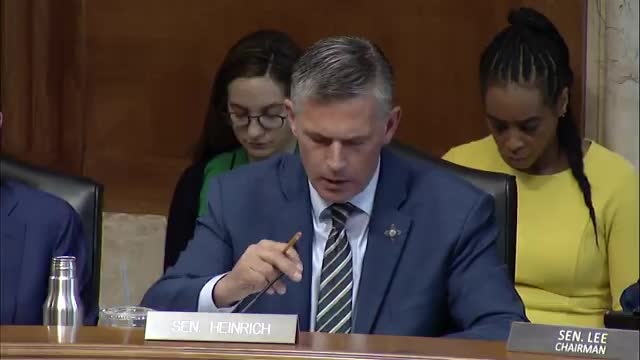
Summary
Witnesses at a congressional hearing said a recent Department of the Interior memo adding review of wind and solar projects on federal lands could slow approvals, tighten supply, raise wholesale and retail power prices and worsen near-term resource adequacy unless interconnection and permitting processes are reformed.
A congressional committee hearing on federal energy permitting on Oct. 5 heard testimony that a recent Department of the Interior memorandum requiring additional review of wind and solar projects on federal lands is adding regulatory delay that could reduce near‑term supply and raise electricity prices.
The hearing focused on how permitting and interconnection bottlenecks affect the pace at which new generation and transmission come online. "Vantage is relatively agnostic as to the source of those electrons," a Vantage representative testified. "So in the case of rulemaking or regulatory action that slows down the process of approving new generation or new transmission, would definitely be a negative for our business." The committee member who opened questioning, Mister Tinch, asked witnesses to describe business and consumer impacts.
The panel agreed that delays in permitting and interconnection queues reduce supply and put upward pressure on wholesale power prices, which state public utility commissions typically pass through to retail bills. "There's scarcity of generation. So anything that is limiting new generation from coming on, whether it's interconnection queues, permitting holdups at Interior or anything else, that's cutting off supply and that is definitely raising prices," said Rob, a grid expert called to testify.
Witnesses pointed to examples where increased renewable and storage deployment coincided with lower wholesale price pressure and maintained reliability. Rob cited Texas as a recent example where "a majority of their peak demands" were served by renewables plus storage without rolling blackouts. A separate witness described a regional grid mix he monitors as roughly 5% coal, 23% gas, 7% nuclear, 35% solar, 15% wind and roughly 15% battery storage, and said that mix delivered both reliability and lower retail prices compared with the national average. "In my grid, we're paying about $11.10.8 to be precise," he said when comparing average retail rates to a national figure of about "17 and change cents per kilowatt hour." (The hearing transcript contained that phrasing verbatim; the exact retail cents-per‑kWh numbers were not independently provided at the hearing.)
On policy fixes, witnesses urged faster interconnection processes and regulatory stability. Rob recommended models such as the Southwest Power Pool's simpler entry-fee approach and said Congress could "encourage FERC to undertake activities like that." The Vantage representative and other witnesses also argued for permitting stability so long‑term investment decisions are not repeatedly upended: "So many utilities ... are making 60‑year investments," the Vantage representative said. "If the policies change 180 degrees every four years, they simply can't do that."
Panel members and witnesses also debated federal analyses of near‑term reliability risk. One witness said Department of Energy modeling ‘‘vastly overstated the retirements of generation’’ and understated potential new supply, a combination that could exaggerate projected reliability shortfalls in DOE's report.
The hearing produced no formal actions. Committee members asked nominees and agency officials to consider interconnection reform, and witnesses suggested Congress could question pending nominees about queue reform and encourage FERC to adopt faster, more standardized interconnection rules. Those suggestions were framed as policy recommendations rather than binding directives.
The discussion combined several related concerns: new federal review requirements for projects on federal lands, lengthy interconnection queue studies, permitting uncertainty for transmission, and the need for regulatory stability to unlock long‑lived investments. Witnesses emphasized that slowing projects already in development queues — particularly renewables paired with storage that currently make up a large share of planned additions, they said — would reduce near‑term supply and likely increase prices for wholesale and retail customers.