
Grid experts tell Senate faster high‑voltage transmission, reconductoring and grid-enhancing tech are the quickest ways to add capacity
Get AI-powered insights, summaries, and transcripts
Subscribe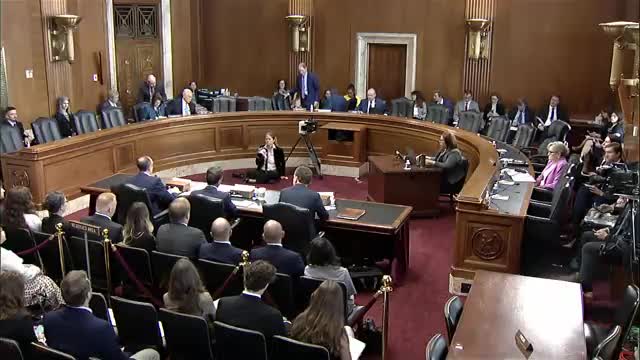
Summary
Transmission, interregional lines and technologies such as reconductoring and dynamic line ratings were presented as the highest-impact, fastest ways to increase usable grid capacity and integrate more generation, witnesses and several senators said at the hearing.
Rob Gramlich, president of Grid Strategies, told the Senate Energy and Natural Resources Committee that transmission is “the main thing we need right now” and argued Congress and federal agencies should prioritize high‑voltage lines and regional planning to integrate resources and lower costs.
Gramlich and other witnesses described three interrelated transmission priorities: (1) faster regional and interregional planning to identify lines with the most system benefit; (2) more rapid deployment of high‑capacity high‑voltage lines where new rights-of-way are justified; and (3) increased use of grid‑enhancing technologies (GETs) and reconductoring to increase throughput on existing corridors at lower cost and in shorter timeframes than full rebuilds.
Why it matters: Witnesses said transmission unlocks the value of generation by moving power from where it is plentiful to where it is needed, improving reliability and affordability. Several senators and witnesses pointed to the scale of need: NERC studies cited in testimony identified a potential need for roughly 35 gigawatts of interregional transmission to improve resilience and resource sharing.
Key points from testimony
- Reconductoring and GETs: Senator King and witnesses discussed advanced conductors and dynamic management systems that can boost line throughput by as much as 40%–100% in some applications without new rights-of-way, offering faster, less costly capacity increases than building new corridors.
- Interregional planning and EPRA: Gramlich praised prior committee work on interregional planning and called for follow‑on bipartisan action to implement EPRA‑type mechanisms that coordinate planning across regions and reduce siloed study timelines.
- Global comparison and manufacturing: Gramlich and other senators noted China’s rapid buildout of high‑voltage transmission and raised concerns that the United States lags; they also discussed the potential to scale domestic manufacturing of advanced conductors.
- Financing and federal role: Senators raised questions about how federal loan programs, tax incentives and FERC authorities could be used to accelerate lines. Senator King noted recent DOE loan-program choices that affect interregional projects and urged more stable, metric‑based federal support.
Representative quotes
- “Transmission is also the main thing we need right now. It has the highest impact,” Rob Gramlich said.
- “Reconducting and grid-enhancing technologies can create more headroom on the grid that allows more load to be developed reliably,” Gramlich added during exchanges with senators.
Remaining questions and next steps
Witnesses recommended that Congress focus on policies that speed siting approvals where needed, incentivize reconductoring and GETs to capture near-term capacity gains, and support coordinated interregional planning and cost allocation to share benefits across regions. Committee members expressed interest in considering legislative and administrative steps to implement those priorities.