
Senate hearing: witnesses warn U.S. grid may be unready for surge in electricity demand from AI and data centers
Get AI-powered insights, summaries, and transcripts
Subscribe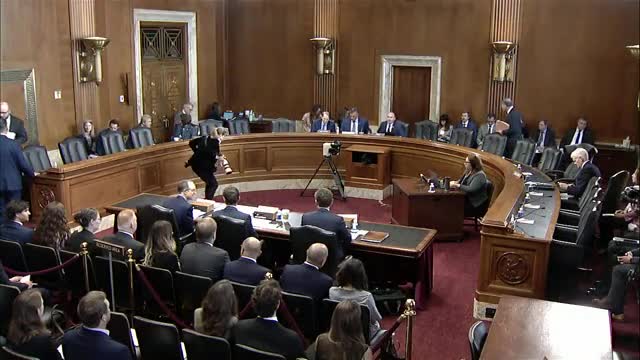
Summary
Witnesses at a Senate Energy and Natural Resources Committee hearing told members that rapid growth in AI compute and data centers, retiring thermal capacity, and permitting and interconnection delays risk shortages, higher prices and localized outages without faster transmission and permitting reforms.
Chairman Lee opened the Senate Energy and Natural Resources Committee hearing by telling witnesses and colleagues that the hearing would focus on rising electricity demand and the nation’s preparedness to meet it.
The hearing featured testimony from Peter Huntsman, chairman and CEO of Huntsman Corporation; Jeff Tench, executive vice president of Vantage Data Centers; and Rob Gramlich, president of Grid Strategies. All three said electricity demand is growing rapidly and that the power system needs faster, coordinated action on transmission, interconnection and siting if the United States is to avoid reliability problems and rising costs.
The central concern raised by witnesses was that several structural trends — the rapid buildout of AI data centers, a rebound in domestic manufacturing and accelerating electrification of vehicles and buildings — are outpacing the growth assumptions that guided planning for generation and transmission. Chairman Lee said, “America’s electricity demand is surging. It’s not creeping up. It’s surging.”
Why it matters: witnesses and several senators warned that if the grid and permitting systems do not adapt, consumers could see higher bills and regions could face outages at times of peak demand. Rob Gramlich said transmission is “the great integrator of all resources,” and argued that faster, higher-capacity lines and better interregional planning would allow the United States to use a broader mix of generation more affordably.
Major witness points and evidence
- Scale of demand: Witnesses reported large commercial requests for power from hyperscale data centers, with Jeff Tench noting customers seeking “1 gigawatt or more” for AI campuses. The committee record and witnesses cited federal analyses showing strong near-term demand growth.
- Retirements vs. additions: Chairman Lee cited FERC data that he said show 24 gigawatts of coal-fired generation slated to retire by 2028 while only about 5 gigawatts of new gas-fired power is expected to come online in the same window. Gramlich and others stressed that markets and state planning will determine what is added but that constrained transmission and long lead times on certain equipment are bottlenecks.
- Interconnection, permitting and supply-chain delays: Tench and others described interconnection timelines, fragmented permitting and turbine lead times as reasons projects are delayed. Tench told the committee that interconnection offers can move years behind data-center development timelines, forcing developers to pursue short-term generation solutions in some cases.
- Role of renewables and storage: Witnesses acknowledged that wind, solar and batteries have been the fastest-growing additions to capacity. The EIA figures cited in testimony said nearly 49 gigawatts of new capacity was installed in 2024 and that a large share has been renewables plus storage. Gramlich and others argued those resources improve affordability and can be reliable when paired with transmission and flexible resources, while Huntsman emphasized the need for firm, dispatchable sources for industrial consumers.
- Policy frictions: Multiple senators and witnesses flagged recent federal actions that could alter project timelines, including a Department of the Interior memo requiring additional review of wind and solar projects on federal lands and ongoing changes to tax-credit programs. Witnesses warned that regulatory uncertainty and rapid policy shifts can reduce investment certainty.
Quotes from the hearing
- “We have spent much of the last 20 years shutting down the generation that can actually meet that demand,” said Chairman Lee during his opening remarks.
- “The greatest barrier we collectively face to our country's leadership on artificial intelligence today is timely access to reliable electric power,” Jeff Tench testified.
- “Transmission is also the main thing we need right now. It has the highest impact,” Rob Gramlich told the committee.
Senators' concerns and exchanges
Committee members from both parties pressed witnesses on practical steps. Senator Heinrich emphasized aggressive interconnection and permitting reform, and Senator King pushed for quicker deployment of grid-enhancing technologies and reconductoring to increase throughput without new rights-of-way. Several senators — including Wyden, Cortez Masto and Risch — discussed the balance among incentives, technology neutrality and the mix of resources (renewables, gas, nuclear) states and customers will choose.
What the hearing did not decide
The hearing gathered testimony and questions but did not produce legislation or committee votes. Senators and witnesses repeatedly described solutions that would require coordinated action by Congress, federal agencies, states, regional planners and private investors.
Looking ahead
Witnesses urged Congress and federal agencies to prioritize transmission buildout, interconnection reform and regulatory certainty for investors. Several senators signaled interest in bipartisan work on permitting and transmission authorities that would shorten timelines while preserving environmental review. The committee set deadlines for senators to submit questions and statements for the record, signaling ongoing attention to the issue.