
Pleasanton planners approve futsal facility at Alameda County Fairgrounds, bar PA system
Get AI-powered insights, summaries, and transcripts
Subscribe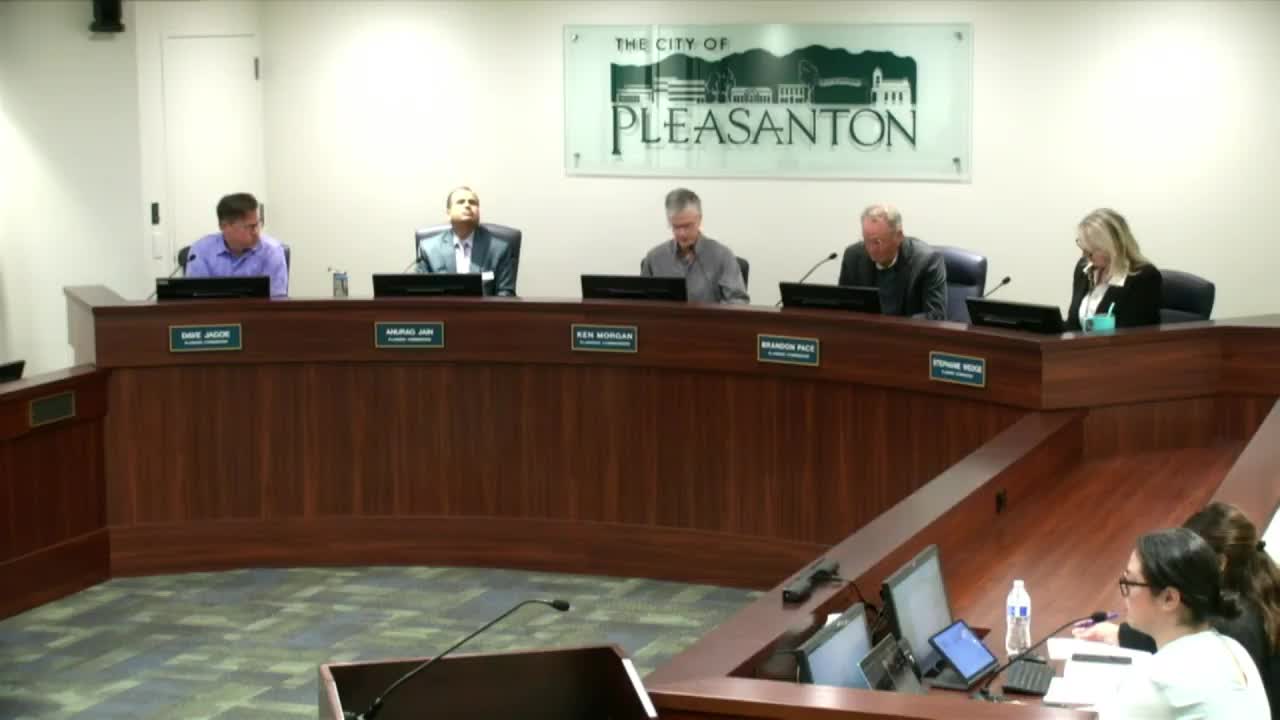
Summary
Pleasanton Planning Commission voted unanimously July 23 to approve United Soccer Club’s conditional use permit for a three-court futsal facility at the Alameda County Fairgrounds, with a modification that forbids a public-address system as part of the approved operations.
Pleasanton Planning Commission voted unanimously July 23 to approve United Soccer Club’s conditional use permit for a three-court futsal facility at the Alameda County Fairgrounds, with a modification that forbids a public-address system as part of the approved operations. The permit allows operations as proposed — intended hours 8 a.m. to 11 p.m. daily — but includes a staff condition that the facility not begin practices or other activities until Alameda County building inspection has reviewed and finaled any required building permits for the site. The commission also retained standard conditions allowing staff to address noise or lighting complaints and seek modifications if needed. Why it matters: The fairgrounds sit adjacent to transient RV parking and some nearby residences. Commissioners sought to balance expanded year-round recreation and revenue for the fairgrounds with neighbor concerns about light, noise and late-night activity. The conditions approved are intended to give the city and property owner tools to address problems if they arise. Planning staff told the commission that the fairgrounds has historic uses memorialized in a land-use agreement with the city but that new activities outside that history require city approval. "All the permits for any structures that happen at the fairgrounds is under the county," planning staff member Jenny Sue said. "The city... added a condition that says the soccer club is not gonna start any activity until their building permits has been reviewed and finaled by the Alameda County building inspection." Commissioners and residents raised questions about lights and noise. Commissioner Wedge asked whether lights could run as late as 11 p.m. seven days a week and noted nearby temporary RV parking and mobile-home parks. Commissioner Jagel described that he can hear after-hours activity from his Del Prado neighborhood and expressed concern about generators and adult leagues running late. Director Clark and planning staff said the city’s conditions require lights to be directed downward and shielded and that the project must comply with the City of Pleasanton noise ordinance; staff also pointed to an existing condition (condition number 10 in the staff report) that allows staff to require operational changes if complaints are received. The applicant’s representative told the commission there is no PA system for the project and said the operator will respond to complaints if they occur: "There’s no PA system on this project," the representative said. "If we get any complaints... we will take care of it." Noticing and permitting: Staff explained that city noticing requirements were met for nearby off-site neighbors (1000-foot radius where applicable) and that the RV/trailer parking the commissioners observed is part of fairgrounds operations and is considered transient on-site use; staff therefore did not mail separate homeowner postcards to occupants of the transient spaces. The commission heard that the fairgrounds and county coordinate for building permits and that the city will not allow operations to begin until the county finalizes necessary permits. Action and conditions: Commissioner Pace moved to approve the project consistent with staff recommendations, "with the modification that there be no PA system permitted as part of the condition of approval." The motion was seconded and passed unanimously on roll call (Commissioner Jagel: yes; Commissioner Jane: aye; Commissioner Pace: aye; Commissioner Wedge: aye; Chair Morgan: aye). Discussion vs. decision: Commissioners repeatedly emphasized that approval of the conditional use permit addresses land-use permission only and that any complaints about noise or lighting can trigger enforcement or a return to the commission to change operating conditions. Staff noted that the fairgrounds, as property owner, also can restrict hours or operations under its lease agreements with an operator. Closing context: Supporters on the commission and the applicant framed the project as a way to activate underused fairgrounds acreage year round and provide recreation opportunities. Resident Maureen Morley, who lives on Fair Street adjacent to the fairgrounds, told the commission she supports fairgrounds success but asked the city to be responsive if operations cause problems: "There is public interest... 7 days a week, 8AM to 11PM, which is a dramatic shift... lighting does have an impact on the neighborhood." The commission and staff said existing conditions, the county permitting step and the ability to return to the commission provide the mechanisms to address issues if they materialize. What’s next: The applicant may proceed with the county’s building-permit process; the city’s approval does not authorize operations to start until county permits are finaled and the city’s conditions are satisfied.