
Council updates building department ordinance, raises some fees and adds inspection and contractor rules
Get AI-powered insights, summaries, and transcripts
Subscribe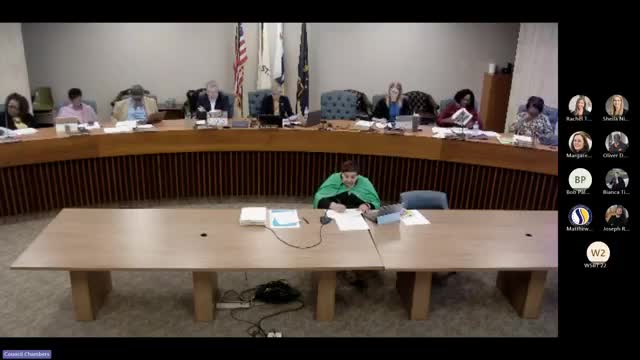
Summary
On June 23 the council passed Bill 38-25, updating Articles 1—7 and Article 11 of Chapter 6 of the South Bend Municipal Code to revise permit fees, inspection protocols, demolition rules, contractor registration, and to incorporate state law changes allowing private providers for plan review and inspections effective Jan. 1, 2026.
The South Bend Common Council on June 23 passed Bill 38-25, which amends multiple articles of Chapter 6 of the South Bend Municipal Code to update regulations governing the city's Building Department.
City Attorney Jenna Thoreau and Building Commissioner Randy James presented the ordinance, which reorganizes and clarifies definitions, adjusts fees (including raising the minimum permit fee from $40 to $60), enhances inspection protocols and red-tag procedures, and formalizes demolition-permit requirements, among other changes. The ordinance also revises contractor registration processes for electrical, mechanical, and HVAC registrations and adds provisions consistent with state law changes in HEA 1005 that allow private providers to perform certain plan reviews and inspections beginning Jan. 1, 2026.
Thoreau said the fee schedule bases fees on construction costs and that staff compared fees with comparable municipalities to set levels that fund building-department services without imposing undue burdens. "These adjustments were made to account for inflation and general revenue generation, to ensure that the revenues of the building department continue to keep pace with rising prices," Thoreau said. Randy James noted the building department operates as an enterprise fund dependent on permit fees.
Key operational changes include a clarified stop-work/cease-and-desist procedure, a more structured approach to identifying and enforcing against abandoned construction projects, codifying Indiana Department of Environmental Management (IDEM) asbestos inspection/notice requirements into demolition permit language, and expanded explicit authority to inspect all construction whether or not a permit has been obtained, subject to state code limits.
The ordinance was discussed in committee and by the council; no members of the public spoke in the bill's public hearing. The council passed the ordinance by roll call (8-0). Staff said the updates were overdue, with some code sections last amended decades ago, and will bring the municipal code into alignment with current state law and local practices.