
Council introduces zoning tweaks to spur urban housing; full code rewrite planned
Get AI-powered insights, summaries, and transcripts
Subscribe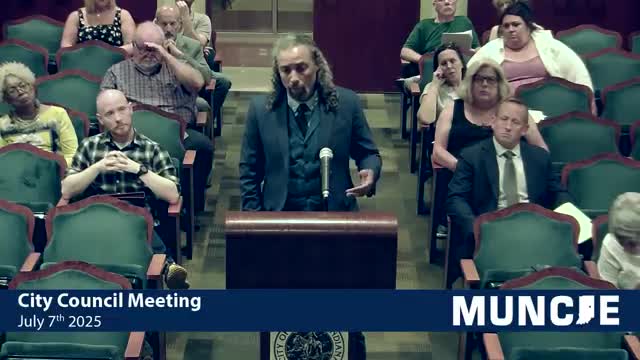
Summary
Council introduced Ordinance 24-25 to alter lot size, setback and accessory-dwelling rules in multiple residential zones to encourage infill housing; the planning commission recommended the changes and staff said a full comprehensive code rewrite will take about 10 months.
The Muncie Common Council introduced Ordinance 24-25 on July 7, a package of zoning amendments aimed at increasing infill housing opportunities by adjusting lot width, lot area, setbacks, minimum floor area and accessory dwelling rules in R-1 through R-4 residential zones.
Kylene Swackhammer of the Planning Commission told the council the current ordinance dates from 1973 and the proposed amendments were written by a committee including the mayor’s office, Commissioner Brand and retired Ball State planning official Jim Lowe. Swackhammer said the changes were intended to align the code with current planning practice and to make it easier to build housing on the small, existing lots common in many Muncie neighborhoods.
Examples discussed at the hearing include reducing required lot widths and lot areas (for example, some references in the discussion compared older 12,000-square-foot requirements to proposed 4,000-square-foot lots) and clarifying accessory dwelling unit (ADU) rules so ADUs would be allowed more readily in some zones without a special‑use variance. Swackhammer cited South Bend as an example of a municipality that reduced lot-size limits and reported more completed projects and fewer variance applications.
Why it matters: council and planning officials said the city already has water, sewer and other infrastructure in many neighborhoods (McKinley, South Central, Thomas Park, Avondale, Gilbert) and that easing dimensional standards could spur developers to build new housing using existing infrastructure. Commissioner Steven Brand added that increasing housing supply could help grow payroll and local income tax receipts—an important consideration as state-level changes to property tax allocations reduce local revenues.
Process and schedule: the Planning Commission recommended the amendments 9–0. City staff and council members discussed whether to suspend rules and adopt the ordinance at the same meeting; a motion to suspend the rules and adopt the ordinance tonight required unanimity and did not receive the necessary vote, so the ordinance remains introduced and will return for final action after the usual notice period. Mayor Dan Ridenour and Jim Lowe said the full comprehensive zoning rewrite will take about 10 months to complete, but they called the ordinance a necessary immediate step to permit near‑term housing opportunities.
Concerns: some council members asked for time to review the packet and to compare language to other cities; others urged moving quickly so developers do not go to other municipalities that have already modernized their codes. Council members also discussed how the changes would affect parking and neighborhood character; staff said each new unit would include private off‑street parking in the referenced triplex example.
Status: ordinance introduced; public hearings and subsequent votes will follow the standard introduction-to-adoption schedule.