
Senate Commerce Committee grills three DOT nominees on safety, freight and autonomous vehicles
Get AI-powered insights, summaries, and transcripts
Subscribe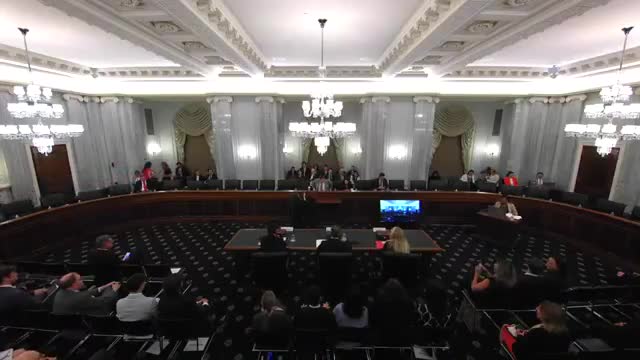
Summary
Three nominees to senior Department of Transportation posts appeared before the Senate Committee on Commerce, Science and Transportation for a confirmation hearing that focused on autonomous‑vehicle safety, freight planning and legal oversight of department rulemaking.
Three nominees to senior Department of Transportation posts appeared before the Senate Committee on Commerce, Science and Transportation for a confirmation hearing that focused on autonomous-vehicle safety, freight planning and legal oversight of department rulemaking.
Chairman Cruz opened the hearing by introducing the nominees — Serval Oz for assistant secretary for research and technology, Michael Rutherford for assistant secretary for the Office of Multimodal Freight Infrastructure and Policy, and Gregory Zirzon for general counsel of DOT — saying, “These nominees fit the bill.”
The hearing came amid committee concern about staffing and program execution at DOT. Ranking Member Cantwell warned the committee that the department needs “a strong safety regime,” and raised concerns about a recently formalized process that she said could allow regulated entities to take actions against safety inspectors.
Oz, who described herself as having led early self‑driving vehicle programs at Google X and later managing digital transformation at a global automotive supplier, emphasized safety as central to her agenda. She cited national road‑fatality figures and said autonomous technology can prevent large numbers of deaths, saying, “We have the technology to save thousands of American lives.” She framed her prospective office as a coordinator of research and a source of a national framework for advancing vehicle automation and related technologies.
Senators pressed Oz on testing transparency and the tradeoff between innovation and oversight. In exchanges with Senators Luhan and Kim, Oz said earlier testing at Google occurred in a regulatory vacuum and stressed the need for a federal framework to standardize testing, data and deployment across states. She said the United States must build and protect its domestic technology stack to remain competitive with international efforts, particularly in China.
Rutherford, who described decades of industry experience including a leadership role at CSX, told senators the Freight Office should adopt a holistic approach to freight planning and finalize the National Multimodal Freight Network and National Freight Strategic Plan. He described the draft multimodal network — the “point of departure” for freight planning — and listed draft inventory figures he said the office is working with: about 78,000 roadway miles, 80,000 rail miles, 21,000 waterway miles, 140 marine ports and 65 airports. Rutherford said he would prioritize addressing congestion and improving supply‑chain visibility through programs such as FLOW (Freight Logistics Optimization Works).
Members also raised concerns about grant processing delays. Senator Schatz pressed nominee Zirzon about the department’s pause and staggered re‑approval of thousands of grants; Zirzon said officials should rely on subject‑matter experts and suggested an operational approach that prioritizes review for impropriety rather than re‑approving every prior award before funds are released.
The committee questioned Zirzon about the legal office’s role in permitting and regulatory exemptions. He said he would rely on technical experts and expressed a commitment to ensure the department follows laws enacted by Congress. In response to a question about environmental review, Zirzon referenced the Supreme Court ‘‘7 counties’’ decision as affecting NEPA reviews and said streamlined, statute‑focused permitting reforms could reduce litigation risk while preserving environmental integrity.
Committee members pressed nominees on several sectoral issues: radio‑frequency interference and radio altimeters in aviation, workforce losses at Federal Highway Administration and Federal Transit Administration, tribal consultation obligations in grant programs, and whether nominees would support consumers in aviation (including an aviation consumer protection office created by recent FAA reauthorization language). Each nominee pledged cooperation with the committee.
No votes were taken at the hearing. Senators will submit written questions, and nominees will have a set period to respond, per the committee’s schedule. The hearing concluded with the chairman adjourning the committee.
The session produced direct lines of inquiry committee staff may pursue in follow‑up: how a federal AV framework would be structured, specific steps to finalize and adopt the National Multimodal Freight Network, and how the General Counsel’s office will handle regulatory exemptions, tribal consultation and the backlog of grant reviews.