
TAG defers decision on "local exhaust" definition after members request more research
Get AI-powered insights, summaries, and transcripts
Subscribe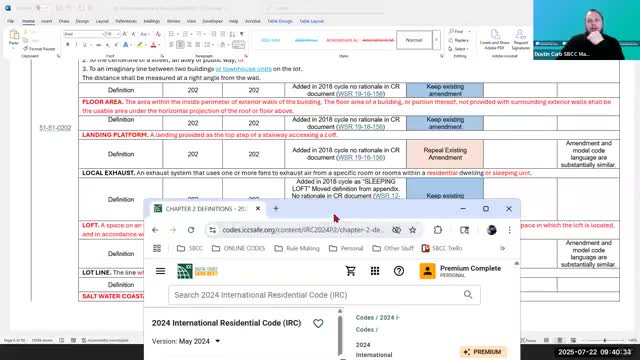
Summary
The TAG agreed to pull the local-exhaust definition from today's vote and revisit it at a later meeting after members said the apparent difference between the state amendment and the model code warranted further review.
The residential-code TAG paused action on a state amendment that defines "local exhaust" after members said the change appeared intentional and deserved further review.
Ron Perkowitz, a codes consultant and former building official in Kitsap County, pressed for more background on why Washington’s current amendment included the term “sleeping unit.” The staff drafter, Dustin Curb, said the amendment dated from 2018 and that his office did not find a clear rationale in older rulemaking documents. "I don't have a great answer for you on that one," Curb said when asked about the amendment’s origin.
Members discussed whether the 2024 model-code definition (which refers to rooms within a dwelling) represented a technical change. Patrick Hanks, a home-builder representative, suggested that the model-code language might be an improvement and recommended moving to the model-code definition unless further evidence supports keeping the state amendment. TAG members agreed to pull the definition from today’s votes and research the historical rationale; staff will circle back with more documentation.
Why it matters: definitions determine what spaces are covered by mechanical requirements and can change compliance obligations for builders and reviewers. Jerome differences — for example, whether an exhaust system specifically references a “sleeping unit” — can alter permit requirements and inspection expectations.
No formal vote was taken on the substance; the item was earmarked for more review at a future TAG meeting.