Get Full Government Meeting Transcripts, Videos, & Alerts Forever!
Get email alerts on the Sustainability topic
No spam. Unsubscribe anytime.
Greenbelt advisory group urges council to finalize 'Save As You Throw' specifics and highlights municipal solar success
Summary
Greenbelt's Green ACES and Green Team asked the City Council to set pricing details for a proposed unit-based trash program, stressed the need to preserve a USDA-funded curbside food-scrap pilot past grant expiration, and reviewed a municipal solar installation that now supplies about half of municipal building electricity.
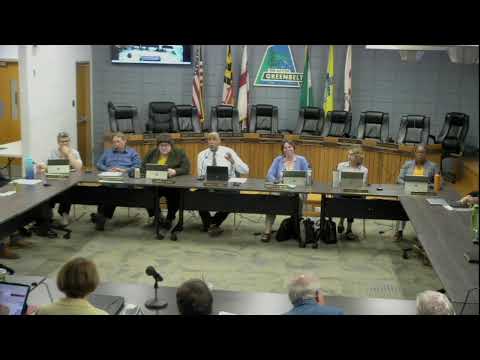
Greenbelt's sustainability volunteers told City Council members at a work session that they need council action this fall to finalize that city's "Save As You Throw" unit-based trash pricing so public education can begin and a curbside food-scrap pilot funded by a USDA grant can continue beyond the grant period.
Why it matters: Greenbelt's advisory sustainability groups said the city approved funding for a unit-priced trash program in the budget but did not adopt the specific price points. Without council adoption of specific rates, program outreach and implementation cannot proceed. The advisory volunteers also said the city needs a plan to keep the curbside food-scrap pickup program operating after the USDA grant ends in August.
At a work session presentation, John Lippert, chair of Green ACES and the Green Team, reviewed recent outreach and program activity. He said a solar array developed with Green Team involvement is operational and will provide approximately 50% of municipal buildings' electricity. He summarized the groups' recommendation on solid-waste fees as a three-pronged approach: (1) raise the base fee to cover costs, (2) implement unit-based pricing (Save As You Throw), and (3) use some of the additional revenue to maintain the curbside food-scrap program beyond the USDA grant period.
Green ACES emphasized outreach needs. Lippert said staff and council must approve final numbers so public education can begin; without the chosen base and opt-out prices, the city cannot prepare materials or begin enrollment. He said the program will require “a major outreach effort in all different types of media” if it starts in January as planned.
The group also described recent and planned sustainability events: three neighborhood EV fairs, regular public outreach at Labor Day and other festivals, and work toward Sustainable Maryland recertification, which requires documented proof of municipal actions.
Discussion and next steps: Council and staff listeners acknowledged the request. Advisory members urged that council set the price points and directed staff to prepare a public-education plan tied to a firm adoption date. No formal vote was taken at the work session; work sessions do not produce formal council actions. Green ACES said it will return with outreach plans once council sets the rates.
Ending note: The Green Team and Green ACES asked for clearer timelines from the city so they can schedule outreach and ensure continuity of the USDA-funded curbside food-scrap pilot.