Get Full Government Meeting Transcripts, Videos, & Alerts Forever!
Get email alerts on the Trail Bridge Design topic
No spam. Unsubscribe anytime.
Parks committee approves 30% design amendment to study Blackmore Bridge feasibility
Summary
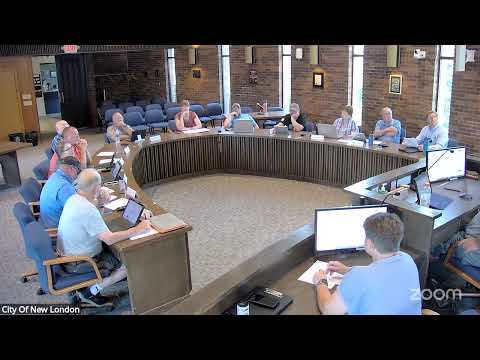
The New London Parks and Recreation Advisory Committee voted to approve and recommend an amendment with Ayers to complete 30% engineering design and hydraulic modeling for a proposed bridge across the Embarrass River into Pfeiffer Park.
The New London Parks and Recreation Advisory Committee voted to approve and recommend to the City Council an amendment with Ayers to fund 30% engineering design and hydraulic modeling for a proposed bridge across the Embarrass River into Pfeiffer Park.
Committee members said the work will model floodplain impacts, develop preliminary bridge alternatives and provide a preliminary cost memo to support grant applications and further decisions. Craig Schuh of Ayers told the committee the 30% effort is intended to "start this, you know, eliminate some of those variables and then continue to move forward in this whole process," and that the work will include coordination with the Wisconsin Department of Natural Resources and FEMA to evaluate effects on the floodplain upstream.
The discussion recapped past decisions to remove the bridge from earlier designs when CDBG and state revolving loan funds with sunset dates were used to build the current trail. Schuh said earlier hydraulic evaluations showed filling the floodplain at the proposed crossing raised upstream levels, especially given a railroad structure upstream, which prompted the pause. He said the new 30% design would test alternatives intended to minimize any upstream floodplain rise and identify affected property owners and permitting requirements.
Committee members and public commenters discussed expected uses for the bridge, including snowmobile connectivity and recreational boating. Schuh said the design team will consider clearance for kayaks and small boats and make the structure large enough for snowmobile passage; he noted the snowmobile club remains an interested stakeholder. He also said the 30% package will include a preliminary cost estimate and an initial list of likely funding sources such as stewardship grants, private sponsorships and local match opportunities.
Several committee members emphasized competing park priorities and the limited budget available for multiple projects. One member said the bridge has been discussed for years and that a 30% design would at least provide a clearer sense of costs and feasibility. The motion to approve the amendment was made and seconded and carried by voice vote.
Next steps identified by staff and Ayers are to complete the 30% design and hydraulic modeling, produce a memo with alternatives and likely costs, and return the results to the committee (and council if requested) for further direction.