Get Full Government Meeting Transcripts, Videos, & Alerts Forever!
Get email alerts on the Dam Inspection topic
No spam. Unsubscribe anytime.
Commission approves temporary drawdown of Collins Pond for dam inspection; requires weekly progress reports
Summary
The New Canaan Inland Wetlands Commission unanimously approved a temporary drawdown and cofferdam installation at Collins Pond to let consultants inspect the dam’s upstream face and two abandoned outlet pipes, with a condition that the site engineer provide weekly written progress reports to town staff.
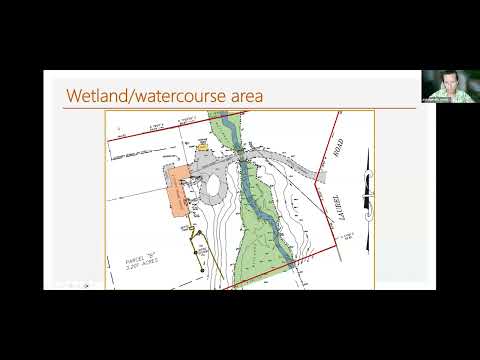
The New Canaan Inland Wetlands Commission voted unanimously July 21 to permit a temporary drawdown of Collins Pond at the Rippewam Road site so engineers can inspect the dam’s upstream face and two abandoned outlet pipes as part of dam repair design work. Joel Moore, a geologist for Verdantus, presented the plan and described cofferdams and bypass pumping to allow visual inspection.
Why this matters: The owners seek to confirm the condition of a 12‑inch cast‑iron low‑level outlet on the dam’s west side and a 4‑inch pipe on the east side — one outlet to be made operable and the other to be sealed — and to document the concrete face before submitting repair plans to the Connecticut Department of Energy and Environmental Protection (CT DEEP) for formal permitting.
Moore described the proposed approach: install temporary coffer dams and bypass pumps to lower water near the upstream face, then allow exposed sediments to stabilize for 3–5 days before technicians conduct a one‑day inspection. Drawdown and filling of the coffer dams would be gradual; Moore said the initial drawdown would take one to two weeks, followed by removal of the coffer dams when inspections and measurements are complete. He said the inspections will support design work that will be submitted to CT DEEP for any required dam‑repair permitting.
Commissioners asked about prior contacts with CT DEEP, alternatives to drawdown (for example, underwater drones) and the purpose of the abandoned pipes. Moore said he has been in contact with CT DEEP; the agency has reviewed prior inspection reports and supports repair work in principle, but the local commission must authorize temporary dewatering because the activity is regulated locally. He said underwater drones provided limited visibility and divers were constrained; visual inspection following a controlled drawdown is necessary to locate and measure the outlet pipes and assess the upstream concrete.
Director Kathleen Holland recommended a permit condition. The commission added Holland’s suggested special condition that the project’s site engineer provide weekly written progress reports to town staff for the duration of in‑water activities and notify staff of issues or corrective measures. Commissioner Sandy Redden moved to approve the application (listed as IW‑25‑31 at the hearing) with that special condition; Commissioner Beth Sanford seconded. The motion passed unanimously.
Next steps: Verdantus will install the temporary coffer dams and pumps under the approved conditions, conduct the inspection and complete repair designs for CT DEEP review. Staff will receive weekly engineering progress reports during in‑water work and will monitor any on‑site issues.