Get Full Government Meeting Transcripts, Videos, & Alerts Forever!
Get email alerts on the Wetlands Pond Proposal topic
No spam. Unsubscribe anytime.
Applicants withdraw plan to excavate 9,500‑sq. ft. pond at 676 Laurel Road after commission presses for more analysis
Summary
Applicants for 676 Laurel Road withdrew an application July 21 to excavate a 9,500‑square‑foot pond and remove 11 trees after New Canaan Inland Wetlands Commission members said they wanted third‑party review of short‑ and long‑term impacts.
Applicants for 676 Laurel Road withdrew their proposal July 21 to excavate a 9,500‑square‑foot pond and remove 11 trees in a wetland corridor after members of the New Canaan Inland Wetlands Commission raised questions about the project’s short‑ and long‑term environmental effects. Alexandra Mok, the soil scientist and landscape designer representing the applicant, asked the commission to allow the withdrawal so the team could address commissioners’ concerns.
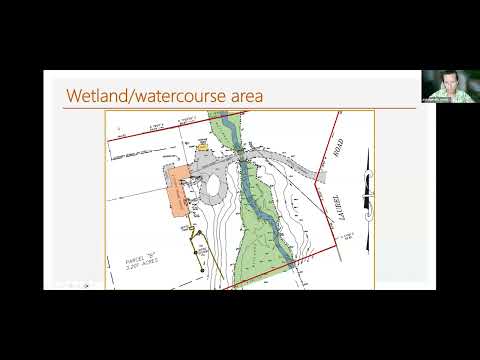
Why this matters: The proposal would convert a functioning wet meadow and stream corridor crossed by Poorhouse Brook into a standing pond and include excavation of roughly 1,407 cubic yards of material for the pond plus about 47 cubic yards for a plunge pool. Commissioners said that converting the existing wetland structure to a pond, and the temporary in‑wetland excavation and equipment access required, raised questions about flood storage, downstream effects and habitat tradeoffs that merited further study.
Mok described the plan in detail at the July 21 meeting. The design called for bypass pumping of the perennial stream around the excavation area, a dewatering trench to contain and dry excavated sediments, use of timber mats and long logs to stabilize equipment access, and a plunge pool to settle sediment before water reaches the new pond. Mok said the site has a high groundwater table and a perennial stream, and that the proposed pond “is going to be wet and is going to hold the water throughout the year.” She also said the maximum pond depth would be 7 feet and that the project would remove 11 trees while planting an 11‑tree mitigation strip and a broader planting plan of shrubs and herbaceous species along disturbed edges.
Commissioners pressed several technical points. They asked how the pond would affect downstream flow and the adjacent landowner’s recently dredged pond, whether the volume and timing of stormwater would change, and whether the excavation could be done without additional tree loss where the excavator needs access. Commissioner Sandy Redden and others repeatedly asked for quantitative analysis; Director Kathleen Holland and several commissioners recommended third‑party review to assess both temporary construction impacts and longer‑term hydrologic and habitat effects.
Mok offered mitigation measures and construction sequencing — installing erosion and sediment controls, constructing a dewatering trench, pumping and bypassing stream flow through a pipe to discharge below the work area, excavating the pond, and then installing plantings and meadow seed mixes on disturbed wetland edges. She estimated excavation could take up to a month and said fall planting typically increases establishment success. Mok also said she would accept a condition that staff inspect plant survival and require replanting if survival fell below an agreed threshold.
After extended discussion about potential impacts and the tight procedural schedule, Mok told the commission she would withdraw the application and return later after consulting staff and, if desired, pursuing additional analysis. “I would like to request that we would like to withdraw the application before you, give us the denial,” she said. The withdrawal prevented a formal vote on the application; commission members indicated they expected the applicant to consult with staff about third‑party review, possible downsizing of the plan to save additional trees, and conditions for monitoring planting success if the proposal is refiled.
Next steps: The applicant will work with Director Holland on follow‑up, consider narrowing the pond footprint to preserve additional trees, and may refile for a future meeting after supplemental review or additional studies. No permit was granted or denied at the July 21 hearing.