Get Full Government Meeting Transcripts, Videos, & Alerts Forever!
Get email alerts on the Strategic Housing Plan topic
No spam. Unsubscribe anytime.
Council committee restarts 'Housing for All' strategic plan work; gap analysis and engagement set for September
Summary
Staff and consultants outlined scope, timeline and objectives for a 10-year 'Housing for All' strategic housing plan, including a separate consultant-led housing gap analysis and multiple planned engagement methods beginning in September.
City planning staff and consultants briefed the Housing and Community Development Committee on July 15 about the scope, timeline and next steps for the Housing for All strategic housing plan, a 10-year strategic framework intended to guide housing priorities for Evanston.
The presentation described the plan's purpose, what it will and will not do, and the four draft objective areas staff are using to structure work: protect (anti-displacement), preserve (existing housing stock), create (new housing), and reduce barriers (zoning, process, code). Staff emphasized the plan will be forward-looking and intended as a "North Star" for policy and funding decisions rather than an immediate production guarantee.
Staff explained that the city paused the strategic-plan work in October 2024 because of staff capacity constraints and relaunched in 2025 after contracting independent consultants. The city retained DPP (Development Planning Partners) to perform a quantitative housing gap analysis looking at supply and demand across housing types and at five- and ten-year horizons; Revolve will assist with plan development, research and writing. The gap analysis is due to be released with the draft plan in September.
The gap analysis will use multiple data sources including U.S. Census population and housing data, MLS listings for the for-sale market, CoStar or similar data for the rental market, HUD/IHDA income limits, and city-provided program data such as inclusionary housing unit counts and wait-list information. Staff said the consultant will produce a reusable tool so the city can update the analysis without a full new contract in future years.
Engagement will begin in September and include in-person pop-ups at community centers or other high-traffic locations, a short digital feedback form (with QR codes), virtual chats timed for organizational participation, and outreach through boards, commissions and community partners. Staff said they will add a new FAQ and a dedicated Housing for All page on the city's website and asked committee members to help promote and, if desired, volunteer for outreach events. Committee members urged staff to prioritize reaching renters, larger households and other constituencies who have historically been underheard.
On goals and implementation staff said the plan will include SMART goals (specific, measurable, achievable, relevant and time-bound), and an implementation section with short-, medium- and long-term actions. Staff proposed coming back to HCDC in September (draft plan plus gap analysis), October (summarized feedback), and November (recommended revisions) so the council can review the plan in December. "We want to make sure we're hitting the December timeline for council considering it," a staff member told the committee.
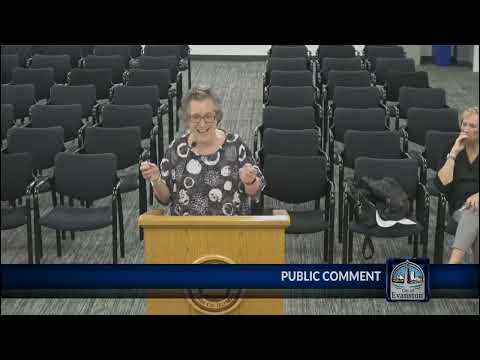
Public commenters earlier in the meeting urged caution about upzoning and emphasized that increasing market-rate housing alone will not produce deeply affordable units. Mary Rasinski told the committee, "market rate affordable housing by upzoning to 2 to 4 units ... is not gonna produce affordable housing." Dominic Vaz of Open Communities urged the plan to include both increasing supply and anti-displacement measures such as a just-cause eviction policy; Vaz said, quoting academic research, that "homelessness thrives among affluence, not poverty." Staff said the gap analysis will inform which actions should be prioritized.
Ending: Staff committed to releasing the draft plan and gap analysis in September, expanding outreach (including improved web content and FAQs), and returning to the committee in October and November for feedback prior to a December council review. Committee members asked staff to publish clear definitions of key terms (for example, what the plan means by "preserve," "create" and "reduce barriers") and to provide a public catalog of existing housing-related programs as part of the plan documentation.