Get Full Government Meeting Transcripts, Videos, & Alerts Forever!
Get email alerts on the Local Budget topic
No spam. Unsubscribe anytime.
Scottsburg staff warn Senate Bill 1 will shrink tax revenue; urge pause on 2026 special projects
Summary
City staff told the Scottsburg City Council at a budget workshop that state Senate Bill 1 and related property-tax changes will reduce local revenue over the next decade, projecting an immediate shortfall and recommending suspension of one-time special projects in the 2026 budget while staff identify cuts and hold spending on unfilled positions.
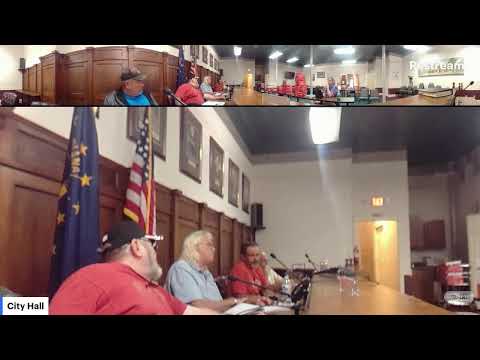
Scottsburg city staff told the City Council at a workshop on Oct. 5, 2025, that state changes tied to Senate Bill 1 and property-tax “circuit breaker” credits will reduce the city’s tax receipts and that the city should pause special projects in the 2026 budget while staff identify cuts.
The warning came from Tish Richard, a city staff member who presented Baker Tilly financial projections prepared for the city, and from Jan, a city staff member who worked with the consultant. They said the projections extend to 2031 and show gradually larger city revenue losses tied to property-tax credits and other state-level changes.
City staff said the four municipal accounts that receive property-tax dollars — the general fund and three other funds the city uses for police, fire, parks, sanitation and economic development — together total a little less than $8 million this year, and that property taxes and the local income tax (LIT) together generate a little under $5 million. Jan and Tish told the council that a current-year “circuit breaker” credit already reduced receipts by about $400,000 and that Baker Tilly’s scenarios show that exposure could grow to roughly $1.2 million by 2031.
Those projections prompted a recommendation that the council avoid one-time special projects in 2026 and instead preserve cash to cover ongoing services. "We're going to suggest that the city for 2026 doesn't do any special projects," Jan said. Tish Richard and Jan said staff will look through the remainder of the current year’s budget for line items they can defer without cutting core services — for example, money budgeted for a stormwater position that has not been filled — and ask the council to authorize temporary reductions so the budget packet submitted to the state is fundable.
The staff presentation emphasized options the city will have to address longer-term losses: raise other local revenues, accept cuts to programs, or seek alternate new revenue sources. The consultants’ projections assume statewide rules on assessments and credits remain in place; Richard told the council the percentage that determines how much the county collects will adjust if assessments change, but that the state regulates the overall process.
Council members and staff discussed timing and next steps. City staff said they expect to have more detailed payroll and insurance numbers within days and planned to return with a draft of recommended cuts and adjustments. Jan asked the council to review those materials and meet again as a workshop the following Monday to finalize options before the formal budget readings in September of next year.
No formal vote or ordinance was taken at the workshop. Staff framed the plan as a request for the council’s authority to identify reductions and to submit an adjusted budget package to the state on schedule.