Get Full Government Meeting Transcripts, Videos, & Alerts Forever!
Get email alerts on the Education Outreach Youth Support topic
No spam. Unsubscribe anytime.
Students of Promise pitches return to Maple Heights, cites 93.8% participant graduation rate and ARPA-funded transitional housing
Summary
Students of Promise presented its evidence-based model to the Maple Heights school board, described past local outcomes and asked the district to partner as it opens an ARPA-funded transitional living facility in Cleveland Heights.
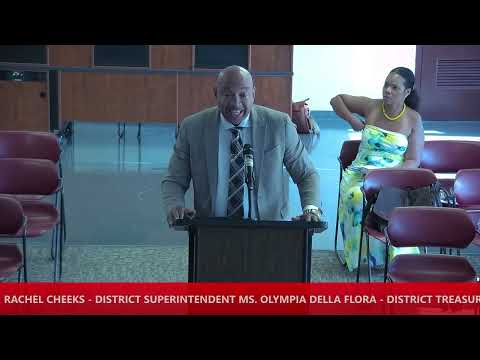
Students of Promise director Bob Ivory told the Maple Heights Board of Education that the nonprofit seeks to reintroduce its evidence-based youth support model to Maple Heights and to partner with the district as the nonprofit opens a transitional living facility for women and children in Cleveland Heights. The program, Ivory said, produced a 93.8 percent graduation rate among Students of Promise participants in Maple from 2014 to 2018. He also said the program saw a 17 percent reduction in suspensions and that more than 60 percent of participants scored “good or excellent” on a standard developmental-assets measure. Ivory said the group’s model centers on a designated on-site “linkage coordinator” who leads case management, mentorship and family engagement. “Students of Promise is now defined as that comprehensive, it’s a research-based, evidence-based model,” Ivory told board members. He said the county has provided ARPA funds to launch a homeless and transitional facility and that the facility is intended to serve eligible students regardless of which district they attend. Linkage coordinator Miss Wright described day-to-day work with students: intake questionnaires, a daily “I am” statement that helps staff identify immediate needs, weekly progress sheets for teachers and intentional parent-engagement projects such as student “headline” posters the program produces for families. “I am a linkage coordinator. I totally love my job,” Wright said during the presentation. Board members asked how the program identifies students. Ivory said selection is collaborative with the district and based on data and referrals — examples include excessive absences, suspensions, failed courses, court involvement, repeated grades or low standardized-test performance. He said the model is designed for grades 9–12 but can work in middle school. Ivory also cited a Case Western Reserve evaluation and the program’s historical connection to the Closing the Achievement Gap (CTAG) initiative in Ohio. There was no formal board vote on the presentation. Ivory asked the district to consider partnership and to allow Students of Promise to operate on an expanded basis with county support; he said the transitional facility is expected to open this fall. Ivory also said the nonprofit is continuing to gather updated outcome data and that the county is exploring a second-wave evaluation. Board members did not take action at the meeting. The presentation concluded with an invitation for follow-up and questions from trustees.